2026 Jeep Grand Cherokee Reviews, Pricing & Specs


Pros & cons
What we like
Stylish design
Small-but-mighty Hurricane 4 Turbo engine
It’s a towing and off-road champ
What to consider
Middling fuel economy
Poor value for money
The CarGurus verdict
A new engine reinvigorates an aging SUV.
Jeep’s midsize SUV gains something and loses something for the 2026 model year. A mild refresh brings a new turbocharged four-cylinder engine, but the Grand Cherokee 4xe plug-in hybrid is no more. Styling changes outside, a bigger touchscreen inside, and a restructured lineup of trim levels round out the changes.
Verdict: The turbo-four engine is impressive, but it can’t account for the lack of a hybrid powertrain, or the price tag for the best version of this grand dame of SUVs.
out of 10 expert review
Look & feel
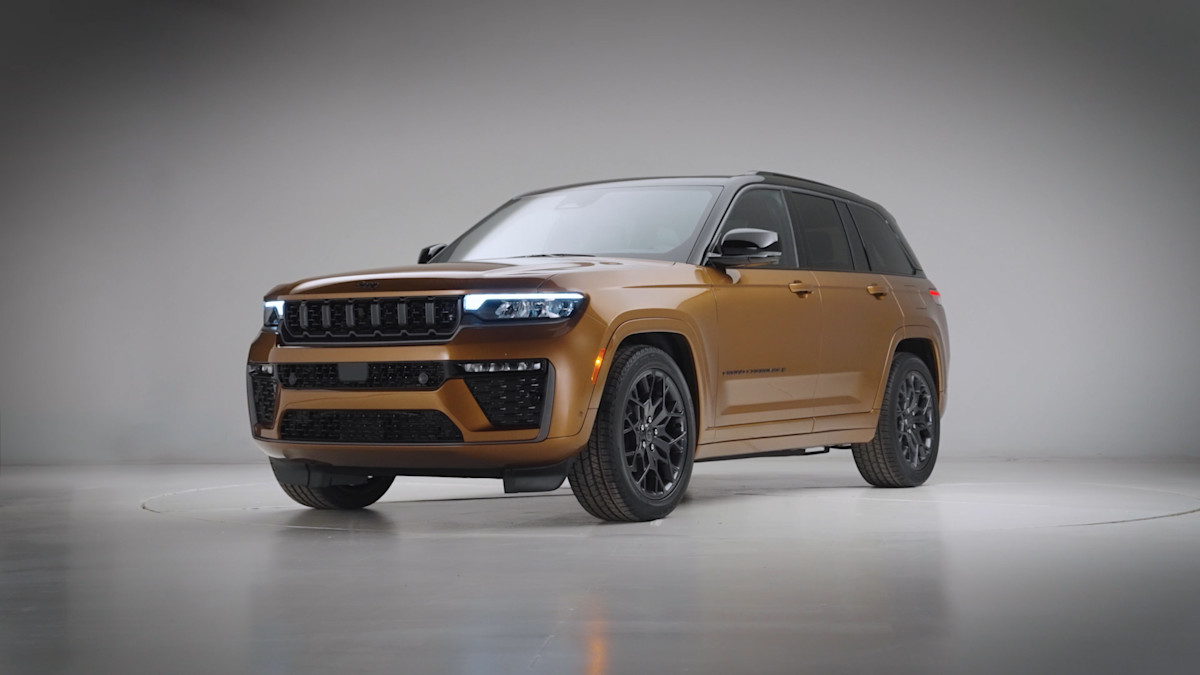
Jeep says the Grand Cherokee’s headlights, grille, and lower front fascia are new for 2026, but even by the standards of midcycle refreshes, the changes are hard to spot. That’s okay, though, because the current-generation Grand Cherokee is a handsome SUV that makes a stronger visual statement than its competitors. Even though it’s been around since the 2021 model year, we haven’t gotten sick of looking at it.
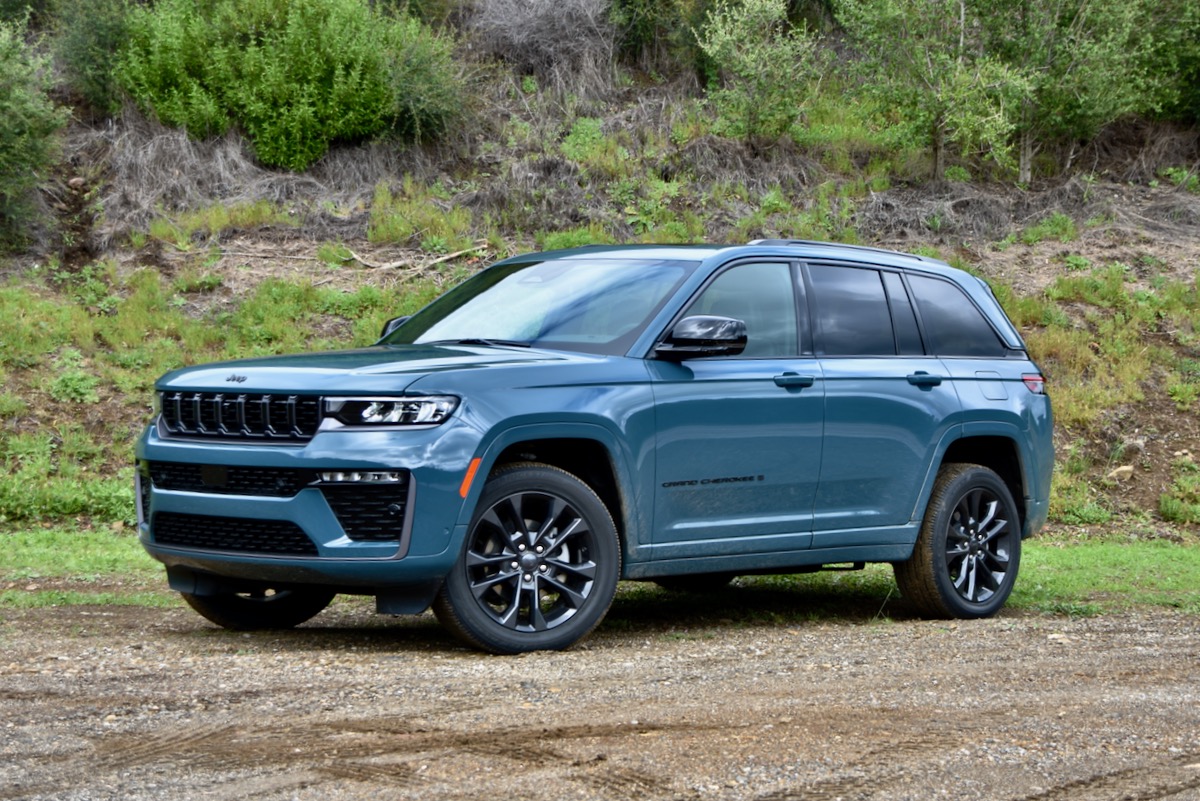
Perched atop a jutting brow, the thin grille and headlights give the Grand Cherokee a substantial, wide-track look. The traditional Jeep trapezoidal wheel arches and the straight body lines that frame them build on that, while the proportions of the hood and the roofline recall classic Jeep models. The shark-nose angle of the front end and the canted rear mean the Grand Cherokee doesn’t just look like a box. Competitors try to dress up softer, more-car-like shapes with big grilles and cladding, but the Grand Cherokee doesn’t need that to explain what it is.
The lineup gets a major overhaul for 2026, shrinking to three core trim levels—Laredo, Limited, and Summit—with a handful of sub-levels. The base Laredo and Laredo X have 18-inch wheels, while the Laredo Altitude gets black 18-inch wheels as part of a standard Black Appearance Package. The Grand Cherokee Limited also comes with 18-inch wheels, but 20s are available for no extra charge. The bigger wheels are standard on Limited Reserve and Limited Altitude models, with the latter getting a blackout treatment similar to the Laredo Altitude. The top Summit trim level gets 21-inch wheels and a black roof.
The interior looks a little more plain now that the smaller Jeep Cherokee has copied parts of its layout, but this SUV still justifies its “grand” billing with smarter materials and more equipment, albeit only at the upper reaches of the lineup. Laredo and Laredo X models have cloth upholstery, the Laredo Altitude, Limited, and Limited Altitude have leatherette, and the Limited Reserve and Summit have genuine leather upholstery. Single-pane and dual-pane sunroofs are available starting on the Laredo Altitude and Limited, respectively—and they're cheaper than they were on 2025 models.

Performance
The biggest news for the 2026 Grand Cherokee is under the hood, where the Hurricane 4 Turbo engine joins the lineup. This is not the same 2.0-liter turbo-four found in a Wrangler, because advanced features such as a variable-geometry turbo and pre-chamber ignition help extract more power. The Hurricane’s 324 horsepower and 332 pound-feet of torque (on regular gasoline) are 54 hp and 37 lb-ft more than the Wrangler can muster. Plus, this engine gets a cool name shared with the inline six-cylinder engine used in the larger Grand Wagoneer (although the two engines share little else).
The Hurricane engine is standard in all Grand Cherokee trims except the base Laredo and Laredo X, which continue with the Pentastar 3.6-liter V6. This naturally aspirated engine produces 293 hp and 260 lb-ft of torque. Both engines are paired with eight-speed automatic transmissions and standard rear-wheel drive (RWD) or optional four-wheel drive (4WD). They’re the only options for 2026, as the 4xe plug-in hybrid powertrain was abruptly discontinued, as was the 5.7-liter Hemi V8 prior to that.
Other midsize SUVs such as the Ford Explorer and the Chevrolet Traverse have adopted downsized four-cylinder engines (although Ford still offers a 400-hp twin-turbo V6 on some models), but the Hurricane 4 is among the best of the bunch. It makes peak power across a broad range of rpm, so there's rarely a wait for the turbo to build boost and deliver thrust. Passing cars on an uphill grade, the Grand Cherokee felt not just confidence-inspiring, but genuinely quick, and while we didn’t have the opportunity to hitch up a trailer on this test drive, the Hurricane 4 provides the same 6,200-pound towing capacity as the Pentastar V6. That’s tops among midsize SUVs.
The rest of the Grand Cherokee driving experience hasn’t changed. It’s fairly easy to guide through corners for a vehicle of its size, but its lazy steering and suspension that's a half step behind body motions still make it feel truck-like. The standard steel suspension on our Limited Reserve test car (height-adjustable air suspension is available on the Summit model) was well-tuned for comfort, though. Bumps and other road imperfections were absorbed without any wobbling or pitching.
Jeep is known more for off-road capability than on-road handling, but the level of capability depends on which Grand Cherokee you choose. The base Laredo comes with Jeep’s Quadra-Trac I 4WD system, but buyers have to upgrade to the Laredo Altitude to get the Selec-Terrain system, which adds multiple drive modes for different surfaces such as snow, mud, and sand. In addition to air suspension that jacks up the Grand Cherokee to increase ground clearance, the top Summit trim level also has a more sophisticated Quadra-Drive II 4WD system with a two-speed transfer case, but even this model lacks the sway-bar disconnect, all-terrain tires, and skid plates of the Grand Cherokee Trailhawk, which goes away along with the 4xe powertrain.

Form & function
The standard Grand Cherokee has two rows and five seats, but Jeep still offers a three-row Grand Cherokee L model. Up front, the Jeep offers similar headroom to other midsize SUVs, while legroom ties the Honda Pilot but trails other competitors. Heated front seats and a heated steering wheel are available starting on the Laredo Altitude, but shoppers have to step up to the Limited Reserve for ventilation, and the Summit for massagers.
It's a similar story in the second row (heated seats are standard on Limited and higher models), where headroom largely conforms to segment norms, but legroom exceeds only one competitor—the Ford Explorer—and the Chevy Traverse offers an additional 3.3 inches of legroom in its second row. Buyers opting for the three-row Grand Cherokee L will again find competitive headroom but sub-par legroom in the rearmost seats.
Two-row models have 37.7 cubic feet of cargo space behind the second row and 70.8 cubic feet with the rear seats folded, which is less than that of a two-row Honda Passport. Similarly, the Grand Cherokee L’s 17.2 cubic feet with all seats in place, 46.9 cubic feet with the third row folded, and 84.6 cubic feet with all back seats folded trails most of the three-row competition with the exception of the Hyundai Santa Fe.
The Grand Cherokee doesn’t have the Hyundai’s prominent dual wireless device chargers, but there are plenty of places to stash a phone and a deep center console storage bin. That’s despite the rotary shifter and the drive-mode selector being positioned in a way that’s visually interesting but not especially practical.

Technology
For 2026, a larger 12.3-inch touchscreen is now available on Laredo Altitude and higher trim levels. The Laredo and Laredo X continue with a 10.2-inch touchscreen, and all trim levels have a 10.2-inch digital instrument cluster. Audio systems range from an unbranded six-speaker system on the Laredo to a 19-speaker McIntosh system on the Summit, which also has a 10.2-inch front-passenger touchscreen.
Jeep continues to rely on the long-lived Uconnect 5 infotainment system, which still has an easy-to-use interface with wireless Apple CarPlay and Android Auto connectivity. The Off-Road Pages display, which includes the likes of an inclinometer and the distribution of power through the 4WD system, is also a great feature for an off-road SUV. That said, the main touchscreen’s home menu is a bit cluttered, the digital instrument cluster is a disorganized collection of widgets no matter which configuration you choose, and the front passenger screen seems unnecessary. We certainly didn’t miss it in our Limited Reserve test vehicle.
Like many modern vehicles, the Grand Cherokee is available with a surround-view camera system (it’s an option on the Limited trim level), but Jeep enhances functionality with night vision and a low-angle off-road camera for spotting obstacles on trails. A digital rearview mirror is also available on Limited Reserve and Summit models, along with the Fam Cam, which lets parents check on kids in the back seats.

Safety
The expected array of driver-assistance features is standard, including adaptive cruise control, automatic emergency braking, lane-keep assist, and lane-departure warning. Jeep also makes blind-spot monitors, rear cross-traffic alert, and rear parking sensors standard—all very helpful features for a vehicle of this size.
Active Drive Assist, a hands-free highway driving system similar to Super Cruise and BlueCruise systems available on the Chevy Traverse and Ford Explorer, respectively (albeit not as feature-rich), is also available starting on the Laredo Altitude trim. For 2026, Jeep says it improved the behavior of this system to more seamlessly transition to lower levels of automation when needed, but we didn’t have a chance to test that out.
Crash-test ratings for the 2026 Grand Cherokee from the National Highway Traffic Safety Administration (NHTSA) were not available at the time of writing. However, the federal safety agency gave the similar 2025 model its highest five-star overall safety rating, with five stars in front and side crash tests and four stars in the rollover evaluation.
The 2025 model was also an Insurance Institute for Highway Safety (IIHS) 2024 Top Safety Pick, but the IIHS has changed its criteria since then. For now, the institute has only confirmed top “Good” scores in the small overlap front and updated side crash tests, and a “Marginal” score for seat belt reminders.

Cost-effectiveness
Official fuel-economy ratings weren’t available at the time of writing, but Jeep expects the new Hurricane four-cylinder engine to return up to 27 mpg combined. That’s a meaningful improvement over the V6 engine’s 22 mpg combined (19 mpg city, 26 mpg highway), and better than the turbo-fours in the Chevy Traverse and the Ford Explorer, or the Honda Pilot’s V6, but can’t beat a Hyundai Santa Fe or a Toyota Grand Highlander Hybrid.
Jeep’s three-year/36,000-mile basic warranty and five-year/60,000-mile powertrain warranty match those of most other brands, with the exception of Hyundai and Kia, which still beat the rest of the industry on warranties. Jeep is also competitive with most other brands on pricing, with the Laredo trim starting at $40,410 with the mandatory $1,995 destination charge. The three-row Grand Cherokee L is an extra $2,000, as is 4WD on all but the Limited Reserve and Summit models.
The best values are near the top of the lineup. Jeep claims the Limited Reserve costs $6,000 less than the 2025 Grand Cherokee Overland model it replaces, and that the Summit offers similar equipment to last year’s Summit Reserve at a $5,000 discount. The base price, in contrast, has increased by a couple of thousand dollars.
Few vehicles offer the ability to off-road or tow comfortably at the price of a well-equipped Grand Cherokee. The new-for-2026 Ford Explorer Tremor is more exhilarating to drive on the road thanks to available 400-hp twin-turbo V6, and can get pretty darn far into the wilderness—but it can’t tow as much as the Jeep. For buyers who simply need the most space for the least money, the hybrid powertrains available from Hyundai and Toyota are more logical choices. These brands’ crossovers might not be as rugged as the Grand Cherokee, but they make more sense where most utility vehicles actually live.

What owners say
Trims & specs
Base MSRP $46,360 | Seating 5 |
Engine 2.0L 324 hp I4 | Cargo Capacity 37.7 cu ft |
Combined MPG 22 | Drivetrain 4X4 |
Base MSRP $46,360 | Seating 5 |
Engine N/A | Cargo Capacity 37.7 cu ft |
Combined MPG N/A | Drivetrain N/A |
Base MSRP $51,915 | Seating 5 |
Engine 2.0L 324 hp I4 | Cargo Capacity 37.7 cu ft |
Combined MPG 22 | Drivetrain 4X4 |
Base MSRP $43,415 | Seating 5 |
Engine 3.6L 293 hp V6 | Cargo Capacity 37.7 cu ft |
Combined MPG 22 | Drivetrain 4X4 |
Base MSRP $50,415 | Seating 5 |
Engine N/A | Cargo Capacity 37.7 cu ft |
Combined MPG N/A | Drivetrain N/A |
Base MSRP $44,360 | Seating 5 |
Engine 2.0L 324 hp I4 | Cargo Capacity 37.7 cu ft |
Combined MPG 24 | Drivetrain 4X2 |
Base MSRP $41,415 | Seating 5 |
Engine 3.6L 293 hp V6 | Cargo Capacity 37.7 cu ft |
Combined MPG 22 | Drivetrain 4X2 |
Base MSRP $38,920 | Seating 5 |
Engine 3.6L 293 hp V6 | Cargo Capacity 37.7 cu ft |
Combined MPG 22 | Drivetrain 4X2 |
Base MSRP $46,320 | Seating 5 |
Engine 2.0L 324 hp I4 | Cargo Capacity 37.7 cu ft |
Combined MPG 22 | Drivetrain 4X4 |
Base MSRP $44,320 | Seating 5 |
Engine 2.0L 324 hp I4 | Cargo Capacity 37.7 cu ft |
Combined MPG 24 | Drivetrain 4X2 |
Base MSRP $40,920 | Seating 5 |
Engine 3.6L 293 hp V6 | Cargo Capacity 37.7 cu ft |
Combined MPG 22 | Drivetrain 4X4 |
Base MSRP $60,600 | Seating 5 |
Engine 2.0L 324 hp I4 | Cargo Capacity 37.7 cu ft |
Combined MPG 22 | Drivetrain 4X4 |


Pricing trends
MSRP range
$38,920 - $60,600
Current avg. market price
$42,071
Trending down by 1.9% this month
May 2026 - November 2026