2025 Lexus LX Hybrid Reviews, Pricing & Specs


Pros & cons
What we like
Capable Overtrail trim
Great handling
Powerful hybrid powertrain
What to consider
Poor fuel economy for a hybrid
Underwhelming third row
Expert review
The 2025 Lexus LX 700h is an upscale yet capable off-roader—especially with the hybrid-exclusive Overtrail trim.
The Lexus LX levels up for 2025, adding a hybrid powertrain for the first time. It enhances the fourth-generation LX, which has been around since the 2022 model year. The LX’s fish-faced grille hasn’t gotten any easier to stomach since then, but over-the-top luxury amenities and refined details put the LX in the same luxury SUV class as the Cadillac Escalade, BMW X7, Mercedes-Benz GLS, and Land Rover Range Rover. A new Overtrail trim gives the 2025 LX a leg up in the off-road department, too.
Verdict: On road, this new Lexus LX Hybrid prioritizes power over fuel economy, and the effortless acceleration is noticeable and appreciated. Leaving the pavement, the new Overtrail trim tackles tough obstacles with ease. Combine the driving prowess with in-cabin comfort and luxury features, and the 2025 Lexus LX 700h can manage both on- and off-road adventures equally well.
out of 10 expert review
Look & feel
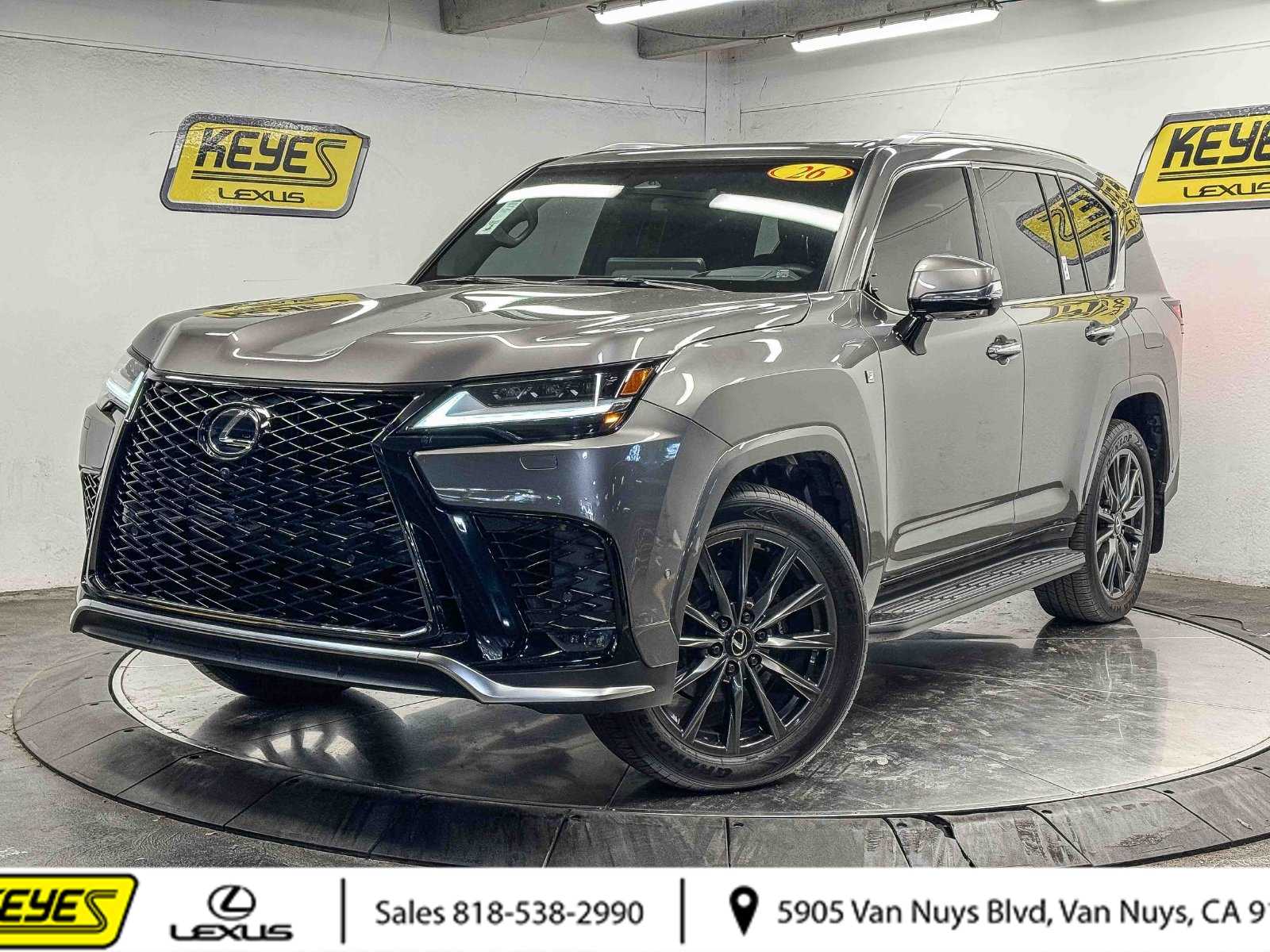
The 2025 Lexus LX 700h has a bold and commanding stance, with each trim level getting different wheel and grille treatments for differentiation. The LX 700h Overtrail gets a more rugged treatment with dark chrome exterior accents, 18-inch wheels, and all-terrain tires. The F Sport Handling trim gets a sportier mesh grille, 22-inch wheels, and a Dark Gray Metallic finish. Both the Luxury and Ultra Luxury have bright chrome accents on the grille and 22-inch forged alloy wheels with a machined finish.
The interior is peppered with real wood trim and reverse stitching accents on the seats, dash, and steering wheel. While there are a number of knobs and buttons to satisfy the tactile need to flip and push, the two-screen setup on the center stack controls some climate and vehicle functions. While the interior color options range from black to white to brown semi-aniline leather in most trims, the F Sport Handling does have spiffy red leather option.
Fit and finish feels generally well done throughout the cabin, with soft leather touch points on the dash and door panels. The one odd finishing touch that didn’t seem quite up to par: the manual shade for the sunroof. This seemed a tad out of sync with a vehicle that costs more than $100,000. At this price point, we expect a large panoramic moonroof, instead of the dinky sunroof, and we would like to see power operations for everything.

Performance
The LX 700h is equipped with a 3.4-liter twin-turbo V6 and 10-speed automatic transmission like the non-hybrid LX 600. But the hybrid system bumps output to 457 horsepower and 583 lb-ft of torque—nearly 50 hp and almost 100 lb-ft over the LX 600. Unlike the mild hybrids offered by BMW and Mercedes-Benz, the Lexus system is a full hybrid that can operate in electric-only mode. However, let’s be clear, the primary objective of this new hybrid isn’t fuel efficiency, as it only gets an EPA-estimated 1 mpg better than the gas-only Lexus LX 600 in combined driving. The primary objective is power.
Unlike other Lexus hybrids, the LX 700h retains both an alternator and a starter. Lexus typically uses the hybrid system’s electric motors to perform these components’ functions but, as many people around the world use the LX to go to far-flung locations in the middle of nowhere, it wanted to make this system bulletproof and ensure that if the hybrid components fail for some reason, the vehicle is still operable. A separate starter and alternator allow the vehicle to continue driving with the engine only.
For this review, we kept the LX 700h confined to the urban jungle, where we were impressed with a tight turning radius that allowed us to make a sharp turn into a garage space from a very narrow alley. It also handled the pockmarked streets and speed bumps of Chicago in reasonable comfort. Driving over these obstacles felt more like a small bump than a teeth-jarring clunk. The LX hybrid was also quite comfortable on the highway—and quiet at speeds up around 70 mph.
Previously, we had the opportunity to take the Overtrail trim through a small, but well-curated off-road course, and with the lack of jostle and clunks, you would think it was taking a walk in the park. Standard across the LX lineup, you’ll see off-road-ready features such as mechanical four-wheel drive (4WD), Active Height Control, adaptive suspension, the Multi-Terrain Select system, a Multi-Terrain Monitor, Crawl Control, and Downhill Assist Control. The Overtrail trim adds electronically controlled front and rear locking differentials. We were especially impressed with Crawl Control, which is like low-speed cruise control. Designed to reduce tire slippage and optimizes chassis behavior, it walked us through the entire off-road course with nary a struggle.

Form & function
The 2025 Lexus LX 700h comes in both two- and three-row configurations. The Overtrail trim has a third-row delete option, which allows you to prioritize carrying cargo over people. Our test vehicle had this option, which came in handy as our vehicle loan coincided with moving house. This two-row model comes with a nice, flat load floor and plenty of space for boxes since the battery pack is located under the cargo floor. If you opt for the three-row model, the battery placement is under the third-row seat and creates a bit of an awkward shelf situation in the cargo area to simulate a flat load floor.
A two-row seating configuration is also available on the Ultra Luxury trim level, but the this version is aimed more at poshness than utility. It comes with just four luxuriously appointed seats, including seat massagers in all seating positions.
There are plenty of storage spaces and cupholders throughout the cabin that are well-placed and easy to reach—including from the third row. But the third row is itself more of an in-case-of-emergency space. There are only two seats back there, and because of the battery being located under the seats, anyone larger than a 10-year-old will be sitting with their knees around their ears. Additionally, the second-row seats have to completely flip forward to allow access to the third row, so if you keep a car seat in the second row, you’ll have to remove it to reach the rear seats.
Similar to the manual sunroof shade, the third-row folding mechanism also seemed lower tech than we expect in a vehicle at this price point. While you do have power operation for the third-row seats, it’s not a press-and-release button operation. Nope, you have to press and hold the button until the seats are completely down or up, which is annoying.
If you are primarily only carrying first- and second-row passengers, another huge bonus is the quad-zone climate control, which allows outboard rear passengers to control their own temperatures. Another cool (literally) feature for second-row passengers is the Cool Box in the center console. Parents manning carpool duty can stock the Cool Box with water or juice, which second-row passengers can access with the push of a button.

Technology
The 2025 Lexus LX 700h comes standard with an unusual dual-screen infotainment system featuring a 12.3-inch upper and 7-inch lower screen.
The infotainment system offers wireless Apple CarPlay and Android Auto as well as a native Lexus natural-language voice assistant that can do things like set the navigation destination, change temperature settings, update you on weather conditions, and tell you a joke. However, some of that functionality requires a subscription. Drive Connect, with cloud navigation and voice assistant, comes with a three-year trial. Remote Connect, which allows for remote start from a phone app as well as the ability to use your phone as a key, also includes a three-year trial.
Outside of the infotainment and connected features, the LX has a ton of other tech features like a 10-speaker premium audio system, head-up display, a 12.3-inch digital gauge cluster, and advanced park assist. One of the features we used the most during our at-home test period: The rear camera mirror. This came in very handy when we stacked boxes to the roof during our move as it enabled us to still “see” out the rear window while it was blocked.
The LX also comes with a wireless phone charger, which we found to be subpar. It heats up your phone and gives only a trickle charge. This is fine if you don’t really need to charge or are only setting your phone on the charger for brief drives, but if you actually need to charge or are taking a road trip, you’re going to want to go old school and bring a cord to charge.
Lexus has started rolling out its hands-free Traffic Jam Assist system, and the LX 700h gets the hardware as standard fare. Designed to help fight driver fatigue during stop-and-go traffic, this system allows you to go hands-free at speeds under 25 mph. It works well, keeping you within the lane lines and modulating the vehicle’s speed with a smooth and even tempo. Once you start to trust the system it does remove some of the anxiety from your commute—we used it a lot during rush hour traffic—though you do need to stay alert and prepared to take control at any moment. While the hardware and software for this feature come standard, it is also tied to a subscription fee after a brief free trial.

Safety
The 2025 Lexus LX 700h comes standard with the Lexus Safety System+ 3.0, which includes automatic emergency braking with pedestrian detection, full-speed adaptive cruise control, lane-departure alert with steer assist, lane-trace assist, road sign assist, and automatic high beams. Blind-spot monitoring and rear cross-traffic alert are standard as well.
In most cases we found these standard features to be more helpful than annoying—with one exception. Our test car also had a driver-attentiveness monitor that we found to be overly sensitive. If we were checking our mirrors to change lanes, or trying to adjust climate settings via the touch screen, it would squawk at us incessantly. The first time this happened, we thought it was a fluke, but it kept squawking even during doing routine driving maneuvers. Thankfully, it’s a feature you can turn off, but what’s the point of having a safety feature if you’re just going to turn it off?
Neither the Insurance Institute for Highway Safety (IIHS) nor the National Highway Traffic Safety Administration (NHTSA) had released safety ratings for the Lexus LX at the time of publication. However, it’s worth noting the LX is built on the same platform as the Toyota Tundra, which is the only full-size truck to get an IIHS Top Safety Pick+ award. The Tundra also received an overall five-star rating from NHTSA.7

Cost-effectiveness
A first look at the 2025 Lexus LX 700h and its competitive set might have you thinking it’s overpriced because it’s MSRP is $10,000 to $30,000 more than the Mercedes-Benz GLS, BMW X7, Cadillac Escalade, and Land Rover Range Rover. The LX 700h does offer impressive standard power—more than a V8 Escalade—and while the Range Rover is available as a plug-in hybrid, the Lexus is the only one to offer a full hybrid powertrain without the need to plug in.
However, what the power giveth, the fuel economy taketh. With EPA-rated fuel economy of 20 mpg combined, the LX 700h is still less fuel efficient than the other large SUVs, except the Escalade. Then again, when you hit this price point, fuel economy is less of a selling point than power—especially when you consider that all five of these SUVs require premium fuel.
For our money, we’d probably opt for the base Overtrail trim and spec it out like our test vehicle with the third-row delete and up-level Mark Levinson premium audio system. This may be the base vehicle in the lineup, but it is in no way basic with a head-up display, digital rear-view mirror, heated-and-ventilated front massaging seats, the rugged off-road tires, and an 8,000-pound towing capacity. The only option was the audio system, and because of the third-row delete, it only costs $900 more than it would without the option.


What owners say
Trims & specs
Base MSRP N/A | Seating N/A |
Engine N/A | Cargo Capacity N/A |
Combined MPG N/A | Drivetrain N/A |
Base MSRP $119,360 | Seating 7 |
Engine N/A | Cargo Capacity 11.0 cu ft |
Combined MPG N/A | Drivetrain N/A |
Base MSRP $120,300 | Seating 7 |
Engine N/A | Cargo Capacity 11.0 cu ft |
Combined MPG N/A | Drivetrain N/A |
Base MSRP N/A | Seating N/A |
Engine N/A | Cargo Capacity N/A |
Combined MPG N/A | Drivetrain N/A |
Base MSRP $141,800 | Seating 4 |
Engine N/A | Cargo Capacity 31.0 cu ft |
Combined MPG N/A | Drivetrain N/A |
Base MSRP $116,505 | Seating 7 |
Engine N/A | Cargo Capacity 11.0 cu ft |
Combined MPG N/A | Drivetrain N/A |
Base MSRP N/A | Seating N/A |
Engine N/A | Cargo Capacity N/A |
Combined MPG N/A | Drivetrain N/A |




Pricing trends
MSRP range
$114,500 - $140,500
Current avg. market price
$107,990
Price unchanged this month
May 2026 - August 2026


