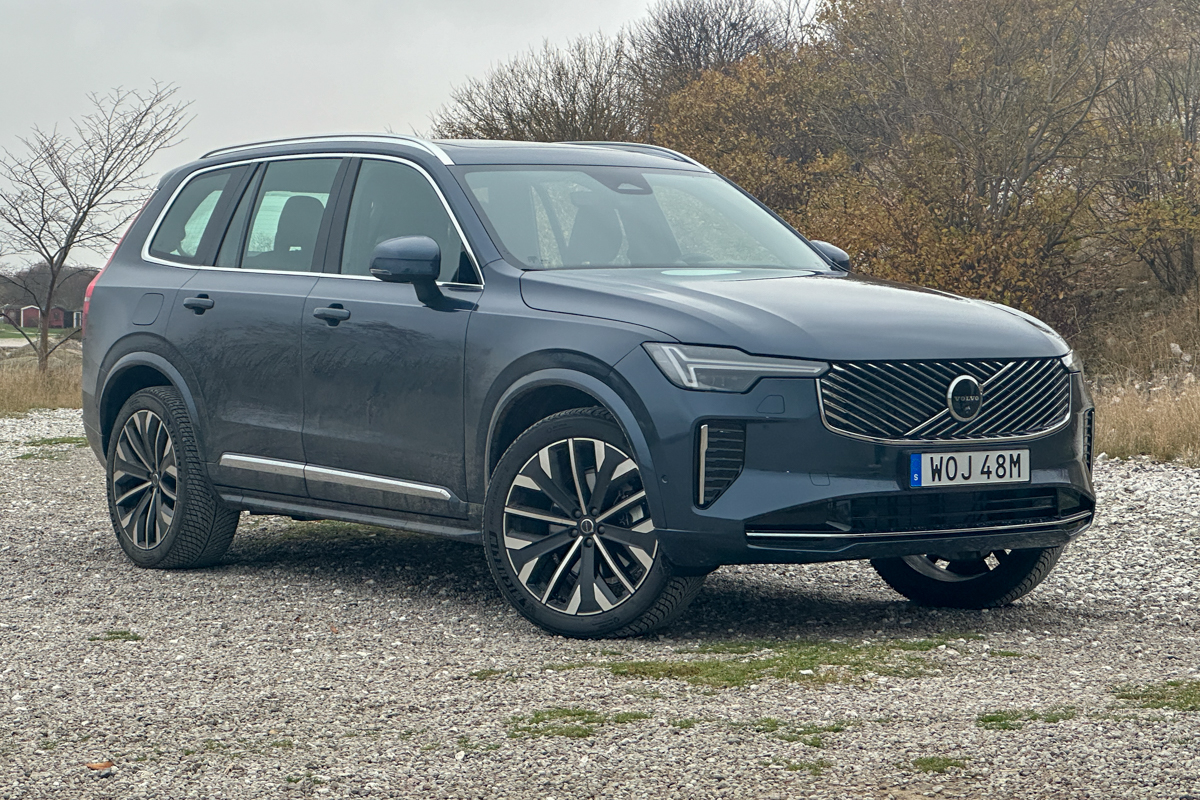
2023 Volvo XC40 Reviews, Pricing & Specs


Pros & cons
What we like
Stylish design
Multiple powertrain options
Comfortable
What to consider
Not much cargo space
Recharge model is expensive
The CarGurus verdict
Volvo’s smallest crossover SUV gets refreshed with a mild-hybrid powertrain.
In Volvo speak, “40” denotes an entry-level model. While the Swedish automaker no longer rosters the S40 sedan or V40 wagon in the United States, the XC40 subcompact crossover remains to compete with the likes of the Audi Q3, BMW X1, Lexus UX, and Mercedes-Benz GLA-Class for aspiring luxury-car owners’ dollars.
The XC40 was unveiled in 2017, arriving in the U.S. as a 2019 model, and hasn’t undergone a redesign since. An all-electric Volvo XC40 Recharge variant joined the lineup as a 2021 model. Volvo’s other current EV, the C40 Recharge, is also broadly similar to the XC40 models, but with a coupe-like body style.
For 2023, Volvo gave the XC40 several notable updates, including new mild-hybrid powertrains, revised styling, and the Android-based infotainment system previously seen on the XC40 Recharge and other Volvo models.
The mild-hybrid lineup includes base Core, mid-level Plus, and top Ultimate trim levels, with B4 front-wheel drive (FWD) and B5 all-wheel drive (AWD) drivetrains. This Volvo XC40 review is based on the Ultimate trim in B5 AWD spec.
out of 10 expert review
Look & feel
The XC40 has been around for a few years now, but it’s still distinctive, combining Volvo’s current design language with a flat-roofed profile that’s very SUV-like. Like other current Volvo models, the XC40 also boasts a clean exterior without extraneous detailing. Models with gasoline engines have hidden tailpipes in keeping with Volvo’s pro-electrification ethos, while fog lights are standard on Plus and Ultimate models.
For 2023, Volvo made some updates to the exterior styling. The automaker’s signature “Thor’s Hammer” headlights have a new pixelated design, the front bumper is now a bit more angular than before, and new wheel designs populate the options list. Even current XC40 owners will probably take a minute to spot these differences, although it will be easier to identify a 2023 Volvo XC40 Recharge, thanks to a new sealed-off grille taken from the C40 Recharge.
The XC40 shares Volvo’s Compact Modular Architecture (CMA) platform with the Volvo C40 Recharge and the Polestar 2 electric vehicles, making the XC40 the only CMA-based model sold in the U.S. that’s available with a combustion engine.
The interior has the same minimalist design as before, with attractive touches like thin air vents framing the central touchscreen, and scalloped elements housing the door handles and speaker grilles. Dual-zone automatic climate control is standard as well, with an optional air purifier. Leather upholstery is available, with vegan leather for Recharge models.
Our XC40 Ultimate test vehicle also had some fancy options, including a panoramic moonroof and an Orrefors crystal shift knob, but the all-black interior seemed like it was designed for Stockholm taxi service. Fit and finish was good, but the materials themselves reminded us that the XC40 is Volvo’s entry-level model.

Performance
A big change for the 2023 model year is under the hood, where Volvo swapped in mild-hybrid powertrains as part of its push to give each model in its U.S. lineup at least some degree of electrification. These add a 48-volt electrical system and 13-horsepower integrated starter generator, which assists the gasoline engine and allows for more use of the engine start/stop system to improve fuel economy, while also filling gaps in its power delivery for added smoothness.
Volvo offers two versions of this setup in the 2023 XC40. The base B4 powertrain teams the mild-hybrid system with a 2.0-liter turbocharged four-cylinder engine producing 197 hp and 221 pound-feet of torque. B5 models get a more powerful 2.0-liter turbo-four rated at 247 hp and 258 lb-ft of torque. An eight-speed automatic transmission is standard with both powertrains, and as noted above the B4 is FWD-only, while the B5 is AWD-only.
Volvo says B4 and B5 models can accelerate from zero to 60 mph in 8.1 seconds and 6.1 seconds, respectively, beating equivalent versions of the Audi Q3. Our B5 test car felt reasonably quick, although the accelerator pedal seemed difficult to modulate, requiring extra initial pressure that made smooth starts a bit tricky. Once we got going, though, the combination of electric assist and turbo boost meant there was always plenty of power on tap. As with all Volvo models, the XC40 is electronically limited to a top speed of 112 mph in the name of safety.
What really stood out about the XC40 was its high level of refinement. While not sporty, it handles corners with composure, and absorbs bumps like a vehicle costing much more. This chassis tuning gives the XC40 a charming calmness, putting it a step above the many similarly-sized crossovers from mainstream brands like Hyundai, Toyota, and Volkswagen. While it doesn’t offer a sport driving mode, Volvo did include the option to increase steering firmness, something we’d skip, as it makes small corrections more difficult.
The XC40 Recharge adds a bit more caffeine to this small SUV’s demeanor. Its two electric motors produce a combined 402 hp and 486 lb-ft of torque, which will get the electric XC40 from zero to 60 mph in 4.7 seconds, according to Volvo, while achieving an EPA-rated 223-mile range. The Recharge can also out-tow the gasoline XC40, with a maximum towing capacity of 4,409 pounds, compared to a best 3,500 pounds for the B5 AWD model.

Form & function
Despite being marketed as SUVs, the Volvo XC40 and its rivals are still fairly small vehicles that are better suited to solo commuting than school-run carpooling. When it comes to practicality, the larger XC60 and XC90 crossovers, or their V60 and V90 wagon counterparts, are better choices.
Among its competitive set, the XC40 is reasonably spacious. It’s tied with the redesigned 2023 BMW X1 for most rear-seat headroom, while front-seat headroom is only a fraction of an inch behind the leading Mercedes-Benz GLA-Class. Legroom in both rows is about average, but a generous amount of shoulder room contributes to a greater feeling of spaciousness—and means you might actually be able to make use of the second-row middle seat without forcing people to squeeze uncomfortably together.
Volvo lists 20 cubic feet of cargo space with the rear seats in place and 46.9 cubic feet with the rear seats folded. That’s less than the BMW X1 and Audi Q3 offer. A power tailgate is standard, though, along with keyless entry on Plus and Ultimate models.
The XC40 does offer good interior storage. The scalloped door panels not only look cool—creating the effect that the armrests are floating in the middle of the doors—but also leave large carve-outs that create more flexibility, accommodating bottles or handbags. The center console storage bin and phone tray are also fairly large considering the interior’s overall dimensions.

Technology
For 2023, gasoline XC40 models get the Android-based infotainment system introduced on the XC40 Recharge for the 2021 model year. This uses Google apps in place of generic ones, so Google Maps serves as the navigation system, voice recognition is handled by Google Assistant, etc. It’s a bit like using Android Auto all the time, although Apple CarPlay and basic Bluetooth support are included as well.
A 12.3-inch digital instrument cluster and 9-inch touchscreen (in Volvo’s typical portrait orientation) are standard. Our B5 Ultimate test vehicle also had a 13-speaker Harman Kardon premium audio system with air-ventilated subwoofer, along with a pair of USB-C ports for each row.
We found the infotainment experience in our test car to be pretty similar to the XC40 Recharge and other Volvo models equipped with the Android operating system. Graphics are universally pleasing, but users who prefer Apple over Android for smartphones might not get as much satisfaction from the Google built-in features.
Part of Volvo’s minimalist design aesthetic also means a lack of analog controls. Aside from a large volume knob, you use the touchscreen for pretty much everything. It seemed like it would have been easier to press a button to activate our test car’s steering wheel and driver’s seat heaters, or to select which driver-assist features we wanted to use. Volvo even gives drivers the option to increase steering firmness through the touchscreen—assuming they can find the menu for it.

Safety
Volvo built its reputation on safety, and that’s reflected in the XC40’s list of standard safety features. Luxury brands often skimp on these features, but the XC40 covers the bases with standard lane keep assist, automatic emergency braking, Oncoming Lane Mitigation, traffic sign recognition, rear parking sensors, blind spot monitoring, and rear cross traffic alert. Front seats designed to prevent whiplash are standard as well.
Upgrading from the base Core trim level to the XC40 Plus adds front parking sensors, while the top Ultimate grade adds side parking sensors, a 360-degree camera system, adaptive cruise control, and Pilot Assist, which can control steering, acceleration, and braking on highways, but remains a hands-on system. The lack of standard adaptive cruise control on the base trim level is one mark against the XC40; most competitors don’t make this feature standard either, but one would expect more of the safety-first Volvo brand.
In the XC40, Pilot Assist also doesn’t offer much more functionality than similar systems available from non-luxury brands. The automated lane centering is a bit smoother, making the system feel less like a novice driver, but we also noticed a tendency to hug the right side of the lane. The 360-degree camera view also had a distorted fishbowl effect that made it less than helpful.
The Insurance Institute for Highway Safety (IIHS) gave the 2023 XC40 top “Good” ratings in most crash tests, but the Volvo was caught out by the IIHS’ updated side-impact test, dropping from a “Good” rating in the original test to an “Acceptable” rating in the updated test.
The IIHS hasn’t published headlight ratings for the 2023 XC40, but the Volvo top “Superior” and second-best “Advanced” ratings for front crash prevention tech in vehicle-to-vehicle and daytime vehicle-to-pedestrian tests, respectively, plus an “Acceptable” rating for child seat anchor ease of use.
The National Highway Traffic Safety Administration (NHTSA) awarded the gasoline 2023 XC40 a five-star overall safety rating, with five stars in frontal and side crash tests, and a four-star rollover rating. The agency hasn’t rated the XC40 Recharge, however.

Cost-effectiveness
EPA fuel-economy ratings for the 2023 Volvo XC40 are 27 mpg combined (24 mpg city, 32 mpg highway) for B4 FWD models and 26 mpg combined (23 mpg city, 30 mpg highway) for B5 AWD models. Those are improvements of just 1 mpg combined and 1 mpg city over 2022’s T4 FWD and T5 AWD models, which lacked the B4 and B5 models’ mild-hybrid system, with highway mpg unchanged. It’s a reminder that the 2023 Volvo XC40 is indeed a mild hybrid, although our observed 27.3 mpg average with the B5 AWD shows improved efficiency is readily achievable in the real world.
Volvo includes a four-year/50,000-mile limited warranty. This is fairly standard coverage, but probably won’t alleviate any buyer skittishness about the added complexity of the XC40’s newly added mild-hybrid components.
Pricing starts at $37,445 for a base XC40 Core with B4 FWD mechanicals (all prices include a mandatory $1,095 destination charge). Our XC40 Ultimate B5 AWD tester had a $47,595 base price, but options including the Climate Package (heated rear seats and heated steering wheel), metallic paint, power tailgate, pixel LED headlights, and 20-inch wheels pushed the as-tested MSRP to $50,190. That’s a pretty typical price climb of a luxury SUV once you pile on the options, but it doesn’t even bring you to the base price of all-electric XC40 Recharge, which starts at $54,645 before options.
The 2023 Volvo XC40 is a competent luxury subcompact crossover, boasting the refined driving experience and upscale design expected of a high-end brand. Looking at rivals, the BMW X1 has been redesigned for 2023 (its coupe-like BMW X2 sibling is likely to follow), most other competitors are fresher designs than the Volvo, and the Lexus UX is available as a full hybrid rated at up to 42 mpg combined. But while the design may be familiar, the XC40 still has everything needed in a good entry-level luxury vehicle. Newer doesn’t always mean better.


What owners say
Brake is a problem in this car- onr has to press hard and all the way to the end to get complete brake.
January 4, 2023Trims & specs
Base MSRP $45,500 | Seating 5 |
Engine 2.0L 247 hp I4 | Cargo Capacity 21.7 cu ft |
Combined MPG 26 | Drivetrain AWD |
Base MSRP $45,500 | Seating 5 |
Engine 2.0L 247 hp I4 | Cargo Capacity 21.7 cu ft |
Combined MPG 26 | Drivetrain AWD |
Base MSRP $42,600 | Seating 5 |
Engine 2.0L 247 hp I4 | Cargo Capacity 21.7 cu ft |
Combined MPG 26 | Drivetrain AWD |
Base MSRP $44,500 | Seating 5 |
Engine 2.0L 194 hp I4 | Cargo Capacity 21.7 cu ft |
Combined MPG 28 | Drivetrain FWD |
Base MSRP $39,900 | Seating 5 |
Engine 2.0L 194 hp I4 | Cargo Capacity 21.7 cu ft |
Combined MPG 28 | Drivetrain FWD |
Base MSRP $49,300 | Seating 5 |
Engine 2.0L 247 hp I4 | Cargo Capacity 21.7 cu ft |
Combined MPG 27 | Drivetrain AWD |
Base MSRP $49,300 | Seating 5 |
Engine 2.0L 247 hp I4 | Cargo Capacity 21.7 cu ft |
Combined MPG 27 | Drivetrain AWD |
Base MSRP $40,750 | Seating 5 |
Engine 2.0L 194 hp I4 | Cargo Capacity 21.7 cu ft |
Combined MPG 28 | Drivetrain FWD |
Base MSRP $40,750 | Seating 5 |
Engine 2.0L 194 hp I4 | Cargo Capacity 21.7 cu ft |
Combined MPG 28 | Drivetrain FWD |
Base MSRP N/A | Seating N/A |
Engine N/A | Cargo Capacity N/A |
Combined MPG N/A | Drivetrain N/A |
Base MSRP $44,500 | Seating 5 |
Engine 2.0L 194 hp I4 | Cargo Capacity 21.7 cu ft |
Combined MPG 28 | Drivetrain FWD |


Pricing trends
MSRP range
$36,350 - $46,500
Current avg. market price
$27,812
Trending down by 2.0% this month
May 2026 - November 2026