Used 2011 Chevrolet HHR for SaleNationwide
Shop with transparent pricing.
Only show listings that include dealer fees- Year:
- 2011
- Make:
- Chevrolet
- Model:
- HHR
- Body type:
- Wagon
- Doors:
- 4 doors
- Drivetrain:
- Front-Wheel Drive
- Engine:
- 172 hp 2.4L I4 Flex Fuel Vehicle
- Exterior color:
- Crystal Red Metallic Tintcoat
- Combined gas mileage:
- 26 MPG
- Fuel type:
- Flex Fuel Vehicle
- Interior color:
- Gray
- Transmission:
- 4-Speed Automatic
- Mileage:
- 96,265
- Stock #:
- U1668A
- VIN:
- 3GNBACFU0BS525483

2011 Chevrolet HHR
2LT FWD
96,265 mi
$7,433
- Year:
- 2011
- Make:
- Chevrolet
- Model:
- HHR
- Body type:
- Wagon
- Doors:
- 4 doors
- Drivetrain:
- Front-Wheel Drive
- Engine:
- 172 hp 2.4L I4 Flex Fuel Vehicle
- Exterior color:
- Crystal Red Metallic Tintcoat
- Combined gas mileage:
- 26 MPG
- Fuel type:
- Flex Fuel Vehicle
- Interior color:
- Gray
- Transmission:
- 4-Speed Automatic
- Mileage:
- 112,024
- Stock #:
- HP1144
- VIN:
- 3GNBACFUXBS647610

2011 Chevrolet HHR
2LT FWD
112,024 mi
$5,618
- Year:
- 2011
- Make:
- Chevrolet
- Model:
- HHR
- Body type:
- Wagon
- Doors:
- 4 doors
- Drivetrain:
- Front-Wheel Drive
- Engine:
- 155 hp 2.2L I4 Flex Fuel Vehicle
- Exterior color:
- Silver
- Combined gas mileage:
- 26 MPG
- Fuel type:
- Flex Fuel Vehicle
- Interior color:
- Black
- Transmission:
- Automatic
- Mileage:
- 70,728
- Stock #:
- 610014
- VIN:
- 3GNBABFW2BS610014

2011 Chevrolet HHR
1LT FWD
70,728 mi
$5,470
- Year:
- 2011
- Make:
- Chevrolet
- Model:
- HHR
- Body type:
- Wagon
- Doors:
- 4 doors
- Drivetrain:
- Front-Wheel Drive
- Engine:
- 155 hp 2.2L I4 Flex Fuel Vehicle
- Exterior color:
- Silver
- Combined gas mileage:
- 26 MPG
- Fuel type:
- Flex Fuel Vehicle
- Interior color:
- Black
- Transmission:
- Automatic
- Mileage:
- 66,996
- Stock #:
- 9084
- VIN:
- 3GNBAAFW6BS562236

2011 Chevrolet HHR
LS FWD
66,996 mi
$7,494
- Year:
- 2011
- Make:
- Chevrolet
- Model:
- HHR
- Body type:
- Wagon
- Doors:
- 4 doors
- Drivetrain:
- Front-Wheel Drive
- Engine:
- 172 hp 2.4L I4 Flex Fuel Vehicle
- Exterior color:
- Victory Red Metallic
- Combined gas mileage:
- 26 MPG
- Fuel type:
- Flex Fuel Vehicle
- Interior color:
- Black (Ebony)
- Transmission:
- 4-Speed Automatic
- Mileage:
- 54,313
- Stock #:
- Z71766
- VIN:
- 3GNBACFU7BS508194

2011 Chevrolet HHR
2LT FWD
54,313 mi
$10,686
- Year:
- 2010
- Make:
- Chevrolet
- Model:
- HHR
- Body type:
- Wagon
- Doors:
- 4 doors
- Drivetrain:
- Front-Wheel Drive
- Engine:
- 155 hp 2.2L I4 Flex Fuel Vehicle
- Exterior color:
- Red
- Combined gas mileage:
- 26 MPG
- Fuel type:
- Flex Fuel Vehicle
- Interior color:
- Gray
- Transmission:
- 4-Speed Automatic
- Mileage:
- 140,488
- Stock #:
- 229070726
- VIN:
- 3GNBAADB8AS591879

2010 Chevrolet HHR
LS FWD
140,488 mi
$6,050
- Year:
- 2010
- Make:
- Chevrolet
- Model:
- HHR
- Body type:
- Wagon
- Doors:
- 4 doors
- Drivetrain:
- Front-Wheel Drive
- Engine:
- 172 hp 2.4L I4 Flex Fuel Vehicle
- Exterior color:
- White
- Combined gas mileage:
- 26 MPG
- Fuel type:
- Flex Fuel Vehicle
- Transmission:
- Automatic
- Mileage:
- 132,307
- Stock #:
- 10028
- VIN:
- 3GNBACDV5AS598388

2010 Chevrolet HHR
2LT FWD
132,307 mi
$5,224
- Year:
- 2010
- Make:
- Chevrolet
- Model:
- HHR
- Body type:
- Wagon
- Doors:
- 4 doors
- Drivetrain:
- Front-Wheel Drive
- Engine:
- 155 hp 2.2L I4 Flex Fuel Vehicle
- Exterior color:
- Blue
- Combined gas mileage:
- 26 MPG
- Fuel type:
- Flex Fuel Vehicle
- Interior color:
- Gray
- Transmission:
- Automatic
- Mileage:
- 32,373
- Stock #:
- C522974
- VIN:
- 3GNBAADB9AS522974

2010 Chevrolet HHR
LS FWD
32,373 mi
$8,447
- Year:
- 2011
- Make:
- Chevrolet
- Model:
- HHR
- Body type:
- Wagon
- Doors:
- 4 doors
- Drivetrain:
- Front-Wheel Drive
- Engine:
- 155 hp 2.2L I4 Flex Fuel Vehicle
- Exterior color:
- Arctic Ice
- Combined gas mileage:
- 26 MPG
- Fuel type:
- Flex Fuel Vehicle
- Interior color:
- Gray
- Transmission:
- Automatic
- Mileage:
- 70,579
- Stock #:
- 507423
- VIN:
- 3GNBAAFW5BS507423

2011 Chevrolet HHR
LS FWD
70,579 mi
$7,175
- Year:
- 2010
- Make:
- Chevrolet
- Model:
- HHR
- Body type:
- Wagon
- Doors:
- 4 doors
- Drivetrain:
- Front-Wheel Drive
- Engine:
- 155 hp 2.2L I4 Flex Fuel Vehicle
- Exterior color:
- Silver
- Fuel type:
- Flex Fuel Vehicle
- Transmission:
- 4-Speed Automatic Overdrive
- Mileage:
- 118,284
- Stock #:
- 560194
- VIN:
- 3GNBABDB0AS560194

2010 Chevrolet HHR
1LT FWD
118,284 mi
$4,629
- Year:
- 2011
- Make:
- Chevrolet
- Model:
- HHR
- Body type:
- Wagon
- Doors:
- 4 doors
- Drivetrain:
- Front-Wheel Drive
- Engine:
- 172 hp 2.4L I4 Flex Fuel Vehicle
- Exterior color:
- Black
- Combined gas mileage:
- 26 MPG
- Fuel type:
- Flex Fuel Vehicle
- Interior color:
- Black
- Transmission:
- 4-Speed Automatic
- Mileage:
- 105,868
- Stock #:
- 4049A
- VIN:
- 3GNBACFU9BS520802

-$1,250
2011 Chevrolet HHR
2LT FWD
105,868 mi
$5,990
$4,990
- Year:
- 2010
- Make:
- Chevrolet
- Model:
- HHR
- Body type:
- Wagon
- Doors:
- 4 doors
- Drivetrain:
- Front-Wheel Drive
- Engine:
- 155 hp 2.2L I4 Flex Fuel Vehicle
- Exterior color:
- Arctic Ice
- Combined gas mileage:
- 26 MPG
- Fuel type:
- Flex Fuel Vehicle
- Interior color:
- Gray
- Transmission:
- Automatic
- Mileage:
- 148,762
- Stock #:
- 554810
- VIN:
- 3GNBAADB7AS554810

2010 Chevrolet HHR
LS FWD
148,762 mi
$5,125
- Year:
- 2011
- Make:
- Chevrolet
- Model:
- HHR
- Body type:
- Wagon
- Doors:
- 4 doors
- Drivetrain:
- Front-Wheel Drive
- Engine:
- 155 hp 2.2L I4 Flex Fuel Vehicle
- Exterior color:
- Gray
- Combined gas mileage:
- 26 MPG
- Fuel type:
- Flex Fuel Vehicle
- Transmission:
- Automatic
- Mileage:
- 88,591
- Stock #:
- Z1295
- VIN:
- 3GNBABFW8BS563331
2011 Chevrolet HHR
1LT FWD
88,591 mi
$8,432
About 2011 Chevrolet HHR
- Year:
- 2011
- Make:
- Chevrolet
- Model:
- HHR
- Body type:
- Wagon
- Doors:
- 4 doors
- Drivetrain:
- Front-Wheel Drive
- Engine:
- 155 hp 2.2L I4 Flex Fuel Vehicle
- Combined gas mileage:
- 27 MPG
- Fuel type:
- Flex Fuel Vehicle
- Transmission:
- 5-Speed Manual
- Mileage:
- 116,056
- Stock #:
- UCF618556
- VIN:
- 3GNBABFW1BS618556

-$300
2011 Chevrolet HHR
1LT FWD
116,056 mi
$5,389
$5,089
- Year:
- 2011
- Make:
- Chevrolet
- Model:
- HHR
- Body type:
- Wagon
- Doors:
- 4 doors
- Drivetrain:
- Front-Wheel Drive
- Engine:
- 155 hp 2.2L I4 Flex Fuel Vehicle
- Exterior color:
- White
- Combined gas mileage:
- 26 MPG
- Fuel type:
- Flex Fuel Vehicle
- Transmission:
- Automatic
- Mileage:
- 185,260
- Stock #:
- P-504910
- VIN:
- 3GNBABFW4BS504910

2011 Chevrolet HHR
1LT FWD
185,260 mi
$3,568
- Year:
- 2011
- Make:
- Chevrolet
- Model:
- HHR
- Body type:
- Wagon
- Doors:
- 4 doors
- Drivetrain:
- Front-Wheel Drive
- Engine:
- 155 hp 2.2L I4 Flex Fuel Vehicle
- Exterior color:
- Gray
- Combined gas mileage:
- 26 MPG
- Fuel type:
- Flex Fuel Vehicle
- Interior color:
- Black
- Transmission:
- Automatic
- Mileage:
- 142,041
- Stock #:
- L99999000
- VIN:
- 3GNBABFW4BS598710

2011 Chevrolet HHR
1LT FWD
142,041 mi
$4,799
- Year:
- 2010
- Make:
- Chevrolet
- Model:
- HHR
- Body type:
- Wagon
- Doors:
- 4 doors
- Drivetrain:
- Front-Wheel Drive
- Engine:
- 155 hp 2.2L I4 Flex Fuel Vehicle
- Exterior color:
- Arctic Ice
- Combined gas mileage:
- 26 MPG
- Fuel type:
- Flex Fuel Vehicle
- Interior color:
- Black (Ebony)
- Transmission:
- 4-Speed Automatic
- Mileage:
- 64,411
- Stock #:
- P928053B
- VIN:
- 3GNBAADB6AS524522

2010 Chevrolet HHR
LS FWD
64,411 mi
$5,798
- Year:
- 2010
- Make:
- Chevrolet
- Model:
- HHR
- Body type:
- Wagon
- Doors:
- 4 doors
- Drivetrain:
- Front-Wheel Drive
- Engine:
- 155 hp 2.2L I4 Flex Fuel Vehicle
- Exterior color:
- Black
- Combined gas mileage:
- 26 MPG
- Fuel type:
- Flex Fuel Vehicle
- Interior color:
- Black (Ebony)
- Transmission:
- 4-Speed Automatic
- Mileage:
- 116,509
- Stock #:
- 1926
- VIN:
- 3GNBAADB9AS511926
2010 Chevrolet HHR
LS FWD
116,509 mi
$5,698
- Year:
- 2011
- Make:
- Chevrolet
- Model:
- HHR
- Body type:
- Wagon
- Doors:
- 4 doors
- Drivetrain:
- Front-Wheel Drive
- Engine:
- 172 hp 2.4L I4 Flex Fuel Vehicle
- Exterior color:
- Black Granite Metallic
- Combined gas mileage:
- 26 MPG
- Fuel type:
- Flex Fuel Vehicle
- Interior color:
- Black (Ebony)
- Transmission:
- 4-Speed Automatic
- Mileage:
- 101,271
- Stock #:
- TBS560763
- VIN:
- 3GNBACFU5BS560763

-$749
2011 Chevrolet HHR
2LT FWD
101,271 mi
$7,798
$7,598
- Year:
- 2010
- Make:
- Chevrolet
- Model:
- HHR
- Body type:
- Wagon
- Doors:
- 4 doors
- Drivetrain:
- Front-Wheel Drive
- Engine:
- 155 hp 2.2L I4 Flex Fuel Vehicle
- Exterior color:
- Crystal Red Metallic Tintcoat
- Combined gas mileage:
- 26 MPG
- Fuel type:
- Flex Fuel Vehicle
- Interior color:
- Black (Ebony)
- Transmission:
- Automatic
- Mileage:
- 126,484
- Stock #:
- 17195
- VIN:
- 3GNBABDB6AS574441

2010 Chevrolet HHR
1LT FWD
126,484 mi
$5,363
- Year:
- 2010
- Make:
- Chevrolet
- Model:
- HHR
- Body type:
- Wagon
- Doors:
- 4 doors
- Drivetrain:
- Front-Wheel Drive
- Engine:
- 155 hp 2.2L I4 Flex Fuel Vehicle
- Exterior color:
- Arctic Ice
- Combined gas mileage:
- 26 MPG
- Fuel type:
- Flex Fuel Vehicle
- Interior color:
- Black (Ebony)
- Transmission:
- 4-Speed Automatic
- Mileage:
- 83,578
- Stock #:
- G516596
- VIN:
- 3GNBAADB6AS516596

2010 Chevrolet HHR
LS FWD
83,578 mi
$7,598
- Year:
- 2010
- Make:
- Chevrolet
- Model:
- HHR
- Body type:
- Wagon
- Doors:
- 4 doors
- Drivetrain:
- Front-Wheel Drive
- Engine:
- 155 hp 2.2L I4 Flex Fuel Vehicle
- Exterior color:
- Red
- Combined gas mileage:
- 26 MPG
- Fuel type:
- Flex Fuel Vehicle
- Interior color:
- Gray
- Transmission:
- 4-Speed Automatic
- Mileage:
- 99,873
- Stock #:
- CYC-579855
- VIN:
- 3GNBABDB3AS579855

2010 Chevrolet HHR
1LT FWD
99,873 mi
$5,976
- Year:
- 2010
- Make:
- Chevrolet
- Model:
- HHR
- Body type:
- Wagon
- Doors:
- 4 doors
- Drivetrain:
- Front-Wheel Drive
- Engine:
- 155 hp 2.2L I4 Flex Fuel Vehicle
- Exterior color:
- Imperial Blue Metallic
- Combined gas mileage:
- 26 MPG
- Fuel type:
- Flex Fuel Vehicle
- Interior color:
- Black (Ebony)
- Transmission:
- 4-Speed Automatic
- Mileage:
- 87,542
- Stock #:
- G513109
- VIN:
- 3GNBAADB9AS513109

2010 Chevrolet HHR
LS FWD
87,542 mi
$8,496
Overview
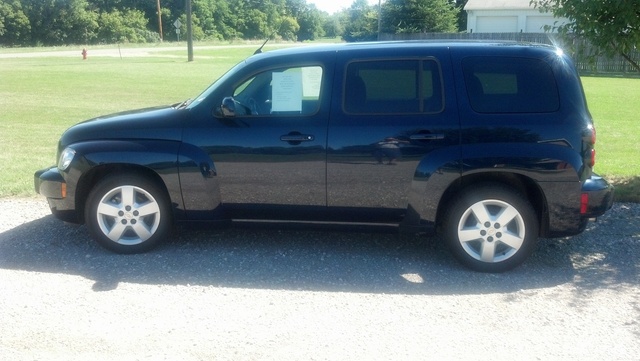
June 7th marks the start of the final year for the HHR – the retro-rod that came too late. It was an ignoble start for the HHR, the car that rose up as a direct challenger to the PT Cruiser. After the Cruiser’s debut in 2000, lead designer Bryan Nesbitt left Chrysler to join GM in April 2001, and in 2005 he tried the same trick again at Chevrolet with the HHR. Now just six years later, 2011 will see the last of the HHRs leave the factory floor, with production officially stopping in May 2012.
Predictably, there’s little new to offer for the HHR in 2011. Some color code reshuffling and an upgraded introductory OnStar package that now includes six months of the Directions and Connections plan with Turn-by-Turn Navigation in addition to the full year of Safe and Sound are the sole changes. That means the same LS/LT trim lineup continues in five-seat regular and two-seat panel configurations, the latter offering a delivery arrangement that deletes rear seats and windows in favor of storage space.
The LS and 1LT trims are powered by a 2.2-liter, inline four-cylinder (I4) engine good for 155 horses, while a 2.4-liter four produces 172 hp and is available as an option in the 1LT trim and comes standard in the 2LT. Both engines are underpowered, but the 2.2-liter is especially so, with its peak torque of 150 not arriving until 4,800 rpm and peak hp showing up 1,300 rpm later. Both engines are capable of running on E85 fuel, however. On regular fuel with the five-speed manual transmission, the 2.2-liter engine produces 22/32 mpg, dropping 2 mpg on the highway with the four-speed automatic. The 2.4 puts up similar numbers – identical to the 2.2 with the five-speed and 22/29 with the automatic.
The real performer is a 2.0-liter, turbocharged inline four that powers the SS trim and produces 250 or 260 hp, depending on whether you opt for the five-speed manual or four-speed auto. The manual feels quicker and gets 21/29 versus the automatic’s 19/29, although the 2.0 isn’t E85-compatible. The SS also gets larger 18-inch alloys, a sport suspension, and special styling to identify it. All trims come with traction control, antilock brakes, and an anti-skid system, as well as daytime running lights, power throughout, and a satellite-ready stereo with digital media connection.
If you’ve always wanted an HHR, this is very literally your last chance. The SS is the way to go, as it’s the only trim that isn’t painfully underpowered. The manual offers a large advantage over the automatic, whether in feel, fun, or fuel economy, but the automatic is still a competent choice. Besides, with the running boards, unique 18-inch wheels, and mesh grille, the SS is by far the most attractive of the bunch.
*CarGurus meticulously monitors the prices of millions of pre-owned vehicle listings, offering users precise and up-to-date market insights. Historical pricing data excludes any additional dealer fees as of May 3, 2026.
4.4 Overall rating
Filter by rating
Danny T
Reviewed a 2011 Chevrolet 2LT FWD on Jan 23, 2013
Nice mid size Chevrolet crossover, loaded with features and room. Can be a sporty fun vehicle for the younger crowd, a cargo vehicle for the working person, or a nice family vehicle. Great gas mileage compared to comparable sized vehicles.
Harold H
Reviewed a 2011 Chevrolet HHR on May 27, 2023
I like it nice car good on gas I love it
Anonymous
Reviewed a 2011 Chevrolet HHR on Sep 21, 2020
Fantastic car- even smells like a new car after 9 years.
Losone P
Reviewed a 2011 Chevrolet HHR on Apr 23, 2024
Needs shocks and new tires. Rides rough but fits my needs for in town use.
2011 Chevrolet HHR Trims
| Trim type | MSRP |
|---|---|
| LS Panel FWD | $19,030 |
| 1LT FWD | $19,720 |
| 2LT FWD | $21,420 |
| LS FWD | $18,720 |
*CarGurus meticulously monitors the prices of millions of pre-owned vehicle listings, offering users precise and up-to-date market insights. Historical pricing data excludes any additional dealer fees as of May 3, 2026.
2011 Chevrolet HHR Price Trends
CarGurus tracks the prices of millions of used car listings every year. See how the average price of 2011 Chevrolet HHR prices has changed over time.
See more price trends2011 Chevrolet HHR Pricing Analysis
Pricing by Popular US Cities
Market Area: Nationwide
Key Insights
- Highest-Price Market: The Washington, DC market leads with an average price of $5,250, indicating a premium demand in the area.
- Best Value: The Miami, FL market offers the lowest average price at $1,699, presenting a significant opportunity for budget-conscious shoppers.
- Inventory Drives Stability: The Washington, DC area also has the most listings at 6, suggesting a stable supply that may help maintain price levels.
City-Level Pricing
| City | Total Listings | Avg Price |
|---|---|---|
| Washington, DC | 6 | $5,250 |
| Chicago, IL | 5 | $2,994 |
| Philadelphia, PA | 5 | $2,799 |
| Los Angeles, CA | 4 | $3,999 |
| Miami, FL | 3 | $1,699 |
Pricing by Trim Packages
Key Insights
- Volume Leader: The LS FWD trim has the highest inventory with 51 listings, indicating strong demand for this base model.
- Premium Spread: The 2LT FWD trim, priced at $21,420, shows a significant premium over the LS FWD trim, which is priced at $18,720, reflecting the added features and desirability.
- Drivetrain Effect: All trims are FWD, suggesting a consistent drivetrain preference among buyers, which may simplify inventory management for dealers.
Trim-Level Details
| Trim | Listings | MSRP | Drivetrain | Engine |
|---|---|---|---|---|
| LS FWD | 51 | $18,720 | FWD | 2.2L 155 hp I4 Flex Fuel Vehicle |
| 1LT FWD | 39 | $19,720 | FWD | 2.2L 155 hp I4 Flex Fuel Vehicle |
| 2LT FWD | 28 | $21,420 | FWD | 2.4L 172 hp I4 Flex Fuel Vehicle |
Pricing Analysis by Model Year
Key Insights
- New-Car Premium: The 2011 model year has a starting MSRP of $18,720, with an average price of $5,301, indicating a significant depreciation since its release.
- Steepest Depreciation: The 2007 model year shows the steepest depreciation at -74.9%, highlighting the rapid decline in value for older models.
- Best Value Sweet Spot: The 2009 model year offers a relatively lower average price of $6,083, making it a potential sweet spot for buyers looking for value without sacrificing too much on age.
Model Year Pricing
| Model Year | Starting MSRP | Avg Price | Avg Price vs Starting MSRP |
|---|---|---|---|
| 2011 | $18,720 | $5,301 | -71.7% |
| 2010 | $18,720 | $5,899 | -68.5% |
| 2009 | $18,720 | $6,083 | -67.5% |
| 2008 | $16,175 | $5,629 | -65.2% |
| 2007 | $16,160 | $4,064 | -74.9% |
| 2006 | $15,890 | $5,590 | -64.8% |
These recommendations are based on CarGurus' proprietary market data from September 30, 2026, CarGurus experts' opinions, and generative AI.
*CarGurus meticulously monitors the prices of millions of pre-owned vehicle listings, offering users precise and up-to-date market insights. Historical pricing data excludes any additional dealer fees as of May 3, 2026.
FAQs
How much does the 2011 Chevrolet HHR cost?
How many 2011 Chevrolet HHR vehicles have no reported accidents or damage?
What is the fuel economy of the 2011 Chevrolet HHR?
What fuel types are available?
*CarGurus meticulously monitors the prices of millions of pre-owned vehicle listings, offering users precise and up-to-date market insights. Historical pricing data excludes any additional dealer fees as of May 3, 2026.

