The Nissan Pathfinder made its debut all the way back in 1985, and was initially designed as a rugged, body-on-frame SUV to tackle serious off-road terrain. Since then, though, it's evolved to meet changing market demands, becoming more of a family-friendly SUV with an emphasis on comfort and technology.
Nissan Pathfinder Buying Guide: Cost, Reliability and the Best Years to Buy
Search for Nissan Pathfinder
See all


Today's Pathfinder competes with other midsize SUVs, such as the Toyota Highlander, the Honda Pilot, and the Kia Telluride. The latest version, introduced for the 2022 model year, heralds a return to the Pathfinder's more rugged look, but maintains a smooth ride and various advanced key features.
It's a nod back to the niche that the Pathfinder initially carved out as a capable and reliable option for families that want versatility without sacrificing comfort or capability.
Nissan Pathfinder Buying Guide: Cost, Reliability, and the Best Years to Buy
- Frequently Asked Questions
- Nissan Pathfinder Pros and Cons
- Nissan Pathfinder Generations
- Fifth Generation (2022-Present)
- Fourth Generation (2013-2020)
- Third Generation (2005-2012)
- Second Generation (1996-2004)
- First Generation (1985-1995)
Frequently Asked Questions
Which Nissan Pathfinder years are the best?
The latest generation of Nissan Pathfinder has been widely acclaimed for its improved technology, upgraded interior, and robust towing capacity. Also highly regarded are models from 2013 to 2020, which strike a similarly good balance between affordability and practicality, boasting reliable V6 engines and ample interior space. If you're looking for true off-road ability, though, the first- and second-generation Pathfinders remain very sought after.
What are the worst Nissan Pathfinder years?
Issues with transmission failures on 2005 to 2007 Pathfinders mean they're generally considered less desirable. These were caused by radiator problems that led to coolant and transmission fluid mixing and causing damage. There were also transmission issues—delayed acceleration, jerking and slipping—with early versions of the fourth-generation Pathfinder, between 2013 and 2015. A $277-million class action lawsuit was settled by Nissan over claims of yet more transmission problems in Pathfinders from 2015 to 2018.
Is the Nissan Pathfinder a good deal?
Yes, the Pathfinder is a strong contender for your money in the midsize SUV market. It offers solid value if you're looking for a comfortable, feature-packed family vehicle. While some models had reliability issues, newer models have addressed many of these concerns, which makes them a compelling choice for both new and used buyers.
Nissan Pathfinder Pros and Cons
Pros:
- Three rows of seats and a spacious interior
- Most models have a powerful V6 engine
- High towing capacity
Cons:
- CVT concerns in some earlier models
- Newer models have limited off-road ability
- Below-average fuel economy for the class
Nissan Pathfinder Generations
Fifth Generation (2022-Present)
Nissan gave the Pathfinder a substantial overhaul for the fifth generation—sometimes known by the model code R53. It brought in a boxier, more rugged appearance while maintaining the comfort and technology expected of a modern family SUV.
Power comes from a 3.5-liter V6 engine with 284 horsepower and 259 lb-ft of torque, with an all-new nine-speed transmission replacing the much-maligned continuously variable transmission (CVT) for better performance and reliability. Despite its rugged looks, the Pathfinder is front-wheel drive (FWD) as standard, but all-wheel drive (AWD) is also available, with seven terrain modes if you need to venture away from the asphalt. A towing capacity of up to 6,000 lbs is one of the best in the class and should easily cope with boats and big trailers, while updated suspension increased roll stiffness for better handling.
Inside, the cabin was modernized over the previous version with improved material quality for a more premium feel, and tech to match—a digital instrument cluster and a nine-inch infotainment touchscreen with Apple CarPlay and Android Auto connectivity are standard features across the range. Higher-spec trims include quilted leather upholstery, a panoramic sunroof and a head-up display.
When it comes to practicality, there's lots of interior space with room for eight as standard, and the Pathfinder can be outfitted with captain's chairs instead of a bench in the second row. Nissan's EZ Flex seating is a one-touch system that lets the seats pitch forward further than usual to allow wider access to the third row, even with a car seat attached.
The Nissan Pathfinder trim levels at launch were S, SV, SL, and Platinum. The Pathfinder S has the basics mentioned above, while the Nissan Pathfinder SV has ProPILOT Assist (a suite of driver assistance systems), heated front seats, and heated wing mirrors.
The Nissan Pathfinder SL has a 360-degree camera system called Intelligent Around View Monitor and wireless Apple CarPlay, while the Nissan Pathfinder Platinum has a 12.3-inch digital dashboard, a head-up display and a wireless charging pad.
On top of all that, cars with the SV Premium Package had the panoramic moonroof, the power liftgate, the receiver hitch, and the second-row captain's chairs with a removable second-row center console. The SL Premium Package includes all that, plus heated rear seats, a wireless charging pad and a Bose Premium Audio system with 13 speakers.
For the 2023 model year, Nissan introduced the Pathfinder Rock Creek model, an off-road inspired variant with tuned suspension, a ⅝-inch suspension lift, 18-inch beadlock-style wheels (with all-terrain tires, naturally) and a tubular roof rack that can carry up to 220 lbs. It was equipped with the second-row captain's chairs, and the V6 engine was turned to 295 horsepower and 270 lb-ft when using premium fuel.
The 2024 model year saw few changes, while 2025 brought in a power liftgate as standard on SV and Rock Creek grades, and Nissan Safety Shield 360—a suite of advanced safety systems—on all models.
For 2026, Nissan gave the Pathfinder a mid-cycle refresh with updated front and rear fascias, satin exterior badges, a restyled dashboard, and a new Baltic Teal color option. The entry-level S trim was dropped, leaving the range as SV, Rock Creek, SL, and Platinum. The standard infotainment touchscreen grows to 12.3 inches, with wireless Apple CarPlay and Android Auto, and the SL gets the digital instrument cluster previously reserved for the Platinum. The Rock Creek, SL, and Platinum models get a 180-degree front camera and an Invisible Hood View, which provides a virtual view through the hood. The wireless phone charger was upgraded with a cooling fan, Qi2 compatibility, and a 15-watt output.
A new Rock Creek Premium package offers a panoramic moonroof, wireless phone charging, a 12-volt power outlet in the cargo area, and a heated steering wheel.
A total of 14 paint colors were offered at launch of the new Nissan Pathfinder, including five two-tone treatments with a contrasting roof.
No major reliability issues have been reported for the latest Nissan Pathfinder. As always with any used buy, ensure that routine maintenance has been carried out, especially on cars with AWD systems.
If you're buying a new Pathfinder, the MSRP as of April 2026 started at $41,445, rising to $53,945, although actual dealership prices can and do vary. For used cars, the average price for a 2022 Pathfinder model is around $27,000, rising to an average of around $33,000 for a 2025 model.
Fourth Generation (2013-2020)
The fourth-generation R52 Nissan Pathfinder marked the transition from the traditional body-on-frame construction to a unibody platform and the comfort and fuel-efficiency focus that came with it.
The 2013 model was equipped with a 3.5-liter V6 engine with 260 horsepower, mated to an Xtronic CVT that was designed to improve fuel efficiency. It featured either FWD or AWD, with mild off-road capability from the latter thanks to a 4WD lock system.
Improved interior space with three rows of seating made it a popular choice for families, as it was more spacious than much of the competition. The base S trim provided tri-zone climate control and an advanced drive-assist display, while the SV trim added conveniences such as a power-adjustable driver's seat and remote engine start. The SL trim upgraded to leather upholstery, a power liftgate, and heated seats, while the range-topping Platinum trim introduced ventilated front seats, a panoramic moonroof, and a Bose audio system.
The 2014 model year saw the introduction of the Pathfinder Hybrid, which features a supercharged 2.5-liter engine with a 15kW electric motor and lithium-ion battery. The hybrid model maintained the Pathfinder's seven seats and cargo capacity but boosted fuel efficiency by 24%, offering 26 mpg combined, according to official figures. You can spot the hybrid models by their LED taillights and Puredrive badging.
In 2015, Nissan added a blind spot warning and rear cross traffic alert to the Pathfinder SL and the Pathfinder Platinum Grades, while AWD models featured hill descent control. The CVT on all models was upgraded to add D-step shift logic, which simulates the steps you get when shifting on a regular transmission (CVTs are stepless).
Revised interior options were added for 2016, while a new Cold Package for the SV trim featured heated front seats, a heated steering wheel, and heated wing mirrors.
A 2017 mid-cycle refresh gave the Pathfinder updated styling, with LED running lights and boosted towing capacity to 6,000 lbs, thanks to a power bump to 284 horsepower from a revised direct injection system. The following year, a Midnight Package was made available for the SL model, adding black exterior elements and 20-inch black alloy wheels. Automatic emergency braking was standardized across the range.
The Nissan Pathfinder Rock Creek Edition arrived in 2019, available on SV and SL grades in both 2WD and FWD. Named after the Pathfinder's rugged heritage, it added dark 18-inch alloy wheels with all-season tires, as well as black exterior elements, a standard tow hitch, and embellishments to the interior.
Also in 2019, intelligent cruise control, blind spot warning and rear cross traffic alert were made standard on SV grades and up, while rear parking sensors and USB-C charging ports were made standard on all models.
Early versions of the fourth-generation Nissan Pathfinder (from 2013 to 2015) had the aforementioned CVT issues, signified by overheating and jerking during acceleration, so watch out for those characteristics during your test drive, in case they haven't been fixed. Whichever year you go for, look for evidence in the maintenance logs that the CVT fluid has been regularly serviced, and check for recalls that could affect the car you're interested in.
Older models of the fourth-generation Pathfinder tend to range between around $10,000 and $18,000, while the refreshed models from 2017 to 2020 cost between $20,000 and $28,000, depending on mileage, condition and trim.
Third Generation (2005-2012)
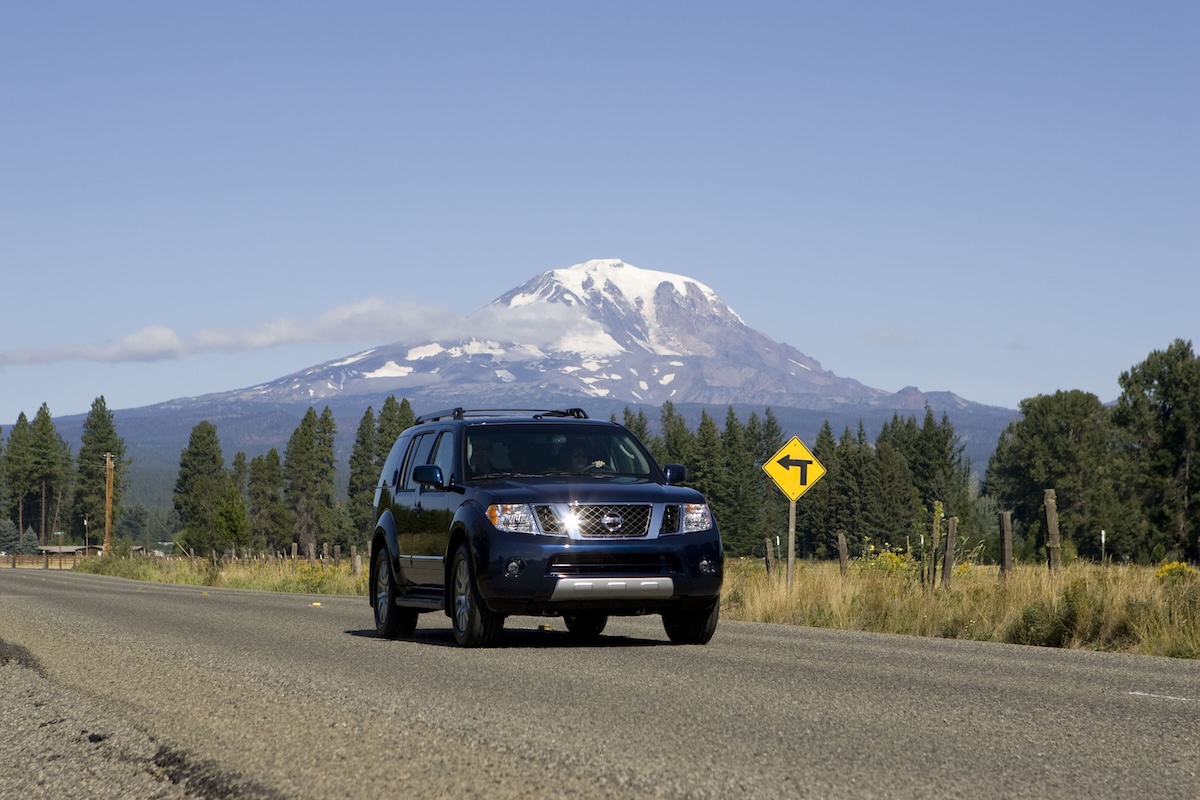
The third-generation R51 Nissan Pathfinder, introduced for the 2005 model year, marked a major evolution, shifting to a truck-based platform shared with the full-size Armada and Titan. This redesign brought increased a bigger footprint, a more rugged appearance, and a significant boost in capability.
For the first time, the Pathfinder offered three-row seating, though cargo space was limited with all seats in use. Under the hood, a 4.0-liter V6 producing 266 horsepower and 288 lb-ft replaced the previous generation's engine, paired with a new five-speed automatic transmission and a towing capacity of up to 6,000 pounds.
Handling was improved with a new independent rear suspension system, and four trims were available: XE, SE, SE Off-Road, and LE. While the Off-Road trim catered to adventurous drivers with skid plates and Hill Descent Control, the LE trim leaned toward luxury with heated leather seats. Owners praised the added power, storage versatility, and overall utility, though complaints centered around a cramped third row, a firm truck-like ride, and sub-par fuel economy.
The All-Mode 4WD system included selectable 2WD, Auto, 4H, and 4LO modes, giving drivers flexibility for different conditions. In 2008, V8 models featured a full-time XN All-Mode 4WD system that automatically adjusted torque distribution for improved traction and cornering stability.
In 2008, a 5.6L V8 option was introduced, increasing output to 310 horsepower and 388 lb-ft of torque, significantly boosting towing capacity to 7,000 lbs.
The 2009 model year brought further refinements, including standard side and curtain supplemental airbags on all models, and new standard 18-inch alloy wheels on the LE V6 trim.
For 2010, the Pathfinder lineup remained largely unchanged but gained a standard moonroof on the LE-V6 trim and a standard Nissan Navigation System on the LE-V8. A new exterior color, Dark Slate, was introduced. Additionally, two new option packages were offered: the LE-V8 Value Package, which included a rear-seat DVD entertainment system and a power moonroof, and the SE Premium Journey Package, which added premium audio, roof rack crossbars, and Nissan Intelligent Key which saves you fishing the key from your pocket to unlock the car.
In 2011, Nissan introduced a special Silver Edition model to commemorate the Pathfinder's 25th anniversary, featuring exclusive 17-inch machine-finished aluminum-alloy wheels, exterior chrome inserts, a Bose 10-speaker audio system, and Silver Edition badging. That year, the SE trim was replaced with the SV trim, which included an eight-way power driver's seat, a seven-inch multi-function information display, and roof rack crossbars.
For 2012, the Pathfinder lineup remained mostly unchanged, but the Nissan Navigation System was made standard on LE trims and a power moonroof and DVD mobile entertainment system were added to the options list.
Despite its rugged appeal, the 2005–2012 models were prone to transmission failures caused by radiator fluid leaking into the transmission, a known issue that prospective buyers should verify has been addressed. Suspension components also tended to wear quickly, particularly on vehicles that were frequently used for towing. Rust is another concern, especially in older models.
Pricing ranges from $6,000 to $12,000 for earlier models and up to $18,000 for well-maintained 2008–2012 models, depending on mileage and condition.
Second Generation (1996-2004)
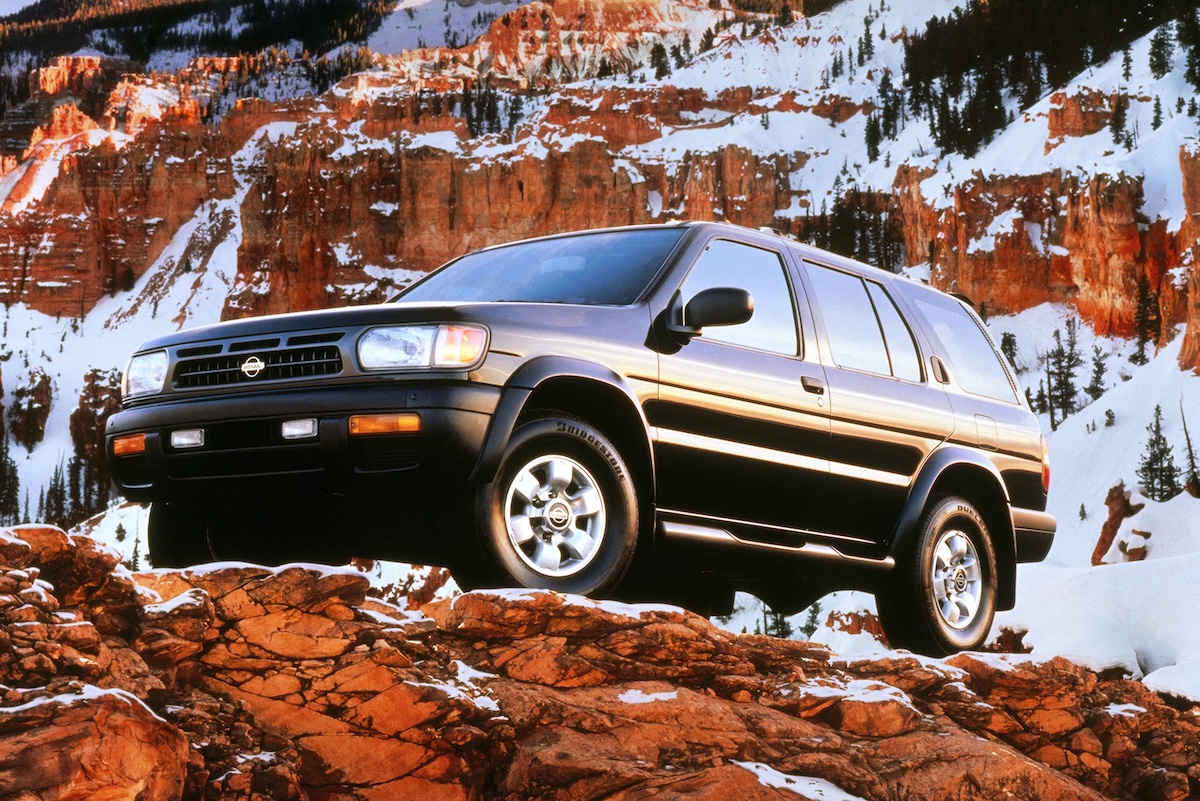
The second-generation R50 Nissan Pathfinder, introduced for the 1996 model year, marked a departure from its predecessor, shifting from a body-on-frame design to a unibody construction. This transition improved ride comfort and handling while maintaining at least some of the Pathfinder's rugged appeal. The exterior was modernized, with smoother lines and a more aerodynamic profile, while the interior saw improved materials and an increase in passenger space.
Under the hood, early models featured a 3.3-liter V6 producing 168 horsepower and 196 lb-ft of torque, paired with either a five-speed manual or a four-speed automatic transmission. While adequate for daily driving, the engine was underpowered compared to competitors. In 2001, Nissan introduced a more potent 3.5-liter V6, increasing output to 240 horsepower and 265 lb-ft of torque, and that significantly improved performance and towing capacity, which maxed out at 5,000 pounds.
Four-wheel drive models featured Nissan's All-Mode 4WD system, allowing drivers to switch between 2WD, Auto, 4H, and 4LO modes for various terrain conditions. The Pathfinder remained a capable off-roader, but with improved road manners, it appealed to a broader audience seeking an SUV for everyday use.
Trims included the base XE, the mid-range SE, and the top-tier LE. The SE trim offered sportier styling with larger wheels, while the LE trim emphasized luxury with available leather upholstery, woodgrain trim, and a premium Bose audio system. A Rock Creek Edition package, introduced in 2001, added unique badging, upgraded wheels, and rugged styling cues.
In 1999, the Pathfinder received a mid-cycle refresh with updated exterior styling, a revised interior, and new safety features, including side-impact airbags. The 2001 model year saw the introduction of the more powerful 3.5-liter engine, which greatly enhanced acceleration and driving dynamics.
Overall, the second-generation Pathfinder struck a balance between rugged capability and daily usability, making it a solid choice in the midsize SUV market. Well-maintained examples from 2001–2004 with the 3.5L engine remain the most desirable on the used market, because they offer a better blend of power, comfort, and reliability.
Despite its improvements, the second-generation Pathfinder had some drawbacks. Early 3.3L models were sluggish, and fuel economy remained unimpressive. Additionally, timing belt replacements were required on the 3.3L engine, and oil leaks and worn suspension components were common concerns over time.
Well-maintained examples of the second-generation Pathfinder typically sell for $2,500 to $6,000, although they're becoming increasingly hard to find.
First Generation (1985-1995)
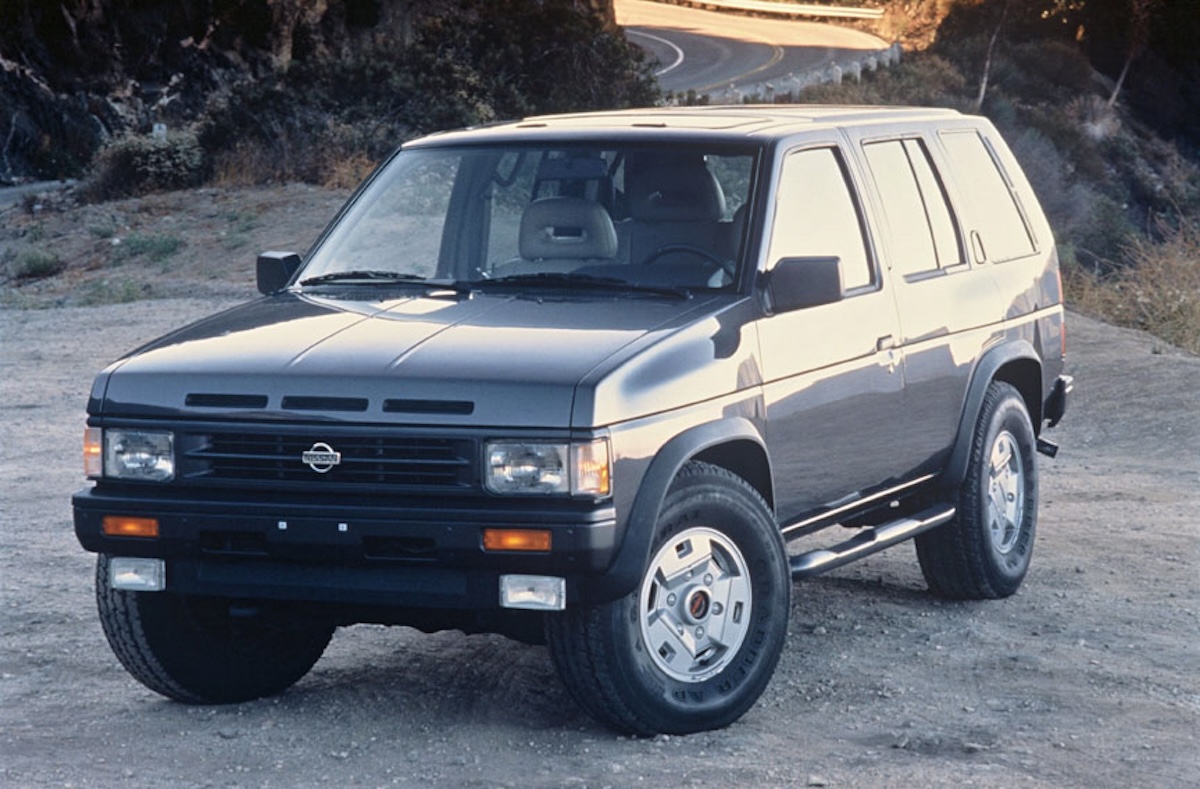
Unveiled in 1985 for the 1986 model year, the first-generation Nissan Pathfinder, codenamed YD21, soon established itself as a rugged, off-road-capable SUV with a truck-based, body-on-frame design. Initially available only as a two-door model, it featured bold, squared-off styling and a durable chassis shared with the Nissan Hardbody pickup. In 1990, Nissan added a four-door variant, making the Pathfinder more practical for families and everyday use.
Power came from a 2.4-liter four-cylinder engine producing 106 horsepower, but most buyers opted for the more robust 3.0-liter V6, which delivered 145 horsepower and 180 lb-ft of torque. While underpowered by modern standards, the V6 provided enough capability for off-road adventures and some light towing, too. It was paired with either a five-speed manual or a four-speed automatic transmission, and four-wheel drive models were equipped with a manual transfer case and locking hubs for more serious off-road use.
The first-generation Pathfinder's simple but functional interior reflected its utilitarian nature. Early models featured hard plastics and basic cloth seats, with higher trims offering optional power windows, air conditioning, and a sunroof. Cargo space was generous with the rear seats folded, and the spare tire was mounted externally on a swing-away carrier to maximize interior room.
The original Pathfinder set the foundation for Nissan's SUV lineup, offering a rugged alternative to the Toyota 4Runner and the Ford Bronco II.
Though praised for its durability and off-road ability, the first-generation Pathfinder was prone to rust, and early automatic transmissions were known to be problematic. Many customers found the rear seats difficult to access in two-door models, making the four-door variant a more popular choice later in production.
Today, well-maintained examples of the first-generation Nissan Pathfinder are increasingly rare. If you can find them, you'll likely find prices ranging from $2,000 to $5,000, depending on condition.
Related Topics:


by Phill Tromans
Phill Tromans has spent more than 15 years as a motoring writer for the likes of Auto Trader, Autocar, Fleet News, CarGurus and more, covering everything from road trips and road tests to industry news and interviews.
The content above is for informational purposes only and should be independently verified. Please see our Terms of Use for more details.


