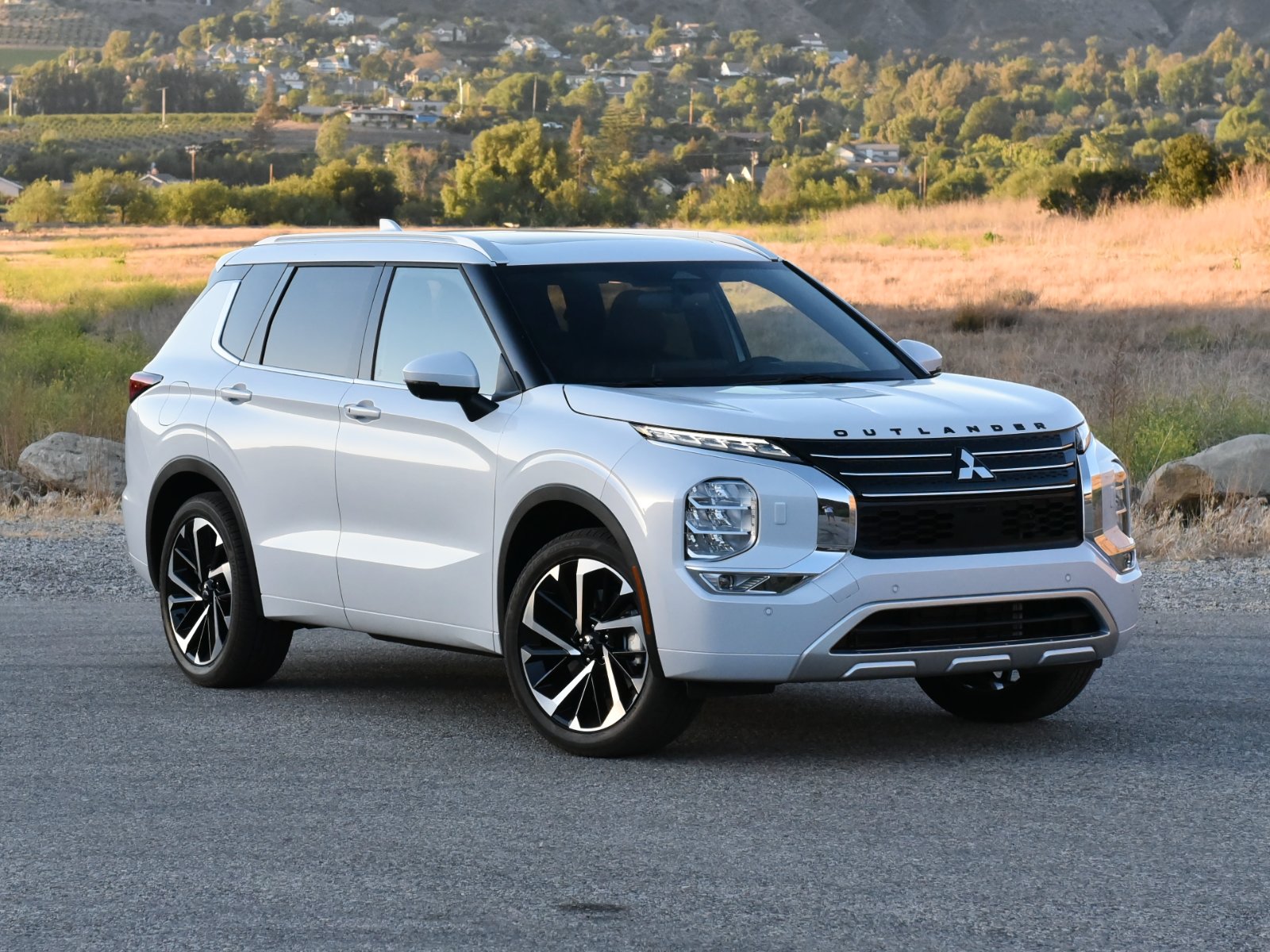
The Mitsubishi Outlander Sport is one of the longest-running models in the subcompact crossover class, having been introduced for the 2011 model year. It hasn’t changed much in that time and remains one of the most affordable options in the sector, undercutting rivals such as the Kia Seltos, the Hyundai Kona, and the Toyota Corolla Cross on price. It’s never been especially cutting-edge, and the Outlander Sport’s lackluster power output and plasticky interior let it down, but later examples benefit from standard all-wheel drive and good reliability.
While some sources say there are two generations of the Outlander Sport, Mitsubishi itself states that there is just one continuous generation with two major facelifts. The platform and mechanicals are essentially the same as when the vehicle was introduced in 2011. While this is an unusually long lifecycle, the benefit is that most of the bugs have been worked out.
Buyers who want Apple CarPlay and Android Auto should check the details, because support for these useful features started to appear in 2017 models, but not across all trim levels. Widespread availability didn’t arrive until 2020, and even now it’s not standard on low-spec models with the 7-inch screen.
For those in the market for an AWD compact SUV and who want a good deal, the Mitsubishi Outlander Sport with its solid post-2020 reliability record is a decent place to start. Our buying guide looks at how the model has evolved over time, the best and worst versions to buy, and how much shoppers can expect to pay.
Mitsubishi Outlander Sport: Cost, Reliability, and the Best Years to Buy
Frequently Asked Questions
Which Mitsubishi Outlander Sport years are the best?
The Mitsubishi Outlander Sport has fewer recalls and consumer complaints than earlier models from the 2017 model year onwards. While the Outlander Sport now feels dated due to its unusually long production run, the benefit is that most reliability issues have been sorted out. We recommend looking at post-2020 models, because they have next to no recalls and include modern tech such as Apple CarPlay and Android Auto.
What are the worst Mitsubishi Outlander Sport years?
The 2015 Mitsubishi Outlander Sport has the most consumer complaints of any model year by far, though 2016 is a close second. CarComplaints.com calls 2013 the worst year due to electrical problems, so anything before 2017 is generally best avoided.
Is a used Mitsubishi Outlander Sport a good deal?
The Mitsubishi Outlander Sport generally has weak resale values, which is good news for those looking for an affordable option but not so good at trade-in time. On balance, we’d consider it a good deal, because used examples from the 2020 model year are at least half the price of the original MSRP. Solid deals can still be had for 2023 models, with the average price ringing in at about $17,000 when original prices ranged from $24,000 to $30,000.
Mitsubishi Outlander Sport Pros and Cons
Pros:
- Standard all-wheel drive
- Easy to park and drive
- Affordable
Cons:
- Cheap interior materials
- Rough ride
- Weak engine
Mitsubishi Outlander Sport Generations
Mitsubishi Outlander Sport First Generation (2011–Present)
The Mitsubishi Outlander Sport became a part of the emerging subcompact crossover segment when it was introduced in North America. It provided a sedan-like ride but added utility with hatchback access, a higher ride height, and available all-wheel drive (which Mitsubishi calls All-Wheel Control). The Outlander Sport has a shortened version of the platform used in the Outlander, and in other markets is known as the ASX. The focus for this new model was fuel efficiency and affordability.
At launch, it was equipped with a 148-horsepower, 2.0-liter, four-cylinder engine paired with a five-speed manual (on the ES trim only) or a continuously variable transmission. There were just two trims: the ES and SE.
Standard features on the ES included cloth seats, heated side mirrors, cruise control, tilt/telescoping steering wheel, and a four-speaker audio system. Standard features for the SE included fog lights, rain-sensing wipers, climate control, and HID headlights. Options included a nine-speaker Rockford Fosgate sound system, panoramic glass roof, and navigation.
The Outlander Sport got a minor facelift in 2013 with new front and rear bumpers, standard 18-inch wheels, and improved sound insulation. This year also included an LE (Limited Edition) trim to celebrate 30 years of Mitsubishi in the U.S.
For 2015, Mitsubishi introduced a new powertrain to address complaints about the Outlander Sport's lack of performance. This new engine was a 168-hp, 2.4-liter four-cylinder, and only available with the new top-tier GT trim.
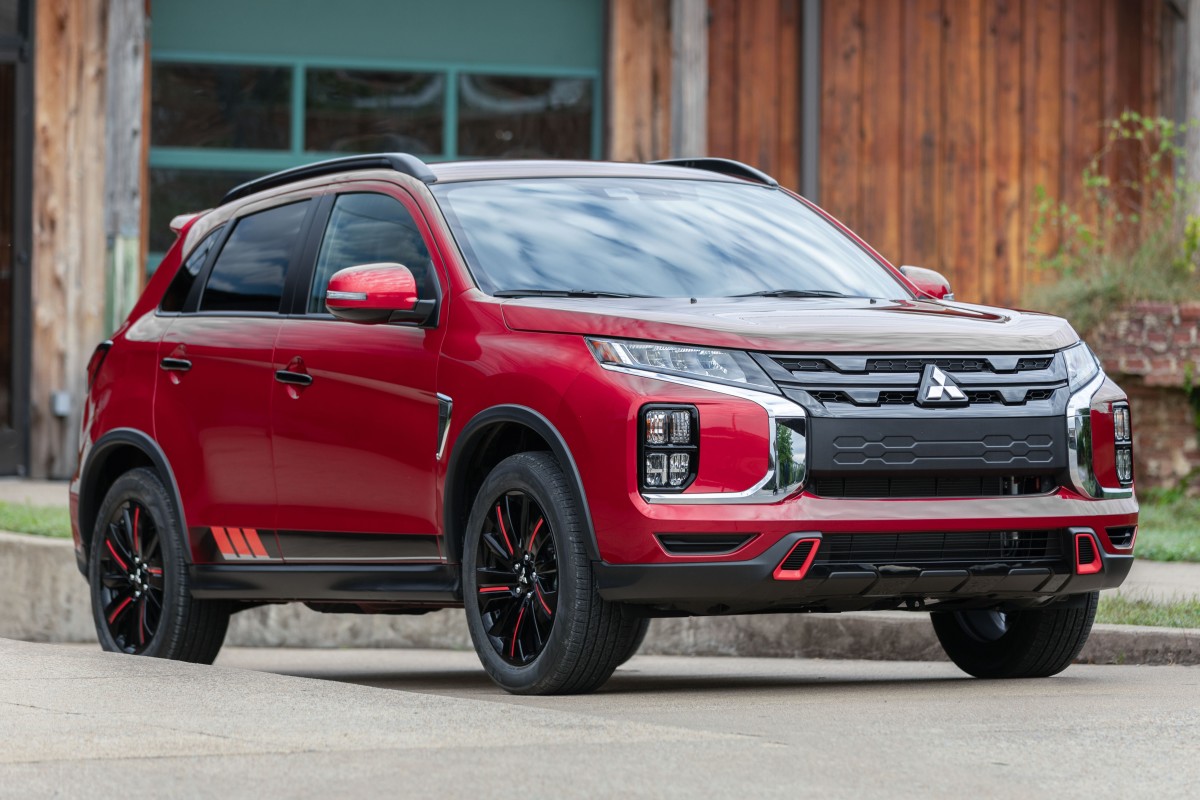
A more significant facelift took place for the 2016 model year, with a “Dynamic Shield” front end, which featured a new grille and bumpers and brought the Outlander Sport into line with Mitsubishi's larger SUVs. Standard wheel-arch moldings and LED turn signal indicators for the door mirrors gave a more rugged appearance, while the interior benefited from a new steering wheel and revised HVAC controls. The higher-end SEL trim—available only with the more powerful 2.4-liter engine—was also introduced.
In 2017, an LE trim was added between the ES and SE, and the SE was upgraded to the 2.4-liter engine. Apple CarPlay and Android Auto started to show up in higher-spec models at this time. Apple CarPlay and Android Auto were rolled out to more models in 2018 and 2019, while the GT trim was dropped for a year then returned, replacing the SEL trim.
The next major refresh was in 2020, with an entirely new front end featuring a much sharper appearance, while fresh rear bumper and taillight designs brushed up the rear. While powertrain options remained the same, the five-speed manual transmission was discontinued this year. Trims included ES, SP, SE, BE, and GT.
Standard features now included automatic climate control, a 7-inch touchscreen audio display, 18-inch wheels, and LED headlights. Starting with the SP trim, buyers got heated front seats, an 8-inch touchscreen display with Apple CarPlay and Android Auto, a roof spoiler, and voice-recognition controls. Features available with higher trim levels included LED fog lights, rain-sensing wipers, a leather-wrapped steering wheel, black roof rails, and push-button start. Only the GT model got the 2.4-liter engine.
Over the next few years there was some trim shuffling in the Outlander Sport lineup, with specs varying slightly. A new entry-level S trim was added in 2021, the ES got more standard features, and the LE trim reappeared. In 2022, the BE (Black Edition) model disappeared, but both the SE and GT got special editions. A Ralliart model appeared in 2023, but the biggest news for that year was that all-wheel drive became standard across the lineup. While this change made the Outlander Sport appear more rugged, it also added to the value proposition, because AWD remained a cost option for alternatives such as the Honda HR-V and the Toyota Corolla Cross.
In 2024 the GT was renamed the SEL, but this year also added the Trail Edition with black hood graphics, black side and fender moldings, a black hood protector and tailgate trim, black inner door handle protectors, mud flaps, and all-weather floor mats. The 2025 and 2026 model years were essentially carryovers.
Shoppers will find a wide range of prices for a used Mitsubishi Outlander Sport, because of the length of its production run. In a nationwide search, we saw prices range from $3,300 for a 2011 SE trim with AWD to $30,600 for a 2025 LE with AWD.
There are some good deals at about $6,000 for the 2011 to 2015 model years before the first refresh. Prices are around $10,000 for cars built between 2016 and 2019—before the second refresh—while our sweet spot of between 2020 and 2023 has a range of about $12,000 to $25,000. Buyers should be able to find clean, low-mileage options at around the $17,000 price point.
Related Topics