Subaru struck first, bringing over the Impreza WRX in 2002. Mitsubishi responded by bringing over the Evo a year later. Buyers loved it, though its big price and mechanical complexity meant it was never a big seller. Even so, Mitsubishi stuck with it until 2015, despite the manufacturer gradually losing interest in rallying and updating the Evo after its hugely successful racing run in the late 1990s and early 2000s.
Today, the Evo is already a collector car, even though the newest ones are barely ten years old. The basic Lancer itself was fairly forgettable and has largely disappeared from U.S. roads, but the Evo’s performance pedigree and extroverted style mean it’ll always have a cult of devoted fans. If you’re looking for an Evo, we’ve broken down each U.S. market generation here and included some advice about what to watch out for and what to pay.
Older pre-1999 Evos are now eligible for relatively easy importation to the U.S., so you may find some for sale occasionally, but they’re still pretty rare. We've included a basic primer about them.
Mitsubishi Lancer Evolution Buying Guide: Cost, Reliability, and the Best Years to Buy
Frequently Asked Questions
Which Mitsubishi Lancer Evolution years are the best?
For a peaky, turbocharged car that’s built to be pushed to its limit, the Lancer Evolution is remarkably reliable and easy to live with in all of its generations. There are some years that are better than others, however. The Evo VIII, the first one to come to the U.S. and sold in 2003 and 2005, was an improved version of the Evo VII, and remarkably sorted out, as was its replacement, the Evo IX, sold from 2006 to 2007. The later Evo X got off to a rocky start, but later models from 2012 to 2015 are also very desirable.
What are the worst Mitsubishi Lancer Evolution years?
2008 to 2010 Evo X models seem to come in for more criticism than other years, possibly because these were the first three seasons of a new design. The main cause of trouble appears to be failed Active Yaw Control (AYC) pumps, which cost about $1,400 to replace. The car isn’t really safe to drive without one, though it can be driven slowly. They tend to fail every 50,000 to 60,000 miles, so it’s essentially a built-in expense. Some earlier Lancer Evolutions also have AYC pumps (though not the U.S.-spec Evo VIII and Evo IX), which can have similar problems, but the issue seems more pronounced in the early Evo X.
Is a used Mitsubishi Lancer Evolution a good deal?
Yes, if you shop carefully. When it was new, the Evo was a great mixture of serious performance and day-to-day practicality, and it still has the moves and the space to be a delightfully fun year-round daily driver. However, many have been modified, which can shorten their lifespan considerably. There isn’t as much aftermarket support for the Evo as there is for the Subaru WRX STI, and certainly, there are no specialist shops for Mitsubishis as there are for Subarus generally. It’s also not cheap for a car over ten years old, but given its huge enthusiast following, prices will likely rise in the future.
Mitsubishi Lancer Evolution Pros and Cons
Pros:
- Vigorous performance
- Day-to-day all-wheel-drive sedan practicality
- Turn-key racer for the road
Cons:
- Cheap interior materials
- Harsh ride quality
- Bloated by the end of its run (Evo X)
Mitsubishi Lancer Evolution Generations
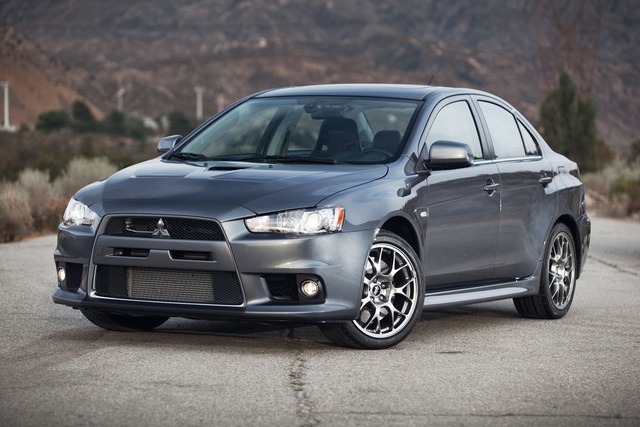
Mitsubishi Lancer Evolution X (2008-2015)
Introduced in 2008, the Lancer Evolution X was the car’s first total redesign in eight years and was based on the redesigned ninth-generation regular Lancer. It was also the first to use an engine other than the famous 4G63. The Evo X was offered in GSR and MR versions, both using a turbocharged and intercooled 2.0-liter inline four-cylinder turbo engine, the new 4B11T design. In the early years of the X, it made 291 horsepower and 300 pound-feet of torque, routed to all-wheel drive. This combination allowed it to do zero to 60 in about 5 seconds. It was spirited car, even if it was heavier than its predecessors.
If you want to row your gears, look to the GSR trim, which used a five-speed manual transmission. The MR trim featured a six-speed Twin Clutch Sportronic Shift Transmission. This automatic features a manual shift mode with steering wheel-mounted magnesium paddle shifters. It makes fast and precise shifts, so it’s good if your aim is more on quicker lap times than the raw joy of the manual, but the MR tends to require more maintenance. The manual, on the other hand, will eat clutches in 30,000 miles if driven hard.
The MR features Normal, Sport, or Super Sport modes, each with its own transmission shift mapping. The Evo X GSR's fuel economy is 16 mpg city, 22 highway, and 18 combined. The MR is slightly more fuel-efficient, returning 17 mpg city, 22 highway, and 19 combined.
The Evo X features a functional rear spoiler, antilock brakes with Brembo calipers, and Super All-Wheel Control (S-AWC), Mitsubishi’s name for its all-wheel drive system. The Evo X, like earlier Lancer Evolutions, also has an Active Yaw Control (AYC) system. S-AWC regulates torque at each wheel for optimal grip in cornering, AYC adapts the suspension to respond to roll and yaw. Like earlier versions, the Evo X is an impressive handler and much more lively on a twisty road than the standard Lancer. The fully independent suspension and front-and-rear stabilizer bars help keep the car firmly planted through hard cornering.
Inside, the Evo X featured an enthusiast-focused cockpit, including grippy Recaro bucket seats with integrated side airbags. The high-contrast instrumentation was designed to make critical information easily readable even during spirited drives. As for equipment, expect power windows, power door locks, and cruise control. Other standard features included a 140-watt, six-speaker stereo. Selecting the MR trim added Bluetooth connectivity as standard equipment.
Owners generally loved the Lancer Evolution for its handling and performance. Some even place it above the WRX STI in terms of handling refinement, but the drab interior wasn’t to everyone’s liking, especially since the Evo cost quite a bit more than the regular Lancer it borrowed most of its furniture.
There were a few other trims throughout the years. The MR touring added heated front seats, upgraded interior materials, and a sunroof, while the MR Premium had an upgraded audio system. The SE (2010 and 2011) used the TC-SST transmission but got special Eibach springs and Bilstein struts, a special key fob, and a letter from Mitsubishi’s then-President Shin Kurihara. The Final Edition (2015 only) got special wheels and a power bump to 303 horsepower and 305 pound-feet of torque.
The Lancer Evolution X is the most common of the Evo models in the U.S., so it’s easier to find than any of the earlier models, but it also has the most mixed reliability record. It’s quite a durable car, but clutches and differentials can wear out quickly when driven hard. The AYC Pump is a regular item that fails, particularly in 2008 to 2010 models. Many have also been modified. While some modification is probably alright, this engine is already highly stressed. Most Evo tuners don’t recommend pushing it past 400 horsepower, and modified examples tend to be used hard.
This Evo is already expensive, but it’s a bargain compared to the earlier models. You can pick up worn out ones for less, but if you’re looking for a clean Lancer Evolution X with under 100,000 miles, they start at around $19,000. Many of them, particularly any upgraded special editions, run for $27,000 to $33,000, and these numbers probably won’t go down over time.
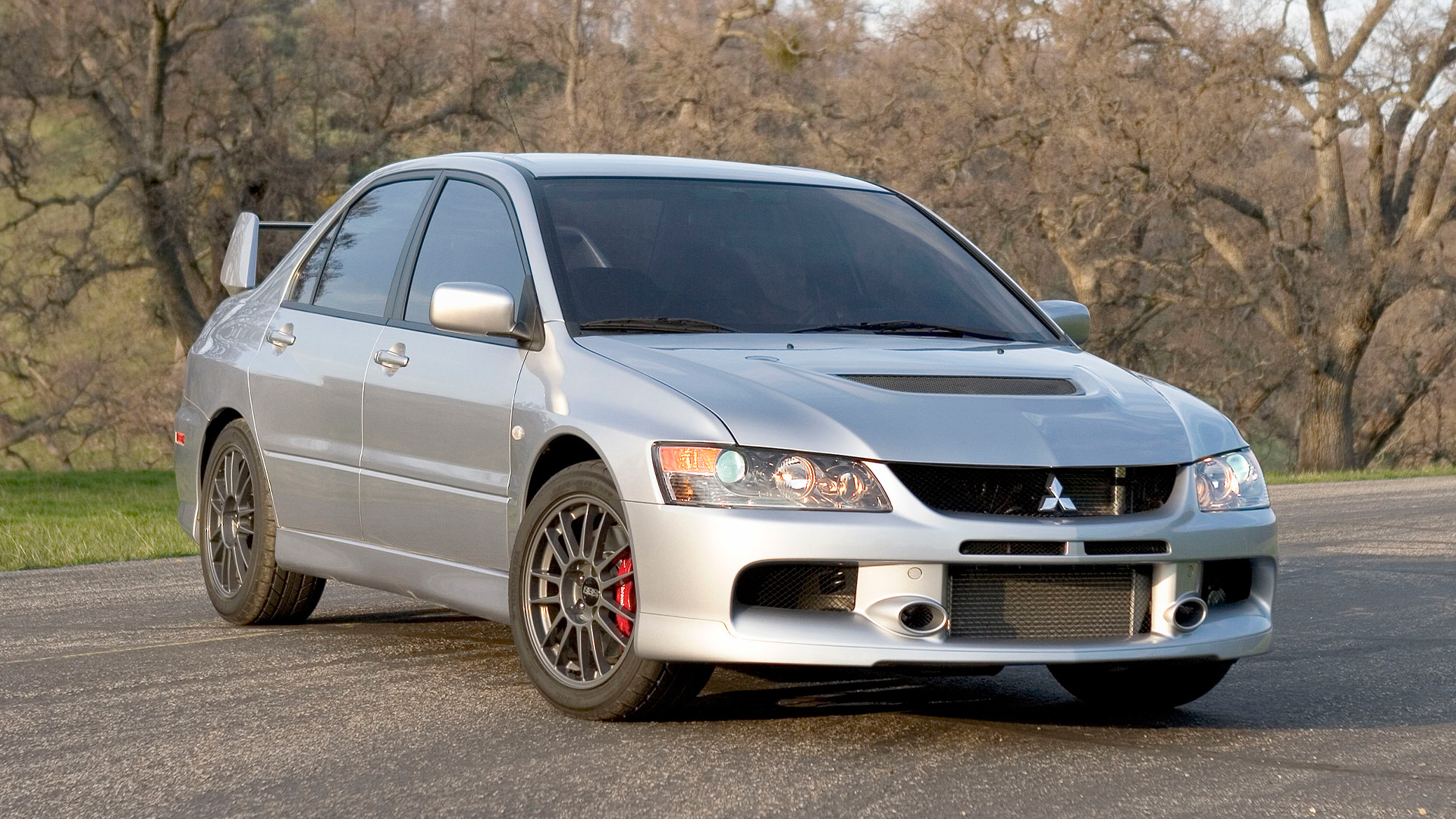
Mitsubishi Lancer Evolution IX (2006-2007)
As the name suggests, the Lancer Evo IX was an evolution rather than a complete rethink. It is a heavy facelift of the earlier Evo VIII, but it also featured some powertrain updates. It’s the last model to use the old 4G63 engine that had powered the Evos up to this point. This version's 2.0-liter turbocharged four makes 286 horsepower and 289 pound-feet of torque. Power is routed through a 5-speed manual transmission or a 6-speed manual, depending on which trim you choose.
There were four basic specs, the standard GSR (Grand Rally Sport, the stripped-down lightweight RS (Rally Sport), the well-equipped SE (Special Edition), and the automatic MR (Mitsubishi Racing). They all have the same engine and mechanical pieces. Still, the MR saves weight by eliminating equipment such as the rear spoiler and the stereo system, power windows and locks, trunk lining, rear windshield wiper, and sound insulation of the SE and MR models. This was the car for people who actualy wanted to build rally cars out of the Evo IX. For civilians, the other trims are much better equipped and not much slower in the real world.
This Evo could rocket to 60 mph in 4.5 seconds, and the best-equipped one was the MR. It got Bilstein shocks, xenon headlights, vortex generators on the back of the roof, fog lights, and special BBS wheels. The other Evo IXs still used Recaro bucket seats, Brembo brakes, Enkei wheels, and air diffusers.
Mitsubishi also offered packages to dress up the rather plain interior, including the SSL (Sun, Sound, and Leather), and much of that equipment was integrated into the SE. One absent thing was the Active Yaw Control (AYC) system, which was not incuded on the U.S.-market Evos until the Evo X, meaning this trouble-prone system isn’t an issue on these cars. However, it kept the Active Center Differential (ACD) system, with its selectable terrain modes and torque optimization.
The Evo IX was the fastest of the classic Evos and arguably the best looking, and it was also the shortest lived in the U.S., on sale from late 2005 to late 2007. As a result, it’s expensive now. Most clean, well-preserved examples fall into the $45,000 to $50,000 range. It’s possible to find cheaper ones, but they might not be in as good condition or they might be modified. As with any Evo, modified ones tend to be used hard and put away wet, which can shorten their lifespan. A mechanical inspection is advised. The good news? Those prices will probably increase in the future.
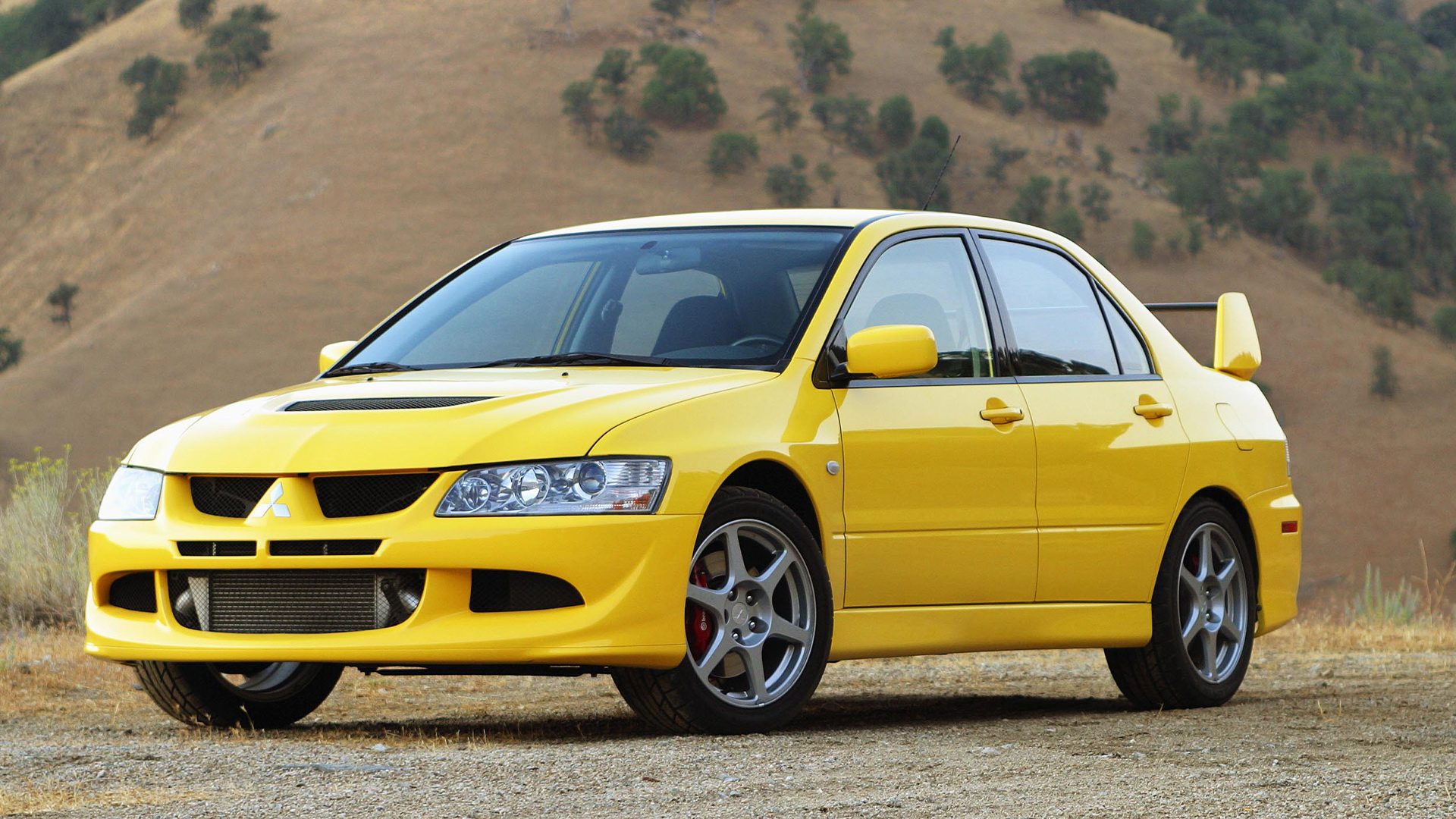
Mitsubishi Lancer Evolution VIII (2003-2005)
Boosted by the appearance of the Evo VII in “2 Fast 2 Furious,” the Evo VIII was the first Lancer Evo widely sold in the United States. It was designed to compete with the Subaru Impreza WRX, just as it did in the World Rally Championship. Both are based on frugal compact sedans, built out with beefed-up engines, focused chassis, and sophisticated AWD powertrains.
The Evo VIII featured the same turbocharged four-cylinder engine as the previous Evo, this time making 271 horsepower and 273 pound-feet of torque in the RS and GSR trims. In the Evo MR trim, it produced 276 horsepower and 286 pound-feet of torque. The Evo VIII made 44 more horsepower than the Subaru WRX, and the brand later would respond with the 300-horsepower WRX STI. Power is sent through a 5-speed manual transmission to a trick all-wheel-drive system.
For 2005, Mitsubishi made leather available as an option, as well as a 315-watt Infinity sound system. The RS trim was once again the most focused model, and features added reinforcement of the trunk, removal of some sound-deadening, and the addition of a helical limited-slip differential. The rear spoiler was also removed, as well as the power locks and windows.
The updated turbocharged four-cylinder engine put out 280 horsepower and 262 pound-feet of torque. Power is routed through a manual transmission to all-wheel drive. A helical front differential and active center differential were standard equipment.
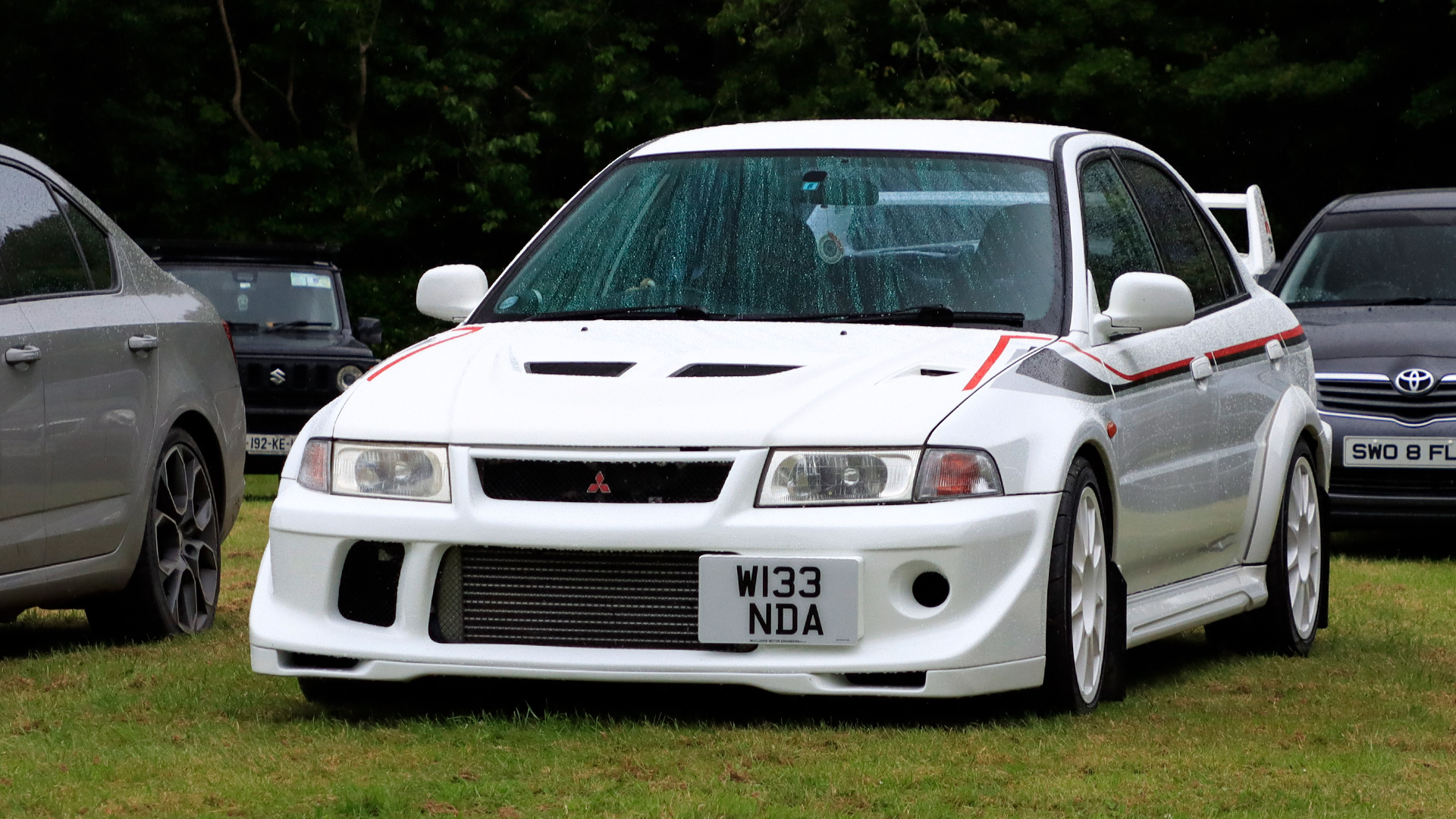
Mitsubishi Lancer Evolution I through Evolution VII (1992-2002)
The Mitsubishi Lancer Evolution first appeared in Japan in the fall of 1992. Based on the fifth-generation standard Lancer, which was sold in the U.S. as the Mitsubishi Mirage, Eagle Summit, and Dodge Colt, the Evolution “evolved” the regular sedan by fitting the turbocharged 2.0-liter 4G63 engine and all-wheel drive system from the Galant VR-4 (which, surprisingly, was also sold in the U.S. in the early 1990s). Though a homologation car for racing, the Evolution GSR came with all the regular convenience features of a standard Lancer, making it a great little sports sedan for discerning customers. It had 244 horsepower and could run up to 142 mph.
In December 1993, the basic package was updated into the Evolution II, spawning the long line of subsequent Evos. The changes were small—lighter front sway bars, bigger spoilers, handling tweaks, a bigger fuel tank, and a tiny bit more power (252 horsepower). It also got fancier wheels from OZ Racing, and Mitsubishi started selling the stripped-out RS model for privateer rally teams. In February 1995, the Evolution III replaced the II with various aerodynamic upgrades, including a massive rear wing and side skirts. A new turbocharger and higher compression pistons boosted power to 270 horsepower.
In early 1996, the entire Lancer lineup was redesigned into its sixth generation, sold in the U.S. as the Mitsubishi Mirage, sans Evo. This change dictated a total redesign of the Evo, and the Lancer Evolution IV arrived in the summer of 1996.
As before, there were two models, the stirpped RS and the civilian GSR. Both still used the 4G63, but now with a new twin-scroll turbocharger that boosted power to 276 hp. However, this rating didn’t reflect the car’s actual power, as in the 1990s, Japanese manufacturers had a “gentleman’s agreement” that limited horsepower ratings on paper to 276, regardless of the true number. The Evo IV would be the first to be seriously dominant in WRC, and it had many mechanical upgrades, including a front limited sip differential (LSD), a friction-type rear LSD, a giant strut brace over the engine and various structural reinforcements. It also got the Active Yaw Control (AYC) system for the first time.
In 1998, Mitsubishi updated the car into the Evo V, now with even more aerodynamic aids and massive front fog lights. It was also the first to get standard Recaro sports seats and Brembo brakes, the latter of which necessitated 16- or 17-inch wheels. Mitsubishi strengthened the engine and gave it hotter cams, new fuel injectors, and a new engine management system, all of which made it even more potent despite retaining the “official” 276 horsepower rating. In early 1999, the Evo V was replaced with the Evo VI, with big engine cooling and durability improvements. By this time, the car was world famous for is rally exploits and in demand in Europe and Japan. There were also unique commemorative Tommi Mäkinen models, which are highly prized today.
The Evo VII, new in the summer of 2001, was the first to command mass market attention in the United States. It was based on the entirely redesigned seventh-generation Lancer, sold in the U.S. but without the Evo until 2003. This car used much of the old hardware, including AYC, and still retained the “official” 276 horsepower rating, but it was the fastest yet and the first to offer anything but a manual transmission.
In 2002, Mitsubishi added the GT-A trim. Only produced for this model year, it came equipped with a 5-speed automatic transmission, unique 17-inch wheels, deleted hood vents, and a rear spoiler deleted or reduced to a small lip spoiler. The GT-A's cabin could be had with Recaro sport bucket seats or more comfortable seats with either leather or premium velour upholstery.
In 2003, the Evo VII was one of the two Mitsubishi hero cars in “2 Fast 2 Furious,” the sequel to “The Fast and the Furious.” It featured an upgraded wing, aftermarket wheels, custom paint and graphics, and other modifications, but it was still very recognizable as an Evo VII. This movie placement raised the notoriety of the Evo in North America. It was a well-known car in tuner communities, but the movie placement put the car on the map in the States.
Related Topics