A complete reinvention elevates the 2027 Toyota Highlander from a dependable–but boring–family hauler that’s been losing ground to bigger and more appealing crossovers. The new Toyota Highlander goes all-electric, a bold move for a model with so much history and brand equity. But when the stiffest competition is coming from inside your own house, reinvention becomes paramount, and moving to a full-EV platform may provide the spark that the new Highlander needs.
2027 Toyota Highlander Pricing, Specs, and Release Date
- What’s New for the 2027 Toyota Highlander
- Design
- Powertrain
- Interior
- Technology
- Safety
- Pricing and Release Date
- Further Research

What’s New for the 2027 Toyota Highlander
Everything. The 2027 Toyota Highlander is a clean-sheet redesign built on a modified TNGA-K platform developed specifically to accommodate the large battery packs necessary for EVs. The new Highlander is lower, wider, and longer than the outgoing model; in particular, the wheelbase grows a dramatic 8.1 inches.
The 2027 Highlander will use Toyota’s latest infotainment system. Two trim levels are offered–XLE and Limited–with two available battery sizes and a maximum driving range expected to fall in the 320-mile range.
Design
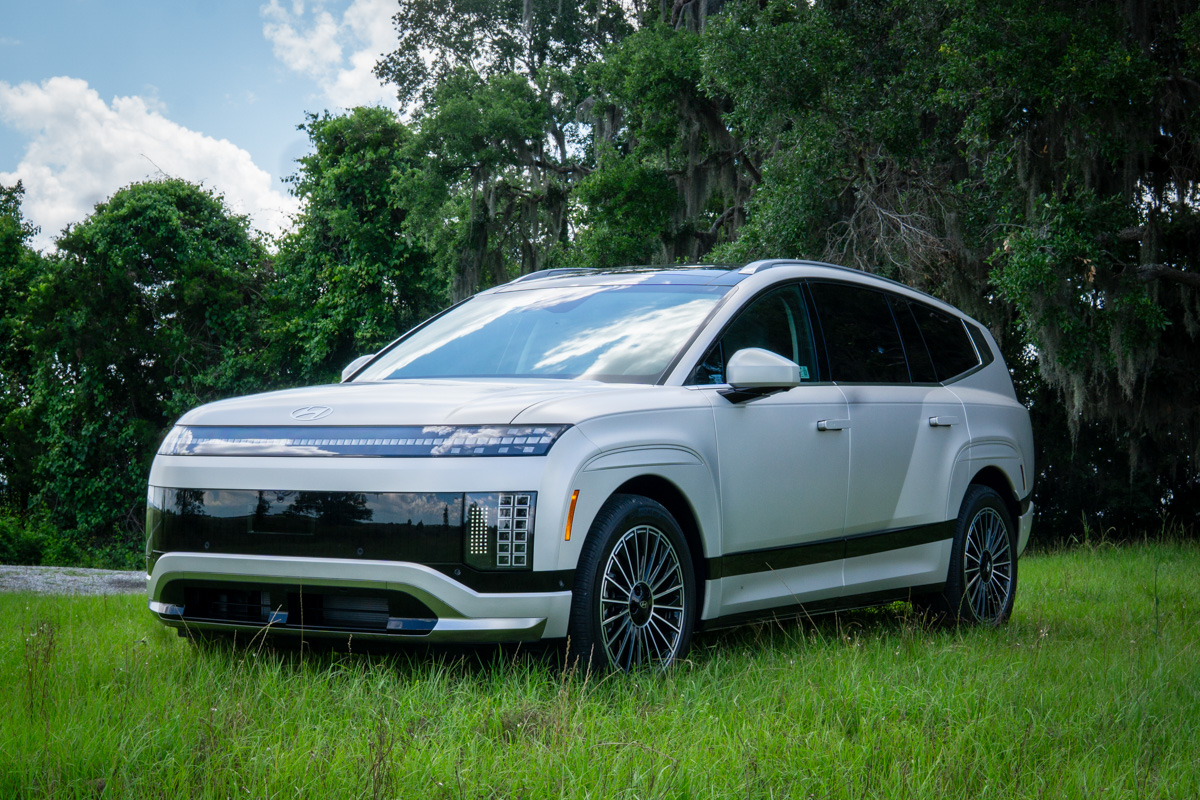
In designing the 2027 Highlander, Toyota dropped the overall height by 0.8 inches, added 2.3 inches to the width, and stretched the wheelbase to 120.1 inches (up 8.1 inches from before). The result is a planted, athletic appearance that breaks from Toyota’s recent, more conservative approach.
Hammerhead-design LED daytime running lights sit above the main headlights, with a full-width light bar connecting them on the Limited trim level. Semi-flush electronic door handles, broad fenders, and an integrated rear spoiler contribute to the new Highlander’s aerodynamic profile. The XLE grade comes standard with 19-inch wheels, but the Limited trim offers available 22-inch upgrades. Exterior colors include a new shade called Spellbound, along with Toyota classics like Wind Chill Pearl, Heavy Metal, Everest, Reservoir Blue, and Midnight Black Metallic. Two-tone paint combinations pair Spellbound, Wind Chill Pearl, Heavy Metal, or Everest with a black roof, although these two-tone combinations are exclusive to the more expensive Limited trim level.
Powertrain
The 2027 Highlander offers two battery sizes: 77.0 kWh or 95.8 kWh. Power output and range vary considerably depending on configuration. The base XLE comes standard with front-wheel drive (FWD) and the smaller battery, which makes 221 horsepower and 198 pound-feet of torque, good for a manufacturer-estimated 287-mile range. Step up to all-wheel drive (AWD) with the same 77.0-kWh battery and power jumps to 338 hp and 323 lb-ft, though range drops to an estimated 270 miles. The larger 95.8-kWh battery is available on XLE AWD models and standard on the Limited, maintaining the 338 hp and 323 lb-ft output while boosting range to an estimated 320 miles.
All models feature a North American Charging System (NACS) port—the Tesla-style connector that provides access to Supercharger stations nationwide. Under ideal conditions, the Highlander can hypothetically charge from 10% to 80% in approximately 30 minutes using DC fast charging. A dual-voltage 120V/240V charging cable comes standard for home charging, along with an 11-kW onboard AC charger. Battery preconditioning automatically warms the battery to optimal temperature when navigating to a fast-charging station, improving charging speeds. The Highlander also features vehicle-to-load capability, allowing it to power external devices or serve as emergency backup power with the purchase of bi-directional accessories—handy for tailgate parties or power outages.

Interior
The 2027 Highlander seats six as standard, with second-row captain's chairs. A three-person bench seat is available on the XLE AWD grade to increase capacity to seven. All grades feature SofTex-trimmed seating with heated front seats and a heated steering wheel standard—notable even on the base model.
The Limited adds ventilated front seats, heated second-row seats, and unique textured leather patterns. An electronically assisted one-touch button folds the second-row seats for third-row access, and the third row provides ample room for two adults. Cargo capacity measures 15.9 cubic feet behind the third row and 45.6 cubic feet with the third row folded. Other storage includes a multi-function center console with a dual wireless charging tray, USB-C ports throughout all three rows, and 18 cupholders.
Technology
Toyota’s latest-generation Audio Multimedia system features AT&T 5G connectivity and a smartphone-like interface with customizable widgets displayed on a 14-inch touchscreen. A 12.3-inch digital gauge cluster with customizable displays sits behind the steering wheel. Wireless Apple CarPlay and Android Auto come standard, along with simultaneous dual Bluetooth phone connectivity.
Enhanced voice assistant functions respond to "Hey Toyota" prompts, though shoppers will want to test-drive this tech; voice assistants in competing vehicles have been hit or miss.
Toyota’s system includes integrated streaming with Spotify and SiriusXM with 360L (subscriptions required for Spotify and SiriusXM). Native turn-by-turn navigation displays full-screen on the digital gauge cluster, and a head-up display is available on the Limited.
Audio options include a standard 6-speaker setup or an available 11-speaker JBL Premium system with subwoofer and amplifier. The Highlander also features a built-in drive recorder that uses exterior cameras to capture 20-second clips of manual and triggered events—no aftermarket dashcam installation required.
Connected services include three-year trials of Drive Connect with Intelligent Assistant, Cloud Navigation with 3D Maps, Safety Connect, Service Connect, and Remote Connect. The Toyota mobile app enables remote charging management, allowing you to check charging status, start or stop charging when plugged in, and edit charging schedules.