When it debuted for the 2024 model year, the Honda Prologue marked several important milestones for the Japanese automaker. It wasn’t just the first electric SUV to wear the Honda badge; it was Honda’s first mass-market electric vehicle (EV) in the United States following limited-production models such as the 2013 Fit EV and the more recent Clarity EV that only managed to offer a range of 89 miles.
With up to 308 miles of range, or up to 294 miles when optioned with all-wheel drive (AWD), the five-passenger Prologue is an attractive option for families looking to test the EV waters. And with a big price drop for the 2026 model year, the Prologue stands out as a bargain-priced option when judged against its electrified competitors.
2026 Honda Prologue Pricing, Specs, and Release Date
- What’s New for the 2026 Honda Prologue
- Design
- Powertrain
- Interior
- Technology
- Safety
- Pricing and Release Date
- Further Research

What’s New for the 2026 Honda Prologue
The headline-making news for 2026 is a $7,500 reduction in price compared to the previous model year. This new pricing went into effect on April 1, 2026. As you may have noticed, that cost savings exactly matches the electric vehicle tax credit some EV buyers had been eligible to receive, which was killed in September of 2025.
Besides the drop in price, there aren’t any major changes for the 2026 model year. For 2025, Honda increased the horsepower of the single-motor, front-wheel-drive (FWD) Prologue from 212 to 220 and of the dual-motor version with AWD from 288 to an even 300. Those figures stay the same for 2026, as does the range of between 283 and 308 miles.
Design
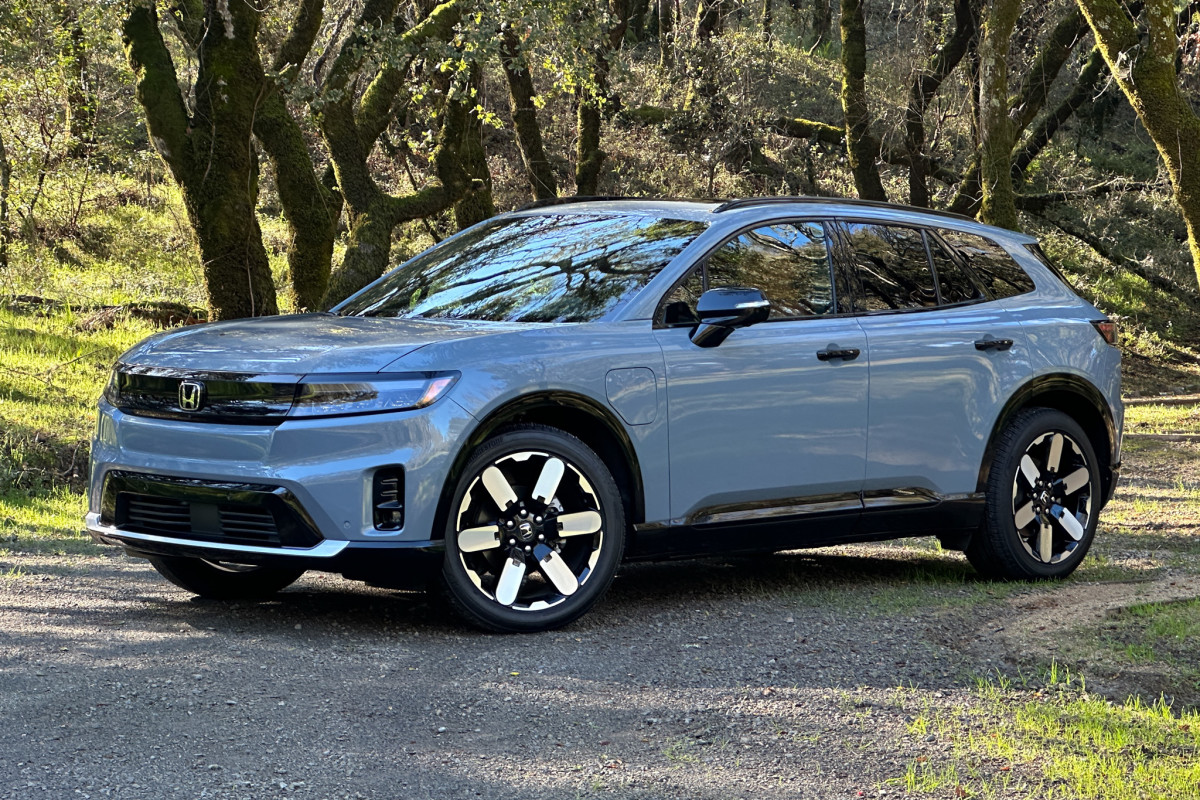
The Honda Prologue doesn’t scream "electric vehicle" like some of its flashier competitors. The Prologue’s smooth face hints at a battery-powered drivetrain that doesn’t need massive amounts of airflow for cooling purposes, but besides that small giveaway, Honda’s electric SUV generally blends in with other cars in suburban driveways and parking lots.
With an overall length that stretches 3 inches longer than the Honda Passport but a roof that sits 8 inches lower, the Prologue’s low profile and stretched-out appearance result in good passenger space and, at up to a class-competitive 25.2 cubic-feet of cargo space behind the rear seats, sufficient room for a small family’s storage needs.
Powertrain
The 2026 Honda Prologue is offered with two powertrain options: a single-motor version with FWD that produces 220 hp and a dual-motor variant with AWD and 300 hp. Range varies from 308 miles for FWD models regardless of trim level to 283 miles from the Prologue Elite with AWD. In the middle sit the dual-motor EX and Touring models with 294 miles each.
The Prologue is also fitted with a regenerative braking system that offers multiple levels of regenerative braking, including a mode that allows for one-pedal driving with regen aggressive enough to bring the SUV to a stop.
The Honda Prologue is rated to tow up to 1,500 pounds.

Interior
The Honda Prologue’s exterior design doesn’t give it away, but the interior may: The Prologue is built atop a platform designed and built by General Motors and shared with the Chevrolet Blazer EV. The knobs, buttons, switches and some other interior bits and pieces match up with vehicles in GM showrooms, not Honda’s. While that may disappoint some die-hard Honda fans, there’s plenty to like inside the Prologue, from its easy-to-see digital gauge cluster to its upright 11.3-inch infotainment display.
Technology
The Honda Prologue features an 11.3-inch touchscreen in the center of the dash, and while it’s not as physically large as the 17.7-inch unit found in the similar Chevy Blazer EV, Honda’s infotainment technology is compatible with Apple CarPlay and Android Auto while the Chevy’s is not. Another 11-inch display sits directly in front of the driver and presents a digital representation of a gauge cluster or, thanks to its Google built-in technology, can display other features like Google Maps navigation. A head-up display is offered on the top Elite trim level.
Prologue EX models come with a six-speaker audio system, and Touring and Elite models benefit from a superior 12-speaker system from Bose.