2026 Subaru Forester Reviews, Pricing & Specs


Pros & cons
What we like
Impressive off-road capability
Lots of utility
Good safety ratings
What to consider
Potentially polarizing design
Sluggish performance
Dissatisfying infotainment system
The CarGurus verdict
The redesigned 2026 Subaru Forester Wilderness continues to travel where few crossover SUVs can.
To create the 2026 Forester Wilderness, Subaru adds all-terrain tires, increased ground clearance, and improved angles of approach, breakover, and departure. Drivetrain modifications enhance traction, added underbody protection prevents damage when off-roading, and a full-size all-terrain spare tire is ready when you need it. Styling changes convey this model’s rugged capabilities, and Subaru outfits the interior for easy clean-up. All 2026 Forester models get a new center console design and updated protection for rear passengers in a collision.
Verdict: Push the new 2026 Forester Wilderness to its limits, and you’ll be impressed by its off-roading capability. But, even if you’re not planning to traverse challenging terrain, it is comforting to know that the Wilderness offers more competence than a typical crossover SUV when confronted with unexpected situations.
out of 10 expert review
Look & feel
Subaru redesigned the 2025 Forester, and introduced a Forester Hybrid version halfway through that model year. Now, the 2026 Forester lineup adds a redesigned Wilderness model and a few other modifications to improve utility and safety.
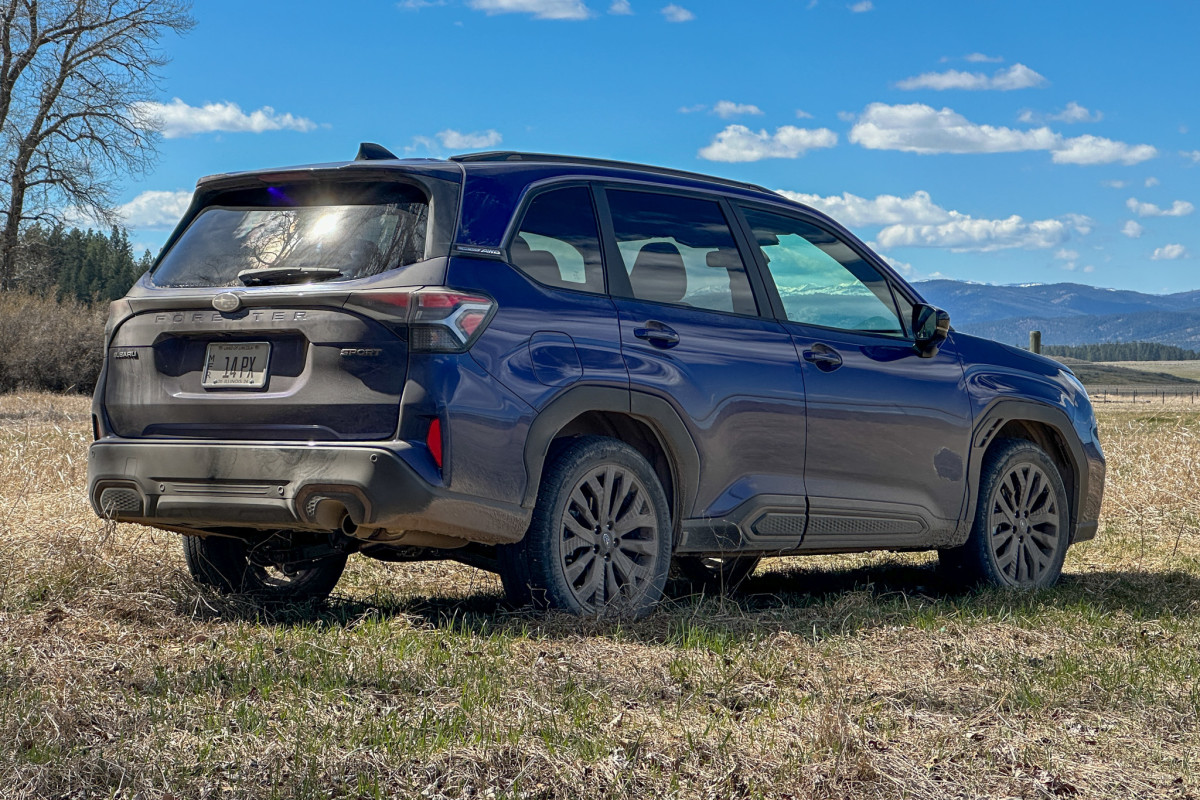
You can easily identify a Wilderness-spec Subaru. In addition to a lifted suspension and all-terrain tires, which are common aftermarket modifications made by Subaru owners, the Wilderness models feature exclusive wheel designs, extra body cladding, and anodized copper accents. And, of course, there are Wilderness badges.
The resulting look is an acquired taste. Some people love it. Some don’t. Let’s just say the treatment looks more natural on the 2026 Forester Wilderness than it does on other Subaru models.
Subaru outfits the interior for easy clean up after an adventure. To that end, the Forester Wilderness features water-resistant artificial leather with a new texture that Subaru claims improves the material’s breathability. (Seat ventilation could help with that, too, but it’s unavailable.)
Additionally, all-weather floor mats trap water, mud, and grime, and a rubber mat does the same in the cargo area. More copper accents and Wilderness emblems embossed on the front seat head restraints ensure you won’t forget you’re driving the most capable Forester model.
As of this writing, Subaru has not announced information for the 2026 Forester Hybrid. The gas-only 2026 Forester lineup includes base, Premium, Sport, Limited, Wilderness, and Touring trim levels, with prices ranging from $31,445 to $43,045, including the $1,450 destination charge. Subaru builds the Forester at its assembly plant in Lafayette, Indiana.
Our test vehicle had the only option package Subaru offers for the Wilderness. It installs a digital instrumentation panel, a navigation system, a Harman Kardon premium sound system, and a power liftgate. Those upgrades brought the manufacturer’s suggested retail price (MSRP) of the test vehicle to $42,035.
Subaru offers a long list of accessory upgrades for the Forester. Highlights include attachments for carrying gear, items to make the SUV more pet friendly, and features to better organize cargo. Since the Forester Wilderness model’s roof rack offers an 800-pound static load rating (176-lb. dynamic rating), a rooftop tent is also available, and you can add a rack-mounted awning for shade at the campsite.

Performance
Wouldn’t a turbocharged Subaru Forester Wilderness be great? Sadly, you can’t get one. A Subaru spokesperson explained to us that if you want turbocharging, you need to upgrade to a 2026 Outback Wilderness. The price difference between the two is $6,610, which isn’t chump change.
So, unless you have that extra wiggle room in your budget, you’ll need to settle for the Forester’s normally aspirated 2.5-liter four-cylinder, which produces 180 horsepower and 178 pound-feet of torque. That’s 80 hp and 99 lb-ft less than the Outback’s turbo four. Granted, the Forester Wilderness weighs 298 pounds less than the Outback, but that extra oomph sure would help in the acceleration department, especially when driving at elevation.
During this evaluation in the Portland, Oregon, area, the driving conditions meant we didn’t notice the Forester’s power deficit, but we also didn’t spend much time slicing and dicing through traffic in the SUV. Our route took us east of the city, through the Columbia River Gorge, and north into the Mount Adams region.
At all times, the continuously variable transmission (CVT) did a good job of keeping the engine in a responsive portion of its rev range while resisting its natural tendency to drone. It features eight programmed ratios to assist with that, and paddle shifters give a driver some control over them, but we doubt many people will use them.
More helpful is the shorter final-drive ratio that’s exclusive to the CVT in the Wilderness model. It gives the SUV better low-speed responsiveness when off-roading. Towing capacity rises by 500 pounds to a maximum of 3,500 pounds thanks to improved transmission cooling.
Subaru’s Active Torque Split all-wheel-drive (AWD) system is standard, and X-Mode Dual Mode traction settings equip the Forester Wilderness with Snow/Dirt and Deep Snow/Mud settings in addition to a Normal mode. The AWD system is new to the redesigned Wilderness, but debuted in the 2025 Forester. Subaru claims it offers faster center differential lockup to reduce wheelspin on loose and slippery surfaces, and uses steering angle data to improve handling on paved roads.
Wilderness models boast standard 17-inch wheels wrapped in all-terrain tires and an increase in ground clearance from 8.7 inches to 9.3 inches. Subaru has increased the approach, breakover, and departure angles, and the Wilderness has more underbody protection to protect against damage when off-roading. Subaru tucks a full-size spare tire with all-terrain tread underneath the cargo floor, adding peace of mind.
We spent plenty of time off-roading in the new Forester Wilderness. Mud and water crossings were in short supply, but the SUV successfully tackled a trail that we thought more appropriate for a traditional off-road-ready SUV, like a Ford Bronco, Jeep Wrangler, or Toyota 4Runner. Subaru assured us the Forester could handle it, but if we owned a Wilderness and came across this particular trail, we wouldn’t have taken it.
To some degree, that’s the point of this SUV’s extra capability. Think of it as an insurance policy in case you come across unexpectedly challenging terrain.
On pavement, the Forester Wilderness is good to drive. The ride is comfortable, the handling is secure, and when cruising on the highway, the cabin is remarkably quiet. It isn’t particularly fuel efficient, though. According to Subaru’s estimates, the Wilderness should get 26 mpg in combined driving, but we averaged 22.7 mpg during this evaluation. That reflects plenty of off-roading and elevation gain, so there’s a good chance you would improve on that result.

Form & function
For decades, the Subaru Forester had emphasized function over form, and that’s unlikely to change. The classic two-box exterior design maximizes passenger room and cargo space, and its tall windows ensure excellent outward visibility to make driving and maneuvering as easy as it can be. With a Forester, style takes a back seat to sensibility.
Both of the Forester Wilderness model’s heated front seats are comfortable. The driver’s seat offers 10-way power adjustment, while the passenger’s seat has 4-way manual adjustment. The right seat is mounted high off of the floor, though, so it provides proper occupant support coupled with a good view out.
Subaru does not offer a heated steering wheel, heated rear seats, or ventilated front seats on the Forester Wilderness. The company says the animal-free interior’s artificial leather steering wheel wrap is incompatible with heating elements. Meanwhile, the added comfort features are exclusive to the Forester Touring trim level.
In the Wilderness, a panoramic sunroof is standard, but it lacks tint, so on a sunny day the solar heating caused by the glass can be intense. A cover helps shield the cabin from the sun, but simultaneously defeats the purpose of having a panoramic sunroof in the first place.
Rear seat comfort is good, with plenty of legroom and foot space, decent cushion support, air conditioning vents, and charging ports. Changes to the rear seatbelts aim to improve occupant safety in a collision, addressing the 2025 Forester’s downgrade in a new crash test performed by the Insurance Institute for Highway Safety (IIHS).
Storage improves for 2026, thanks to a new center console design. It accommodates larger water bottles, and adds a handy bin perfect for the remote keyless entry fob or standing a smartphone upright. The center armrest is also longer than it was last year, making it more useful to shorter drivers.
Open the available power liftgate, and the Forester Wilderness provides 27.5 cubic feet of cargo space. That’s not class leading, but considering the full-size spare under the load floor, it’s still generous for the compact SUV segment. The Forester’s boxy design helps you to make the most of it, too. Fold down the 60/40-split rear seat, and you’ve got 69.1 cubic feet of cargo room available.
As previously mentioned, Subaru offers numerous extra-cost accessories that expand the Forester’s ability to carry things.

Technology
As part of the available option package for the Forester Wilderness, a 12.3-inch digital instrumentation panel is available. It is well organized and easy to use, and it offers access to plenty of vehicle data, a navigation system map, driving assistance system status, and more.
It pairs with an 11.6-inch touchscreen infotainment system, mounted in portrait orientation in the middle of the dashboard. The screen is framed by volume and radio tuning knobs, dual-zone climate system temperature controls, and buttons for the front defroster and rear defogger. A hazard flasher button is at the upper left, where it is easy to find and use.
The infotainment system uses the company’s latest Subaru Multimedia Plus software, and it includes wireless Apple CarPlay and Android Auto, SiriusXM satellite radio, access to a Wi-Fi hotspot, and lengthy complimentary subscriptions to MySubaru Companion connected service plans. Unfortunately, they do not equip the Forester Wilderness with a conversational digital voice assistant.
You can use the voice recognition system to find simple destinations, adjust the cabin temperature, and turn on the seat heaters. Follow the instructions on the display, speak slowly and clearly, and chances are you’ll obtain a satisfactory result. Issuing complex commands and queries can cause frustration. Not only that, but the infotainment screen seems busy and cluttered, and it can be hard to find certain features.
After you’ve gone through all of the menus and chosen your vehicle settings, you can avoid using the native technology by pairing your smartphone and running Apple CarPlay or Android Auto. Our test vehicle also had wireless smartphone charging and a sweet-sounding Harman Kardon premium audio system.
For improved visibility on trails, the Wilderness has a standard 180-degree forward view camera system. The button to activate the camera isn't obvious, tucked down by the base of the center console. The fact that the camera can be manually activated by a physical button is nice, but both the forward camera and the reversing camera present a distorted view of the world on the center display, making them hard to trust, especially when off-roading.

Safety
Subaru calls its package of camera-based advanced driving assistance systems (ADAS) EyeSight. It includes adaptive cruise control, forward collision warning, automatic emergency braking, lane departure warning, lane-keeping assist, and lane-centering assist. Unusual features of EyeSight are an automatic throttle management system when the driver accelerates and an obstacle is in the way, and a Lead Vehicle Start Alert that notifies a distracted Subaru driver that the vehicles ahead are moving again.
In addition to EyeSight, the Forester Wilderness has an active blind-spot monitoring system that can add steering to prevent a collision, rear cross-traffic alert, and Automatic Emergency Steering (evasive steering assist).
Emergency Stop Assist with Safe Lane Selection operates when the driver is using the adaptive cruise control. It can detect an unresponsive driver, choose a safe lane to stop within, and bring the SUV to a halt with the flashers active. Subaru Connected Services can then place an emergency call to get help as soon as possible.
We used the adaptive cruise control and lane-centering assist system while driving out of Portland and east along the Washington state shoreline of the Columbia River. Under these conditions, it operated mostly unobtrusively, though on a handful of occasions we felt it necessary to override the technology’s steering inputs. Also, though we had our hands on the steering wheel the entire time, we received several inaccurate reminders to hold the steering wheel.
As we mentioned previously, Subaru has improved the 2026 Forester’s rear seatbelts to enhance occupant safety. In last year’s IIHS crash-test ratings, the Forester earned a Top Safety Pick rating, but did not receive the highest Top Safety Pick+ honor. It appears that an Acceptable instead of a Good rating in a new test measuring rear passenger safety was the culprit, and because Subaru takes safety seriously, the automaker wasted no time in trying to resolve the issue to earn a better score.
The National Highway Traffic Safety Administration (NHTSA) gave the redesigned 2025 Forester five-star ratings in each individual assessment, plus a four-star rollover resistance rating.

Cost-effectiveness
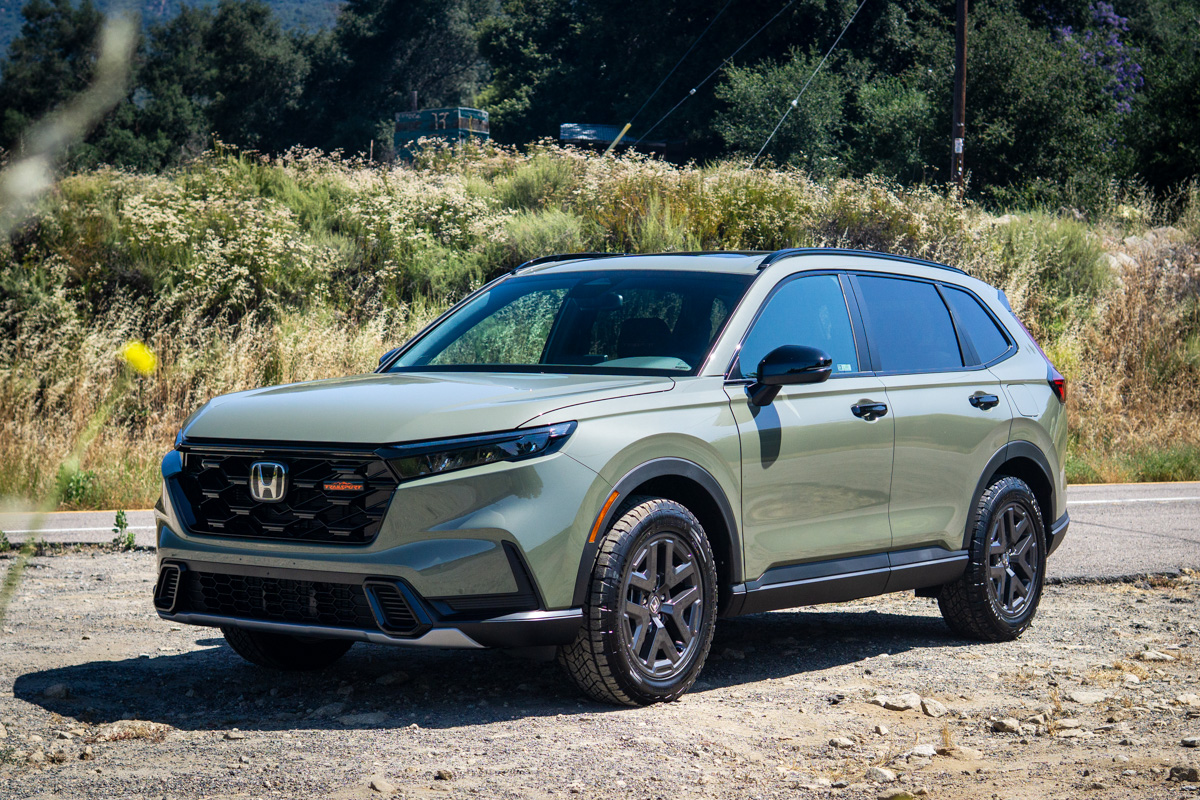
In the compact crossover SUV class, there are several off-road-themed rivals to the Forester Wilderness. They include the Chevrolet Equinox Activ, GMC Terrain AT4, Honda CR-V TrailSport, Hyundai Tucson XRT, Mazda CX-50 Meridian Edition, Kia Sportage X-Pro, Nissan Rogue Rock Creek, and Toyota RAV4 Woodland. Mainly, these are cosmetic packages with cladding, stripes, and all-terrain tires.
There are a couple of more capable alternatives to the Forester Wilderness, and both of them offer turbocharged power.
At $32,990, the smaller 2025 Jeep Compass Trailhawk has an appealing base price, but options rapidly inflate the MSRP beyond what’s reasonable. Jeep’s plans for the Compass beyond the 2025 model year are also unknown. It is ripe for a redesign, which might happen for 2026.
The more appealing rival to the Forester Wilderness is the Ford Bronco Sport Badlands. Equipped with a 250-hp turbocharged four-cylinder whipping up 280 lb-ft of torque, it is speedy where the Subaru is sluggish. An optional Sasquatch Package fortifies the Badlands with more aggressive rubber, a proper off-road suspension, and a somewhat silly front brush guard. However, so equipped, the Ford is priced more like an Outback Wilderness.
That leaves the Subaru Forester Wilderness with a compelling value story to tell. It might not have the power and torque of those two rivals, but it does offer a competitive price, superior capabilities, and top-notch safety ratings. It is also more fuel efficient than the Ford, can tow almost twice as much trailer weight as the Jeep, and supplies more ground clearance and cargo space than either of those alternatives.
We like the redesigned 2026 Subaru Forester Wilderness. It’s better than the version it replaces, and in many ways is arguably superior to the two rivals that might be able to follow it down a more challenging trail. All it needs is a turbocharger and a new infotainment system to ensure its position as the most capable compact crossover SUV money can buy.

What owners say
Perfect vehicle! Great looks. fuel economy significantly better than ratings, super quite ride, extremely comfortable, and technologically advanced!
October 12, 2026Trims & specs
Base MSRP $34,795 | Seating 5 |
Engine N/A | Cargo Capacity 27.5 cu ft |
Combined MPG N/A | Drivetrain N/A |
Base MSRP N/A | Seating N/A |
Engine N/A | Cargo Capacity N/A |
Combined MPG N/A | Drivetrain N/A |
Base MSRP $35,995 | Seating 5 |
Engine N/A | Cargo Capacity 27.5 cu ft |
Combined MPG N/A | Drivetrain N/A |
Base MSRP $31,995 | Seating 5 |
Engine N/A | Cargo Capacity 27.5 cu ft |
Combined MPG N/A | Drivetrain N/A |
Base MSRP $31,995 | Seating 5 |
Engine N/A | Cargo Capacity 27.5 cu ft |
Combined MPG N/A | Drivetrain N/A |
Base MSRP $29,995 | Seating 5 |
Engine N/A | Cargo Capacity 29.6 cu ft |
Combined MPG N/A | Drivetrain N/A |
Base MSRP $36,995 | Seating 5 |
Engine N/A | Cargo Capacity 27.5 cu ft |
Combined MPG N/A | Drivetrain N/A |
Base MSRP $39,995 | Seating 5 |
Engine N/A | Cargo Capacity 27.5 cu ft |
Combined MPG N/A | Drivetrain N/A |


Pricing trends
MSRP range
$29,995 - $39,995
Current avg. market price
$33,498
Trending down by 1.1% this month
May 2026 - November 2026