2021 Land Rover Defender Reviews, Pricing & Specs
Write a review$46,100 to $83,000
Original MSRP
8
of 10
expert review
avg user rating
(0 reviews)
Pros
Excellent off-road capability
Stylish design
Spacious
Cons
Poor fuel economy
Poor handling
Interior materials feel cheap

The 2021 Land Rover Defender treads where few other SUVs dare to follow, bringing a modern design, innovative technology, luxury, and comfort to a niche dominated by the Jeep Wrangler and the new Ford Bronco. Is there room for British civility on the trails and in the suburban jungles?

The original Land Rover Series I emerged in 1948, inspired by the Willys Jeep so frequently seen in Britain and Europe during World War II. The Series II followed in 1958; the Series III in 1971; the Land Rover 90 and 110 in 1983. The Defender name was first used in 1990. Land Rover continued building this original Defender with only minor changes through January 2016, but only sold it in the U.S. from 1993 to 1997.
Across the generations from 1948 to 2016, the Defender line had a distinctive look and character. Round headlamps flanked the grille. Diamond plate or anti-skid surfaces sometimes covered the flat hood and flat front fenders. A box-shaped cabin with a tall roofline and flat windshield gave the Defender the aerodynamic signature of a piano crate. Somehow, it all added up to timeless cool.
The new Defender strives to echo the vibe of previous generations while bringing the SUV firmly into the modern era. Rather than the wide-eyed look of round incandescent headlamps, the Defender has half-round LED headlights. It looks like there is a set of eyelids over the lights, giving the truck a serious appearance. The styling of the grille seems structural, almost like a built-in push bar. The flat-topped fenders are a callback, as are the fender flares and floating roof. The tops of the fenders even wear composite cladding with a diamond-plate pattern. There's a functional vent on each side of the body just behind the front fenders, like the gills on a shark. Around back, the spare tire rides on the middle of the side-hinged tailgate.
Short overhangs front and rear make the SUV look planted and capable of climbing over any obstacle it encounters. The Defender looks great in person, presenting much better than in pictures (some cars do that). Fit and finish are first-rate, and the bold yet tasteful "DEFENDER" nameplate on the front and rear is in good taste.
Inside, the theme of exposed structure is even more prominent than it is on the exterior. The dash looks like it is held between two horizontal beams. Exposed Allen-head bolts secure the door panels. The controls are beefy, and so is the steering wheel. The leather-upholstered seating looks tough but is luxury comfortable. A digital instrument panel inset into the dash behind the steering wheel is crisp and clean. The center touchscreen interface mounts securely between the "beams" of the dash.
Everything about the Defender's interior feels authentic, of high quality, and thoughtfully designed. Touch a metal-look surface and you discover that it's real metal. Touch leather and you feel leather. Even the plastic parts—and of course there are many—have a substantial feel.

While the Series I, II, III, and early Defender models were working vehicles, you'd be more likely to find them bouncing through a field or engaging an auxiliary tool with a power take-off than cruising along the coastline. Today's Defender will likely spend 99% of its life commuting to work, shuttling kids to school or soccer practice, or running errands around town. It has to be as accomplished at rock crawling as it is at parking lot tango.
Two powertrains are available for the Defender in the U.S. The base powertrain is a turbocharged 2.0-liter inline-four-cylinder engine tuned to produce 296 horsepower and 295 pound-feet of torque. Next is a turbocharged 3.0-liter inline-six-cylinder mild-hybrid setup, tuned to produce 395 hp and 406 lb-ft of torque. A supercharged 5.0-liter V8 producing 518 hp, has been announced as an option for 2022—an exciting prospect for the future.
All Defender models use an eight-speed automatic transmission and full-time 4WD with low range and Terrain Response, Land Rover's system for matching vehicle setup and performance to surface conditions. Terrain Response 2 is optional, adding automatic and advanced settings. Locking center and active locking rear differentials are another off-road add-on.
Dedicated off-roaders can study the spec sheets for Defender for hours, imagining the possibilities a 30.1-degree approach angle and 37.6-degree departure angle promise, or drooling over the Defender's maximum ascent/descent gradient of 45 degrees and maximum side slope traverse gradient of 45 degrees could accomplish, especially with 8.5 inches minimum/11.5 inches maximum ground clearance. Where could you go, what obstacles could you conquer? Where can you test the Defender's 35.4 inches of wading depth without getting in too much trouble?
On the road, the Defender is plenty quick for a vehicle weighing in at 4,830-5,165 pounds (depending on configuration). The 2.0-liter Defender 110 rumbles from 0-60 mph in 7.7 seconds, while the 3.0-liter goes from a standstill to 60 mph in 5.8 seconds, according to Land Rover. That's plenty fast enough for most drivers. The Defender also has a maximum towing capacity of 8,200 pounds and has a payload capacity of over 1,700 pounds.
Our Defender 110 test vehicle had the 3.0-liter mild-hybrid powertrain and impressed us with its driving character. On long highway stretches, the Defender was rock-solid and super comfortable. In city driving, the high seating position gave a great view of the road, and the same attributes that make the Defender a good choice for trail driving allowed it to negotiate congested roadways and parking lots with ease. We took the Defender along some of our favorite dirt roads and some farm trails, where it convinced us that it is more than just its good looks.
We didn't get an opportunity to challenge the Defender over any rocky obstacles or any real off-roading scenarios. Still, we're pretty confident in its off-road capability and would love to test that out in the right place and time.

Rather than being based on a traditional body-on-frame platform like the old truck, the new Defender rides on the same unibody platform underlying the current Land Rover Range Rover, Range Rover Sport, and Discovery. That's proven engineering and makes extensive use of aluminum for weight reduction and strength.
Suspension is key to both on-road and off-road functions, and the Defender uses four-wheel independent multi-link air suspension to enhance both situations. The benefits of independent suspension are many, allowing wheels to react to different conditions without requiring simultaneous counter-reaction across a solid axle. Off-road, this is useful and technical, but on-road, it makes for a much better ride every time you drive.
Independent suspension also opens up interior configuration possibilities, as demonstrated by the Defender's seating layout. The Defender has the option of adding a jump seat between the front seats for three-across seating. The second row is roomy side-to-side, too. A third-row seat for two is available in the long-wheelbase 110 as well. Our Defender 110 test vehicle didn't have any optional seating installed, so we can only speculate on the usefulness of the third row's 20.5 inches of available legroom.
Luggage space behind the second row on the 110 is 34—34.6 cubic feet and 15.6 cubic feet on the 90. The three-door model also has 58.3 cubic feet of cargo space behind the front sets. The 110 has room for 78.8 cubic feet of cargo behind its first row.

The Defender uses Land Rover's Electronic Vehicle Architecture 2.0, which allows the company to reach out to your vehicle to make software adjustments through the ether just like the updates you can get on your smartphone. But on your Defender, 14 individual modules can receive remote updates—without ever visiting a dealership. To make this possible, a WiFi connection is standard, with optional upgrades to service.
In terms of infotainment, the Defender was the first Land Rover to use the company's new Pivi Pro system, with a 10-inch touchscreen and a 12.3-inch digital instrument panel. Bluetooth, Apple CarPlay, and Android Auto connections are standard. USB and 12-volt outlets abound in the cabin. Multiple camera views are available for the Defender, including a "transparent hood" view using the 3D surround-camera system with a 360-degree view. The myriad of views around the vehicle will be very helpful for off-roading, especially in situations where a dedicated trail spotter is not available.
A six-speaker audio system is standard, but the stereo can be upgraded to 10 or 14 speakers plus a subwoofer. Meridian sound systems are also available, with 180 watts, 400 watts, or 700 watts of amplification.
A new full-color head-up display is available as well. A ClearSight rear-view mirror replaces the traditional reflective view mirror with a camera view, which can be a great convenience when carrying a whole load of passengers or cargo. However, it does take some getting used to.

Neither the National Highway Traffic Safety Administration (NHTSA) nor the Insurance Institute for Highway Safety (IIHS) have released crash-test ratings for the 2021 Land Rover Defender, which is not unusual for a new, relatively low-volume luxury SUV.
That doesn't mean the Defender is unsafe. In fact, it comes with an extensive list of standard safety features, including a perimeter alarm, front airbags with a passenger seat occupant monitor, a tire pressure monitoring system, a rear ISOFIX system for child safety seats, electronic traction control, dynamic stability control, roll stability control, emergency braking, anti-lock braking, emergency brake assist, cruise control speed limiter, blind spot assist, lane-keep assist, driver condition monitor, traffic sign recognition, rear traffic monitor, clear exit monitor, and a 360-degree parking aid.
The Defender underwent extensive durability testing during its development, including hundreds of thousands of miles through some of Earth's harshest climates and conditions. It has front and rear recovery points capable of withstanding up to 10 tons of pull—essential features if you decide to challenge your Defender (and yourself) off-road, where even the best drivers need a little help now and then.
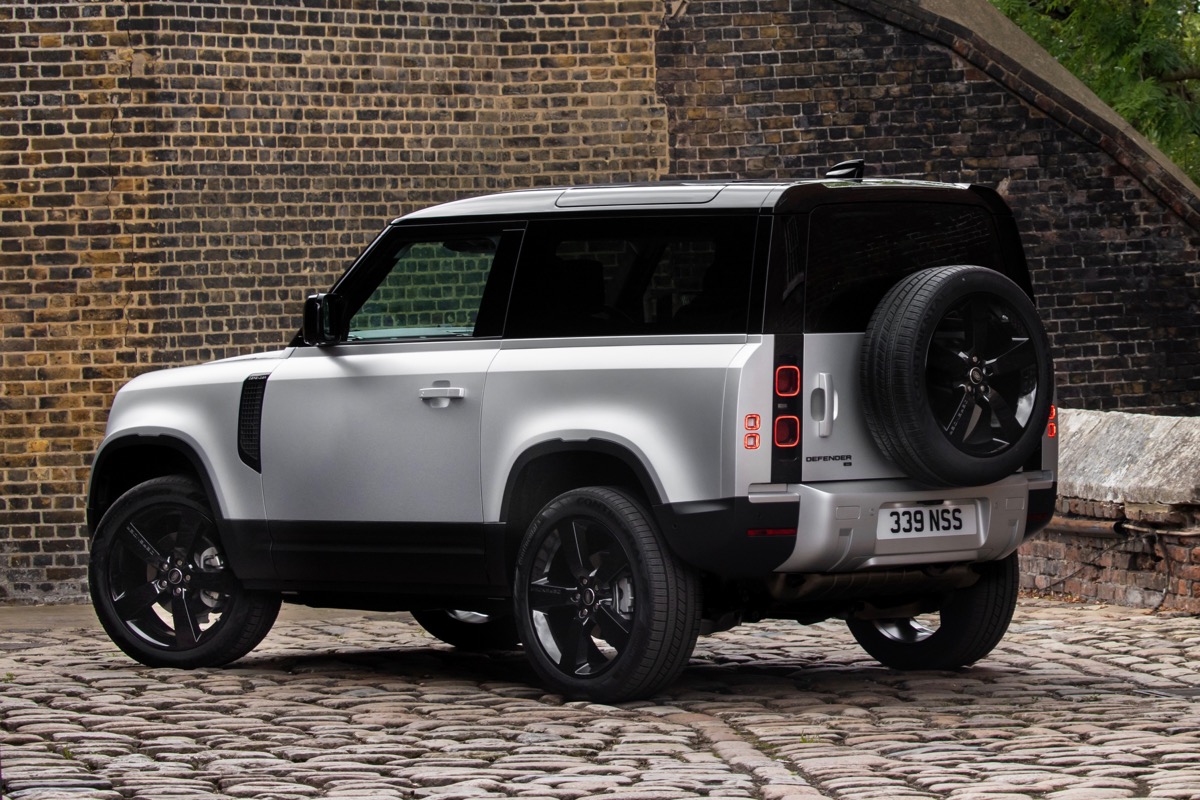
Land Rover is a premium brand, and it's possible to personalize a Defender to the point where it reaches six figures. But the price of entry can be very reasonable. A base Defender 90 starts at $46,100, which is just a few thousand dollars above the average transaction price for a new car in the U.S. right now. The Defender 90 comes in five models for 2021 (base, Defender 90 S, Defender 90 X-Dynamic S, First Edition, and X), with the top Defender 90 X pushing the MSRP up to $80,500.
A base Defender 110 starts at $50,500. Land Rover offers six Defender 110 models for 2021, including base, Defender 110 S, SE, X-Dynamic SE, X-Dynamic HSE, and X configurations. As with the Defender 90, the X trim level is the most expensive, starting at $83,000. Our test vehicle was a 2021 Defender 110 SE with an as-tested price of $69,905.
The upcoming 2022 Defender V8 (available in 90 and 110 body styles) will break the $100,000-barrier.
Consider the competition. For off-roading, you have to measure the Defender against the Jeep Wrangler (starting at $29,070), Jeep Wrangler 4xe plug-in hybrid (starting at $51,225), Ford Bronco (starting at $28,500), and Toyota 4Runner (starting at $37,305). Once you start to option up these vehicles and move to higher trim levels, you'll find your bottom line getting closer to or exceeding the Defender's starting price.
The 2021 Land Rover Defender isn't for everybody. It isn't even for every off-roader. It isn't trying to be. But for a driver who appreciates the Defender's legacy and pedigree, not to mention its design and execution, the price of entry may be worth the money. Look at it this way: A new Defender will be more capable, more reliable, and less expensive than a fully-restored classic Defender—and if you maintain it properly, it might be on its way to being a classic in its own right.

User reviews for 2021 Land Rover Defender
Write a review2021 Land Rover Defender Pricing
Trims & specs
Air Conditioning
Automatic climate control front air conditioning · Dual front air conditioning zones
Airbags
Dual front airbags · Passenger airbag deactivation: occupant sensing deactivation · Front side airbags · Front side curtain airbags
Audio System
Antenna Type: mast · Voice recognition audio system · Bluetooth auxiliary audio input · Internet radio app: Spotify · Touch screen display radio · Satellite Radio: SiriusXM · Total Number of Speakers: 6 · 180 watts
Brakes
ABS: 4-wheel · Braking assist: hill start assist · Electronic parking brake: auto off · Front brake diameter: 14.29 · Front brakes: ventilated disc · Rear brake diameter: 13.8 · Rear brakes: ventilated disc
Comfort Features
Floor Material: rubber · Shift knob trim: alloy · Steering wheel trim: leather
Convenience Features
Assist handle: front · Cargo area power outlet: 12V · Cargo cover: retractable · Center console: front console with armrest and storage · Cupholders: front · Dimming rearview mirror: auto-dimming · Easy entry: manual driver seat · Multi-function remote: proximity entry system · One-touch windows: 2 · Power outlet(s): USB rear · Power steering: speed-proportional · Power windows: lockout button · Reading lights: front · Rear power outlet: 12V · Steering wheel: tilt and telescopic · Steering wheel mounted controls: audio · Storage: cargo tie-down anchors and hooks · Universal garage door opener: Homelink · Vanity mirrors: dual illuminating
Driver Seat
Power adjustments: 8
Drivetrain
4WD Type: full time · Axle ratio: 3.60 · Locking differential: center · Transfer Case: electronic hi-lo gear selection
Engine
Battery: maintenance-free
Exterior Features
Door handle color: body-color · Exhaust tip color: stainless-steel · Front bumper color: black · Grille color: black · Mirror color: black · Rear bumper color: black · Rear trunk/liftgate: side-hinged · Rocker panel color: black · Window trim: black
Headrests
Front headrests: adjustable · Number of front headrests: 2 · Number of rear headrests: 3
In Car Entertainment
Connected in-car apps: Google POIs · Infotainment: Android Auto ready · Infotainment screen size: 10 in.
Instrumentation
Fuel economy display: range · Warnings and reminders: coolant temperature warning
Lights
Daytime running lights: LED · Exterior entry lights: puddle lamps · Headlights: Auto on/off · Tail and brake lights: LED
Mirrors
Exterior mirrors: integrated turn signals
Passenger Seat
Power adjustments: 8
Rear Seats
Type: 40-20-40 split bench
Roof
Roof rails: black
Safety
Automatic emergency braking: front · Camera system: surround view · Child seat anchors: LATCH system · Cross Traffic Alert: rear · Crumple zones: rear · Impact sensor: post-collision safety system · Parking sensors: front · Pre-Collision Warning System: audible warning · Pre-collision warning system: pedestrian detection · Rearview monitor: in dash · Traffic sign recognition: adaptive speed limiting
Seatbelts
Front seatbelts: 3-point · Seatbelt force limiters: front and rear · Seatbelt pretensioners: front and rear · Seatbelt warning sensor: driver and passenger · Second row seatbelts: 3-point
Seats
Driver seat power adjustments: height · Front seat type: bucket · Passenger seat power adjustments: height · Rear headrests: adjustable · Rear seat folding: split · Upholstery: cloth
Security
Power door locks: anti-lockout
Spare Tire
Mount Location: outside
Spare Wheel
Rim Type: steel
Stability and Traction
Traction control: with trailer stability control
Suspension
Front Arm Type: short and long arm (SLA) · Front Spring Type: coil springs · Front Suspension Classification: independent · Front Suspension Type: strut · Front shock type: monotube · Rear Spring Type: coil springs · Rear Suspension Classification: independent · Rear Suspension Type: multi-link · Rear shock type: monotube · Stabilizer bar(s): front
Telematics
Driver assistance app: roadside assistance · Electronic messaging assistance: with voice recognition · Navigation system: with voice recognition · Phone: voice activated · Phone wireless data link: Bluetooth · Smart device app compatibility: InControl · Smart device app function: maintenance status
Tires
Type: all terrain
Tires and Rims
Spare tire size: full-size matching · Wheels: painted steel
Towing and Hauling
Tow hooks: rear
Wheels
Wheel spokes: 8
Windows
Front wipers: speed sensitive · Liftgate window: fixed · Power windows: with safety reverse · Rear wiper: variable intermittent
Air Conditioning
Automatic climate control front air conditioning · Dual front air conditioning zones
Airbags
Dual front airbags · Passenger airbag deactivation: occupant sensing deactivation · Front side airbags · Rear side curtain airbags
Audio System
Antenna Type: diversity · Voice recognition audio system · USB auxiliary audio input · Internet radio app: Spotify · HD radio · Satellite Radio: SiriusXM · Total Number of Speakers: 6 · 180 watts
Brakes
ABS: 4-wheel · Braking assist: hill start assist · Electronic parking brake: auto off · Front brake diameter: 14.29 · Front brakes: ventilated disc · Rear brake diameter: 13.8 · Rear brakes: ventilated disc
Comfort Features
Armrests: rear center with cupholders · Floor Material: rubber · Shift knob trim: alloy · Steering wheel trim: leather
Convenience Features
Assist handle: front · Cargo area power outlet: 12V · Cargo cover: retractable · Center console: front console with armrest and storage · Cupholders: front · Dimming rearview mirror: auto-dimming · Easy entry: manual driver and passenger seat · Multi-function remote: keyless entry with panic alarm · One-touch windows: 2 · Power outlet(s): 12V front · Power steering: speed-proportional · Power windows: lockout button · Reading lights: rear · Rear power outlet: 12V · Steering wheel: tilt and telescopic · Steering wheel mounted controls: audio · Storage: front seatback · Universal garage door opener: Homelink · Vanity mirrors: dual illuminating
Driver Seat
Adjustable lumbar support: power · Power adjustments: 12
Drivetrain
4WD Type: full time · Axle ratio: 3.60 · Locking differential: center · Transfer Case: electronic hi-lo gear selection
Engine
Battery: maintenance-free
Exterior Features
Door handle color: body-color · Exhaust tip color: stainless-steel · Front bumper color: black · Grille color: black · Mirror color: black · Rear bumper color: black · Rear trunk/liftgate: side-hinged · Rocker panel color: black · Window trim: black
Headrests
Front headrests: adjustable · Number of front headrests: 2 · Number of rear headrests: 3
In Car Entertainment
Connected in-car apps: Google search · Infotainment: PIVI Pro · Infotainment screen size: 10 in.
Instrumentation
Fuel economy display: range · Instrument cluster screen size: 12.3 in. · Warnings and reminders: low oil pressure
Lights
Daytime running lights: LED · Exterior entry lights: puddle lamps · Headlights: automatic high beam dimmer · Tail and brake lights: LED
Mirrors
Exterior mirrors: power
Passenger Seat
Adjustable lumbar support: power · Power adjustments: 12
Rear Seats
Type: 40-20-40 split bench
Roof
Roof rails: black
Safety
Automatic emergency braking: front pedestrian · Camera system: surround view · Child seat anchors: LATCH system · Cross Traffic Alert: rear · Crumple zones: front · Impact sensor: fuel cut-off · Parking sensors: rear · Pre-Collision Warning System: visual warning · Pre-collision warning system: pedestrian detection · Rearview monitor: in dash · Traffic sign recognition: adaptive speed limiting
Seatbelts
Front seatbelts: 3-point · Seatbelt force limiters: front · Seatbelt pretensioners: front and rear · Seatbelt warning sensor: driver and passenger · Second row seatbelts: 3-point
Seats
Driver seat power adjustments: height · Front seat type: bucket · Passenger seat power adjustments: height · Rear headrests: adjustable · Rear seat folding: split · Upholstery: leather · Upholstery accents: cloth
Security
Power door locks: anti-lockout
Spare Tire
Mount Location: outside
Spare Wheel
Rim type: aluminum alloy
Stability and Traction
Traction control: with trailer stability control
Suspension
Front Arm Type: short and long arm (SLA) · Front Spring Type: coil springs · Front Suspension Classification: independent · Front Suspension Type: strut · Front shock type: monotube · Rear Spring Type: coil springs · Rear Suspension Classification: independent · Rear Suspension Type: multi-link · Rear shock type: monotube · Stabilizer bar(s): rear
Telematics
Driver assistance app: roadside assistance · Electronic messaging assistance: with voice recognition · Navigation system: hard drive navigation system · Phone: voice activated · Phone wireless data link: Bluetooth · Smart device app compatibility: InControl · Smart device app function: vehicle location
Tires
Type: all terrain
Tires and Rims
Spare tire size: full-size matching · Wheel type: aluminum alloy
Towing and Hauling
Tow hooks: front
Wheels
Wheel spokes: 6
Windows
Front wipers: variable intermittent · Liftgate window: fixed · Power windows: remote operation · Rear wiper: with washer
Air Conditioning
Automatic climate control front air conditioning · Dual front air conditioning zones
Airbags
Dual front airbags · Passenger airbag deactivation: occupant sensing deactivation · Front side airbags · Rear side curtain airbags
Audio System
Antenna Type: mast · Voice recognition audio system · USB auxiliary audio input · Internet radio app: Spotify · AM/FM radio · Satellite Radio: SiriusXM · Total Number of Speakers: 6 · 180 watts
Brakes
ABS: 4-wheel · Braking assist: hill start assist · Electronic parking brake: auto off · Front brake diameter: 13.7 · Front brakes: ventilated disc · Rear brake diameter: 12.8 · Rear brakes: ventilated disc
Comfort Features
Door sill trim: scuff plate · Floor Material: rubber · Shift knob trim: alloy · Steering wheel trim: leather
Convenience Features
Assist handle: front · Cargo area power outlet: 12V · Cargo cover: retractable · Center console: front console with armrest and storage · Cupholders: front · Dimming rearview mirror: auto-dimming · Multi-function remote: keyless entry with panic alarm · One-touch windows: 4 · Power outlet(s): 12V front · Power steering: electric · Power windows: lockout button · Reading lights: rear · Rear power outlet: 12V · Steering wheel: tilt and telescopic · Steering wheel mounted controls: phone · Storage: front seatback · Universal garage door opener: Homelink · Vanity mirrors: dual illuminating
Driver Seat
Power adjustments: 8
Drivetrain
4WD Type: full time · Axle ratio: 4.10 · Locking differential: center · Transfer Case: electronic hi-lo gear selection
Engine
Battery: maintenance-free
Exterior Features
Door handle color: body-color · Exhaust tip color: stainless-steel · Front bumper color: black · Grille color: black · Mirror color: black · Rear bumper color: black · Rear trunk/liftgate: side-hinged · Rocker panel color: black · Window trim: black
Headrests
Front headrests: adjustable · Number of front headrests: 2 · Number of rear headrests: 3
In Car Entertainment
Connected in-car apps: app marketplace integration · Infotainment: Android Auto ready · Infotainment screen size: 10 in.
Instrumentation
Fuel economy display: range · Warnings and reminders: coolant temperature warning
Lights
Daytime running lights: LED · Exterior entry lights: security approach lamps · Headlights: wiper activated · Tail and brake lights: LED
Mirrors
Exterior mirrors: power folding
Passenger Seat
Power adjustments: 8
Rear Seats
Type: 40-20-40 split bench
Roof
Roof rails: black
Safety
Automatic emergency braking: front pedestrian · Camera system: surround view · Child seat anchors: LATCH system · Crumple zones: front · Impact sensor: door unlock · Parking sensors: front · Pre-Collision Warning System: visual warning · Pre-collision warning system: pedestrian detection · Rearview monitor: in dash · Traffic sign recognition: adaptive speed limiting
Seatbelts
Front seatbelts: 3-point · Seatbelt force limiters: front and rear · Seatbelt pretensioners: front and rear · Seatbelt warning sensor: driver and passenger · Second row seatbelts: 3-point
Seats
Driver seat power adjustments: reclining · Front seat type: bucket · Passenger seat power adjustments: reclining · Rear headrests: adjustable · Rear seat folding: split · Upholstery: cloth
Security
Power door locks: anti-lockout
Spare Tire
Mount Location: outside
Spare Wheel
Rim Type: steel
Stability and Traction
Traction control: with trailer stability control
Suspension
Driver Adjustable Suspension: ride control · Front Arm Type: short and long arm (SLA) · Front Spring Type: pneumatic springs · Front Suspension Classification: independent · Front Suspension Type: strut · Front shock type: monotube · Leveling: self leveling suspension · Rear Spring Type: pneumatic springs · Rear Suspension Classification: independent · Rear Suspension Type: multi-link · Rear shock type: monotube · Stabilizer bar(s): rear · Suspension control: electronic
Telematics
Driver assistance app: roadside assistance · Electronic messaging assistance: with read function · Navigation system: touch screen display · Phone: voice activated · Phone wireless data link: Bluetooth · Smart device app compatibility: InControl · Smart device app function: lock operation
Tires
Type: all terrain
Tires and Rims
Spare tire size: full-size matching · Wheels: painted steel
Towing and Hauling
Tow hooks: rear
Wheels
Wheel spokes: 8
Windows
Front wipers: variable intermittent · Liftgate window: fixed · Power windows: remote operation · Rear wiper: with washer
Air Conditioning
Automatic climate control front air conditioning · Dual front air conditioning zones
Airbags
Dual front airbags · Passenger airbag deactivation: occupant sensing deactivation · Front side airbags · Front side curtain airbags
Audio System
Antenna Type: diversity · Voice recognition audio system · Bluetooth auxiliary audio input · Internet radio app: Spotify · Touch screen display radio · Satellite Radio: SiriusXM · Total Number of Speakers: 6 · 180 watts
Brakes
ABS: 4-wheel · Braking assist: hill start assist · Electronic parking brake: auto off · Front brake diameter: 13.7 · Front brakes: ventilated disc · Rear brake diameter: 12.8 · Rear brakes: ventilated disc
Comfort Features
Armrests: rear center with cupholders · Door sill trim: scuff plate · Floor Material: rubber · Shift knob trim: alloy · Steering wheel trim: leather
Convenience Features
Assist handle: front · Cargo area power outlet: 12V · Cargo cover: retractable · Center console: front console with armrest and storage · Cupholders: rear · Dimming rearview mirror: auto-dimming · Multi-function remote: proximity entry system · One-touch windows: 4 · Power outlet(s): USB rear · Power steering: electric · Power windows: lockout button · Reading lights: rear · Rear power outlet: 12V · Steering wheel: tilt and telescopic · Steering wheel mounted controls: voice recognition controls · Storage: cargo tie-down anchors and hooks · Universal garage door opener: Homelink · Vanity mirrors: dual illuminating
Driver Seat
Adjustable lumbar support: power · Power adjustments: 12
Drivetrain
4WD Type: full time · Axle ratio: 4.10 · Locking differential: center · Transfer Case: electronic hi-lo gear selection
Engine
Battery: maintenance-free
Exterior Features
Door handle color: body-color · Exhaust tip color: stainless-steel · Front bumper color: black · Grille color: black · Mirror color: black · Rear bumper color: black · Rear trunk/liftgate: side-hinged · Rocker panel color: black · Window trim: black
Headrests
Front headrests: adjustable · Number of front headrests: 2 · Number of rear headrests: 3
In Car Entertainment
Connected in-car apps: app marketplace integration · Infotainment: Apply CarPlay ready · Infotainment screen size: 10 in.
Instrumentation
Fuel economy display: range · Instrument cluster screen size: 12.3 in. · Warnings and reminders: coolant temperature warning
Lights
Daytime running lights: LED · Exterior entry lights: puddle lamps · Headlights: automatic high beam dimmer · Tail and brake lights: LED
Mirrors
Exterior mirrors: heated
Passenger Seat
Adjustable lumbar support: power · Power adjustments: 12
Rear Seats
Type: 40-20-40 split bench
Roof
Roof rails: black
Safety
Automatic emergency braking: front · Camera system: surround view · Child seat anchors: LATCH system · Crumple zones: rear · Impact sensor: door unlock · Parking sensors: front · Pre-Collision Warning System: visual warning · Pre-collision warning system: pedestrian detection · Rearview monitor: in dash · Traffic sign recognition: adaptive speed limiting
Seatbelts
Front seatbelts: 3-point · Seatbelt force limiters: front and rear · Seatbelt pretensioners: front and rear · Seatbelt warning sensor: driver and passenger · Second row seatbelts: 3-point
Seats
Driver seat power adjustments: reclining · Front seat type: bucket · Passenger seat power adjustments: height · Rear headrests: adjustable · Rear seat folding: split · Upholstery: leather · Upholstery accents: cloth
Security
Power door locks: anti-lockout
Spare Tire
Mount Location: outside
Spare Wheel
Rim type: aluminum alloy
Stability and Traction
Traction control: with trailer stability control
Suspension
Driver Adjustable Suspension: height · Front Arm Type: short and long arm (SLA) · Front Spring Type: pneumatic springs · Front Suspension Classification: independent · Front Suspension Type: strut · Front shock type: monotube · Leveling: self leveling suspension · Rear Spring Type: pneumatic springs · Rear Suspension Classification: independent · Rear Suspension Type: multi-link · Rear shock type: monotube · Stabilizer bar(s): front · Suspension control: electronic
Telematics
Driver assistance app: roadside assistance · Electronic messaging assistance: with read function · Navigation system: with voice recognition · Phone: voice activated · Phone wireless data link: Bluetooth · Smart device app compatibility: InControl · Smart device app function: engine start
Tires
Type: all terrain
Tires and Rims
Spare tire size: full-size matching · Wheel type: aluminum alloy
Towing and Hauling
Tow hooks: front
Wheels
Wheel spokes: 6
Windows
Front wipers: variable intermittent · Liftgate window: fixed · Power windows: with safety reverse · Rear wiper: auto-on in reverse
Air Conditioning
Automatic climate control front air conditioning · Dual front air conditioning zones
Airbags
Dual front airbags · Passenger airbag deactivation: occupant sensing deactivation · Front side airbags · Front side curtain airbags
Audio System
Antenna Type: diversity · Voice recognition audio system · USB auxiliary audio input · Internet radio app: Spotify · HD radio · Satellite Radio: SiriusXM · Total Number of Speakers: 6 · 180 watts
Brakes
ABS: 4-wheel · Braking assist: hill start assist · Electronic parking brake: auto off · Front brake diameter: 14.29 · Front brakes: ventilated disc · Rear brake diameter: 13.8 · Rear brakes: ventilated disc
Comfort Features
Armrests: rear center with cupholders · Door sill trim: illuminated scuff plate · Floor Material: rubber · Shift knob trim: alloy · Steering wheel trim: leather
Convenience Features
Assist handle: rear · Cargo area power outlet: 12V · Cargo cover: retractable · Center console: front console with armrest and storage · Cupholders: front · Dimming rearview mirror: auto-dimming · Easy entry: manual driver and passenger seat · Multi-function remote: keyless entry with panic alarm · One-touch windows: 2 · Power outlet(s): 12V front · Power steering: electric · Power windows: lockout button · Reading lights: front · Rear power outlet: 12V · Steering wheel: tilt and telescopic · Steering wheel mounted controls: multi-function screen controls · Storage: door pockets · Universal garage door opener: Homelink · Vanity mirrors: dual illuminating
Driver Seat
Adjustable lumbar support: power · Power adjustments: 12
Drivetrain
4WD Type: full time · Axle ratio: 3.60 · Locking differential: center · Transfer Case: electronic hi-lo gear selection
Engine
Battery: maintenance-free · Electric Motor Battery Type: lithium ion · Electric Motor HP: 10 · Electric Motor Power Output (Kilowatts): 7 · Electric Motor Torque: 40 · Hybrid Gas Engine HP: 395 · Hybrid Gas Engine HP@RPM: 5000 · Hybrid Gas Engine Torque: 406 · Hybrid gas Engine Torque@RPM: 2000
Exterior Features
Door handle color: body-color · Exhaust tip color: stainless-steel · Front bumper color: black · Grille color: black · Mirror color: black · Rear bumper color: black · Rear trunk/liftgate: side-hinged · Rocker panel color: black · Skid plate(s): front and rear · Window trim: black
Headrests
Front headrests: adjustable · Number of front headrests: 2 · Number of rear headrests: 3
Hybrid
Starter Type: motor/generator
In Car Entertainment
Connected in-car apps: app marketplace integration · Infotainment: PIVI Pro · Infotainment screen size: 10 in.
Instrumentation
Fuel economy display: range · Instrument cluster screen size: 12.3 in. · Warnings and reminders: low fuel level
Lights
Daytime running lights: LED · Exterior entry lights: security approach lamps · Headlights: auto delay off · Tail and brake lights: LED
Mirrors
Exterior mirrors: power
Passenger Seat
Adjustable lumbar support: power · Power adjustments: 12
Rear Seats
Type: 40-20-40 split bench
Roof
Roof rails: black
Safety
Automatic emergency braking: front pedestrian · Camera system: surround view · Child seat anchors: LATCH system · Cross Traffic Alert: rear · Crumple zones: front · Impact sensor: door unlock · Parking sensors: rear · Pre-Collision Warning System: audible warning · Pre-collision warning system: pedestrian detection · Rearview monitor: in dash · Traffic sign recognition: adaptive speed limiting
Seatbelts
Front seatbelts: 3-point · Seatbelt force limiters: front · Seatbelt pretensioners: front · Seatbelt warning sensor: driver and passenger · Second row seatbelts: 3-point
Seats
Driver seat power adjustments: reclining · Front seat type: bucket · Passenger seat power adjustments: reclining · Rear headrests: adjustable · Rear seat folding: split · Upholstery: leather · Upholstery accents: cloth
Security
Power door locks: anti-lockout
Spare Tire
Mount Location: outside
Spare Wheel
Rim type: aluminum alloy
Stability and Traction
Traction control: with trailer stability control
Suspension
Front Arm Type: short and long arm (SLA) · Front Spring Type: coil springs · Front Suspension Classification: independent · Front Suspension Type: strut · Front shock type: monotube · Rear Spring Type: coil springs · Rear Suspension Classification: independent · Rear Suspension Type: multi-link · Rear shock type: monotube · Stabilizer bar(s): front
Telematics
Driver assistance app: roadside assistance · Electronic messaging assistance: with voice recognition · Navigation system: touch screen display · Phone: voice activated · Phone wireless data link: Bluetooth · Smart device app compatibility: InControl · Smart device app function: engine start
Tires
Type: all terrain
Tires and Rims
Spare tire size: full-size matching · Wheels: painted aluminum
Towing and Hauling
Tow hooks: front
Wheels
Wheel spokes: 5
Windows
Front wipers: variable intermittent · Liftgate window: fixed · Power windows: with safety reverse · Rear wiper: variable intermittent
Air Conditioning
Automatic climate control front air conditioning · Dual front air conditioning zones
Airbags
Dual front airbags · Passenger airbag deactivation: occupant sensing deactivation · Front side airbags · Front side curtain airbags
Audio System
Antenna Type: diversity · Voice recognition audio system · USB auxiliary audio input · Internet radio app: Spotify · Premium Brand: Meridian · Touch screen display radio · Satellite Radio: SiriusXM · 1 subwoofer · Total Number of Speakers: 10 · 400 watts
Brakes
ABS: 4-wheel · Braking assist: hill start assist · Electronic parking brake: auto off · Front brake diameter: 14.29 · Front brakes: ventilated disc · Rear brake diameter: 13.8 · Rear brakes: ventilated disc
Comfort Features
Armrests: rear center with cupholders · Door sill trim: scuff plate · Floor Material: rubber · Shift knob trim: alloy · Steering wheel trim: leather
Convenience Features
Assist handle: front · Cargo area power outlet: 12V · Cargo cover: retractable · Center console: front console with armrest and storage · Cupholders: front · Dimming rearview mirror: auto-dimming · Easy entry: power steering wheel · Memorized settings: passenger seat · Multi-function remote: trunk release · One-touch windows: 4 · Power outlet(s): USB-C front · Power steering: electric · Power windows: lockout button · Reading lights: rear · Rear power outlet: 12V · Rearview mirror: camera-based · Steering wheel: power tilt and telescopic · Steering wheel mounted controls: audio · Storage: door pockets · Universal garage door opener: Homelink · Vanity mirrors: dual illuminating
Driver Seat
Adjustable lumbar support: power · Power adjustments: 12
Drivetrain
4WD Type: full time · Axle ratio: 3.60 · Locking differential: center · Transfer Case: electronic hi-lo gear selection
Engine
Battery: maintenance-free · Electric Motor Battery Type: lithium ion · Electric Motor HP: 10 · Electric Motor Power Output (Kilowatts): 7 · Electric Motor Torque: 40 · Hybrid Gas Engine HP: 395 · Hybrid Gas Engine HP@RPM: 5500 · Hybrid Gas Engine Torque: 406 · Hybrid gas Engine Torque@RPM: 2000
Exterior Features
Door handle color: body-color · Exhaust tip color: stainless-steel · Front bumper color: black · Grille color: black · Mirror color: black · Rear bumper color: black · Rear trunk/liftgate: side-hinged · Rocker panel color: black · Window trim: black
Headrests
Front headrests: adjustable · Number of front headrests: 2 · Number of rear headrests: 3
Hybrid
Starter Type: motor/generator
In Car Entertainment
Connected in-car apps: Google search · Infotainment: PIVI Pro · Infotainment screen size: 10 in.
Instrumentation
Fuel economy display: range · Instrument cluster screen size: 12.3 in. · Warnings and reminders: maintenance reminder
Lights
Daytime running lights: LED · Exterior entry lights: security approach lamps · Headlights: auto delay off · Tail and brake lights: LED
Mirrors
Exterior mirrors: power
Passenger Seat
Adjustable lumbar support: power · Power adjustments: 12
Rear Seats
Type: 40-20-40 split bench
Roof
Roof rails: black
Safety
Automatic emergency braking: front · Camera system: surround view · Child seat anchors: LATCH system · Cross Traffic Alert: rear · Crumple zones: front · Impact sensor: fuel cut-off · Parking sensors: rear · Pre-Collision Warning System: visual warning · Pre-collision warning system: pedestrian detection · Rearview monitor: in dash · Traffic sign recognition: adaptive speed limiting
Seatbelts
Front seatbelts: 3-point · Seatbelt force limiters: front · Seatbelt pretensioners: front · Seatbelt warning sensor: driver and passenger · Second row seatbelts: 3-point
Seats
Driver seat power adjustments: height · Front seat type: bucket · Passenger seat power adjustments: height · Rear headrests: adjustable · Rear seat folding: split · Upholstery: leather · Upholstery accents: cloth
Security
Power door locks: anti-lockout
Spare Tire
Mount Location: outside
Spare Wheel
Rim type: aluminum alloy
Stability and Traction
Traction control: with trailer stability control
Suspension
Driver Adjustable Suspension: ride control · Front Arm Type: short and long arm (SLA) · Front Spring Type: pneumatic springs · Front Suspension Classification: independent · Front Suspension Type: strut · Front shock type: monotube · Leveling: self leveling suspension · Rear Spring Type: pneumatic springs · Rear Suspension Classification: independent · Rear Suspension Type: multi-link · Rear shock type: monotube · Stabilizer bar(s): rear · Suspension control: electronic
Telematics
Driver assistance app: roadside assistance · Electronic messaging assistance: with read function · Navigation system: touch screen display · Phone: voice activated · Phone wireless data link: Bluetooth · Smart device app compatibility: InControl · Smart device app function: maintenance status
Tires
Type: all terrain
Tires and Rims
Spare tire size: full-size matching · Wheel type: aluminum alloy
Towing and Hauling
Tow hooks: rear
Wheels
Wheel spokes: 6
Windows
Front wipers: speed sensitive · Liftgate window: fixed · Power windows: with safety reverse · Rear wiper: with washer
Air Conditioning
Automatic climate control front air conditioning · Dual front air conditioning zones
Airbags
Dual front airbags · Passenger airbag deactivation: occupant sensing deactivation · Front side airbags · Front side curtain airbags
Audio System
Antenna Type: diversity · Voice recognition audio system · Bluetooth auxiliary audio input · Internet radio app: Spotify · Premium Brand: Meridian · HD radio · Satellite Radio: SiriusXM · 1 subwoofer · Total Number of Speakers: 10 · 400 watts
Brakes
ABS: 4-wheel · Braking assist: hill start assist · Electronic parking brake: auto off · Front brake diameter: 14.29 · Front brakes: ventilated disc · Rear brake diameter: 13.8 · Rear brakes: ventilated disc
Comfort Features
Armrests: rear center with cupholders · Door sill trim: aluminum · Floor Material: rubber · Shift knob trim: alloy · Steering wheel trim: leather
Convenience Features
Assist handle: rear · Cargo area power outlet: 12V · Cargo cover: retractable · Center console: front console with armrest and storage · Cupholders: rear · Dimming rearview mirror: auto-dimming · Easy entry: manual driver seat · Memorized settings: 3 driver · Multi-function remote: trunk release · One-touch windows: 2 · Power outlet(s): USB rear · Power steering: electric · Power windows: lockout button · Reading lights: front · Rear power outlet: 12V · Rearview mirror: camera-based · Steering wheel: power tilt and telescopic · Steering wheel mounted controls: phone · Storage: tablet holder · Universal garage door opener: Homelink · Vanity mirrors: dual illuminating
Driver Seat
Adjustable lumbar support: power · Power adjustments: 12
Drivetrain
4WD Type: full time · Axle ratio: 3.60 · Locking differential: center · Transfer Case: electronic hi-lo gear selection
Engine
Battery: maintenance-free · Electric Motor Battery Type: lithium ion · Electric Motor HP: 10 · Electric Motor Power Output (Kilowatts): 7 · Electric Motor Torque: 40 · Hybrid Gas Engine HP: 395 · Hybrid Gas Engine HP@RPM: 5000 · Hybrid Gas Engine Torque: 406 · Hybrid gas Engine Torque@RPM: 2000
Exterior Features
Door handle color: body-color · Exhaust tip color: stainless-steel · Front bumper color: black · Grille color: black · Mirror color: black · Paint: contrast roof · Rear bumper color: black · Rear trunk/liftgate: side-hinged · Rocker panel color: black · Skid plate(s): front · Window trim: black
Headrests
Front headrests: adjustable · Number of front headrests: 2 · Number of rear headrests: 3
Hybrid
Starter Type: motor/generator
In Car Entertainment
Connected in-car apps: app marketplace integration · Infotainment: Android Auto ready · Infotainment screen size: 10 in.
Instrumentation
Fuel economy display: range · Instrument cluster screen size: 12.3 in. · Warnings and reminders: low fuel level
Lights
Daytime running lights: LED · Exterior entry lights: puddle lamps · Headlights: LED · Tail and brake lights: LED
Mirrors
Exterior mirrors: reverse gear tilt
Passenger Seat
Adjustable lumbar support: power · Power adjustments: 12
Rear Seats
Type: 40-20-40 split bench
Roof
Roof rails: black
Safety
Automatic emergency braking: front pedestrian · Camera system: surround view · Child seat anchors: LATCH system · Cross Traffic Alert: rear · Crumple zones: rear · Impact sensor: fuel cut-off · Parking sensors: rear · Pre-Collision Warning System: visual warning · Pre-collision warning system: pedestrian detection · Rearview monitor: in dash · Traffic sign recognition: adaptive speed limiting
Seatbelts
Front seatbelts: 3-point · Seatbelt force limiters: front · Seatbelt pretensioners: front · Seatbelt warning sensor: driver and passenger · Second row seatbelts: 3-point
Seats
Driver seat power adjustments: reclining · Front seat type: folding removable center seat · Passenger seat power adjustments: reclining · Rear headrests: adjustable · Rear seat folding: split · Upholstery: perforated · Upholstery accents: cloth
Security
Power door locks: anti-lockout
Spare Tire
Mount Location: outside
Spare Wheel
Rim type: aluminum alloy
Stability and Traction
Traction control: with trailer stability control
Suspension
Driver Adjustable Suspension: height · Front Arm Type: short and long arm (SLA) · Front Spring Type: pneumatic springs · Front Suspension Classification: independent · Front Suspension Type: strut · Front shock type: monotube · Leveling: self leveling suspension · Rear Spring Type: pneumatic springs · Rear Suspension Classification: independent · Rear Suspension Type: multi-link · Rear shock type: monotube · Stabilizer bar(s): front · Suspension control: electronic
Telematics
Driver assistance app: roadside assistance · Electronic messaging assistance: with voice recognition · Navigation system: with voice recognition · Phone: voice activated · Phone wireless data link: Bluetooth · Smart device app compatibility: InControl · Smart device app function: horn/light operation
Tires
Type: all terrain
Tires and Rims
Spare tire size: full-size matching · Wheel type: aluminum alloy
Towing and Hauling
Tow hooks: front
Wheels
Wheel locks: front and rear · Wheel spokes: 5
Windows
Front wipers: speed sensitive · Liftgate window: fixed · Power windows: with safety reverse · Rear wiper: auto-on in reverse
Air Conditioning
Automatic climate control front air conditioning · Dual front air conditioning zones
Airbags
Dual front airbags · Passenger airbag deactivation: occupant sensing deactivation · Front side airbags · Rear side curtain airbags
Audio System
Antenna Type: diversity · Voice recognition audio system · Bluetooth auxiliary audio input · Internet radio app: Spotify · Premium Brand: Meridian · Touch screen display radio · Satellite Radio: SiriusXM · 1 subwoofer · Total Number of Speakers: 10 · 400 watts
Brakes
ABS: 4-wheel · Braking assist: hill start assist · Electronic parking brake: auto off · Front brake diameter: 14.29 · Front brakes: ventilated disc · Rear brake diameter: 13.8 · Rear brakes: ventilated disc
Comfort Features
Armrests: rear center with cupholders · Door sill trim: illuminated scuff plate · Floor Material: rubber · Shift knob trim: alloy · Steering wheel trim: leather
Convenience Features
Assist handle: front · Cargo area power outlet: 12V · Cargo cover: retractable · Center console: front console with armrest and storage · Cupholders: rear · Dimming rearview mirror: auto-dimming · Easy entry: power steering wheel · Memorized settings: passenger seat · Multi-function remote: proximity entry system · One-touch windows: 4 · Power outlet(s): USB-C front · Power steering: electric · Power windows: lockout button · Reading lights: rear · Rear power outlet: 12V · Rearview mirror: camera-based · Steering wheel: power tilt and telescopic · Steering wheel mounted controls: cruise controls · Storage: cargo tie-down anchors and hooks · Universal garage door opener: Homelink · Vanity mirrors: dual illuminating
Driver Seat
Adjustable lumbar support: power · Power adjustments: 12
Drivetrain
4WD Type: full time · Axle ratio: 3.60 · Locking differential: center · Transfer Case: electronic hi-lo gear selection
Engine
Battery: maintenance-free · Electric Motor Battery Type: lithium ion · Electric Motor HP: 10 · Electric Motor Power Output (Kilowatts): 7 · Electric Motor Torque: 40 · Hybrid Gas Engine HP: 395 · Hybrid Gas Engine HP@RPM: 5500 · Hybrid Gas Engine Torque: 406 · Hybrid gas Engine Torque@RPM: 2000
Exterior Features
Door handle color: body-color · Exhaust tip color: stainless-steel · Front bumper color: black · Grille color: black · Mirror color: black · Rear bumper color: black · Rear trunk/liftgate: side-hinged · Rocker panel color: black · Skid plate(s): front · Window trim: black
Headrests
Front headrests: adjustable · Number of front headrests: 2 · Number of rear headrests: 3
Hybrid
Starter Type: motor/generator
In Car Entertainment
Connected in-car apps: app marketplace integration · Infotainment: Android Auto ready · Infotainment screen size: 10 in.
Instrumentation
Fuel economy display: MPG · Instrument cluster screen size: 12.3 in. · Warnings and reminders: low oil pressure
Lights
Daytime running lights: LED · Exterior entry lights: security approach lamps · Headlights: Auto on/off · Tail and brake lights: LED
Mirrors
Exterior mirrors: driver side auto-dimming
Passenger Seat
Adjustable lumbar support: power · Power adjustments: 12
Rear Seats
Type: 40-20-40 split bench
Roof
Roof rails: black
Safety
Automatic emergency braking: front · Camera system: surround view · Child seat anchors: LATCH system · Cross Traffic Alert: rear · Crumple zones: rear · Impact sensor: fuel cut-off · Parking sensors: front · Pre-Collision Warning System: audible warning · Pre-collision warning system: pedestrian detection · Rearview monitor: in dash · Traffic sign recognition: adaptive speed limiting
Seatbelts
Front seatbelts: 3-point · Seatbelt force limiters: front and rear · Seatbelt pretensioners: front and rear · Seatbelt warning sensor: driver and passenger · Second row seatbelts: 3-point
Seats
Driver seat power adjustments: height · Front seat type: bucket · Passenger seat power adjustments: height · Rear headrests: adjustable · Rear seat folding: split · Upholstery: leather · Upholstery accents: cloth
Security
Power door locks: anti-lockout
Spare Tire
Mount Location: outside
Spare Wheel
Rim type: aluminum alloy
Stability and Traction
Traction control: with trailer stability control
Suspension
Driver Adjustable Suspension: ride control · Front Arm Type: short and long arm (SLA) · Front Spring Type: pneumatic springs · Front Suspension Classification: independent · Front Suspension Type: strut · Front shock type: monotube · Leveling: self leveling suspension · Rear Spring Type: pneumatic springs · Rear Suspension Classification: independent · Rear Suspension Type: multi-link · Rear shock type: monotube · Stabilizer bar(s): front · Suspension control: electronic
Telematics
Driver assistance app: roadside assistance · Electronic messaging assistance: with read function · Navigation system: with voice recognition · Phone: voice activated · Phone wireless data link: Bluetooth · Smart device app compatibility: InControl · Smart device app function: vehicle location
Tires
Type: all terrain
Tires and Rims
Spare tire size: full-size matching · Wheels: painted aluminum
Towing and Hauling
Tow hooks: front
Wheels
Wheel spokes: 5
Windows
Front wipers: variable intermittent · Liftgate window: fixed · Power windows: with safety reverse · Rear wiper: auto-on in reverse
Air Conditioning
Automatic climate control front air conditioning · Dual front air conditioning zones
Airbags
Dual front airbags · Passenger airbag deactivation: occupant sensing deactivation · Front side airbags · Rear side curtain airbags
Audio System
Antenna Type: diversity · Voice recognition audio system · Bluetooth auxiliary audio input · Internet radio app: Spotify · Premium Brand: Meridian · Touch screen display radio · Satellite Radio: SiriusXM · 1 subwoofer · Total Number of Speakers: 10 · 400 watts
Brakes
ABS: 4-wheel · Braking assist: hill start assist · Electronic parking brake: auto off · Front brake diameter: 14.29 · Front brakes: ventilated disc · Rear brake diameter: 13.8 · Rear brakes: ventilated disc
Comfort Features
Armrests: rear center with cupholders · Dash trim: leather · Door sill trim: illuminated scuff plate · Floor Material: rubber · Shift knob trim: alloy · Steering wheel trim: leather
Convenience Features
Adaptive stop and go cruise control: semi-automatic · Assist handle: front · Cargo area power outlet: 12V · Cargo cover: retractable · Center console: front console with armrest and storage · Cruise control: adaptive · Cupholders: rear · Dimming rearview mirror: auto-dimming · Easy entry: power steering wheel · Memorized settings: driver seat · Multi-function remote: proximity entry system · One-touch windows: 4 · Power outlet(s): USB rear · Power steering: speed-proportional · Power windows: lockout button · Reading lights: front · Rear power outlet: 12V · Rearview mirror: camera-based · Steering wheel: power tilt and telescopic · Steering wheel mounted controls: audio · Storage: front seatback · Universal garage door opener: Homelink · Vanity mirrors: dual illuminating
Driver Seat
Adjustable lumbar support: power · Power adjustments: 14
Drivetrain
4WD Type: full time · Axle ratio: 3.60 · Locking differential: center · Transfer Case: electronic hi-lo gear selection
Engine
Battery: maintenance-free · Electric Motor Battery Type: lithium ion · Electric Motor HP: 10 · Electric Motor Power Output (Kilowatts): 7 · Electric Motor Torque: 40 · Hybrid Gas Engine HP: 395 · Hybrid Gas Engine HP@RPM: 5500 · Hybrid Gas Engine Torque: 406 · Hybrid gas Engine Torque@RPM: 2000
Exterior Features
Door handle color: body-color · Exhaust tip color: stainless-steel · Front bumper color: black · Grille color: black · Mirror color: black · Rear bumper color: black · Rear trunk/liftgate: side-hinged · Rocker panel color: black · Skid plate(s): front · Window trim: black
Headrests
Front headrests: adjustable · Number of front headrests: 2 · Number of rear headrests: 3
Hybrid
Starter Type: motor/generator
In Car Entertainment
Connected in-car apps: Google search · Infotainment: Apply CarPlay ready · Infotainment screen size: 10 in.
Instrumentation
Fuel economy display: range · Instrument cluster screen size: 12.3 in. · Warnings and reminders: low fuel level
Lights
Daytime running lights: LED · Exterior entry lights: puddle lamps · Headlights: auto delay off · Tail and brake lights: LED
Mirrors
Exterior mirrors: integrated turn signals
Passenger Seat
Adjustable lumbar support: power · Power adjustments: 14
Rear Seats
Type: 40-20-40 split bench
Roof
Moonroof: power panoramic · Moonroof / Sunroof: power sunshade · Roof rails: black
Safety
Automatic emergency braking: front pedestrian · Camera system: surround view · Child seat anchors: LATCH system · Cross Traffic Alert: rear · Crumple zones: rear · Impact sensor: fuel cut-off · Parking sensors: rear · Pre-Collision Warning System: visual warning · Pre-collision warning system: pedestrian detection · Rearview monitor: in dash · Traffic sign recognition: adaptive speed limiting
Seatbelts
Front seatbelts: 3-point · Seatbelt force limiters: front · Seatbelt pretensioners: front · Seatbelt warning sensor: driver and passenger · Second row seatbelts: 3-point
Seats
Driver seat power adjustments: reclining · Front seat type: bucket · Passenger seat power adjustments: reclining · Rear headrests: adjustable · Rear seat folding: split · Upholstery: perforated
Security
Power door locks: anti-lockout
Spare Tire
Mount Location: outside
Spare Wheel
Rim type: aluminum alloy
Stability and Traction
Traction control: with trailer stability control
Suspension
Driver Adjustable Suspension: height · Front Arm Type: short and long arm (SLA) · Front Spring Type: pneumatic springs · Front Suspension Classification: independent · Front Suspension Type: strut · Front shock type: monotube · Leveling: self leveling suspension · Rear Spring Type: pneumatic springs · Rear Suspension Classification: independent · Rear Suspension Type: multi-link · Rear shock type: monotube · Stabilizer bar(s): rear · Suspension control: electronic
Telematics
Driver assistance app: roadside assistance · Electronic messaging assistance: with voice recognition · Navigation system: with voice recognition · Phone: voice activated · Phone wireless data link: Bluetooth · Smart device app compatibility: InControl · Smart device app function: maintenance status
Tires
Type: all terrain
Tires and Rims
Spare tire size: full-size matching · Wheels: painted aluminum
Towing and Hauling
Tow hooks: rear
Wheels
Wheel spokes: 5
Windows
Front wipers: variable intermittent · Liftgate window: fixed · Power windows: remote operation · Rear wiper: variable intermittent
Air Conditioning
Automatic climate control front air conditioning · Dual front air conditioning zones
Airbags
Dual front airbags · Passenger airbag deactivation: occupant sensing deactivation · Front side airbags · Front side curtain airbags
Audio System
Antenna Type: diversity · Voice recognition audio system · Bluetooth auxiliary audio input · Internet radio app: Spotify · Premium Brand: Meridian · AM/FM radio · Satellite Radio: SiriusXM · 1 subwoofer · Total Number of Speakers: 14 · 700 watts
Brakes
ABS: 4-wheel · Braking assist: hill start assist · Electronic parking brake: auto off · Front brake diameter: 14.29 · Front brakes: ventilated disc · Rear brake diameter: 13.8 · Rear brakes: ventilated disc
Comfort Features
Armrests: rear center with cupholders · Center console trim: wood · Dash trim: leather · Door sill trim: illuminated scuff plate · Floor Material: rubber · Foot pedal trim: alloy · Shift knob trim: alloy · Steering wheel trim: leather
Convenience Features
Adaptive stop and go cruise control: semi-automatic · Assist handle: rear · Cargo area power outlet: 12V · Cargo cover: retractable · Center console: front console with armrest and storage · Cruise control: adaptive · Cupholders: front · Dimming rearview mirror: auto-dimming · Easy entry: manual driver seat · Memorized settings: passenger seat · Multi-function remote: keyless entry with panic alarm · One-touch windows: 2 · Power outlet(s): 12V front · Power steering: electric · Power windows: lockout button · Reading lights: front · Rear power outlet: 12V · Rearview mirror: camera-based · Steering wheel: power tilt and telescopic · Steering wheel mounted controls: voice recognition controls · Storage: cargo tie-down anchors and hooks · Universal garage door opener: Homelink · Vanity mirrors: dual illuminating
Driver Seat
Adjustable lumbar support: power · Power adjustments: 14
Drivetrain
4WD Type: full time · Axle ratio: 3.60 · Locking differential: center · Transfer Case: electronic hi-lo gear selection
Engine
Battery: maintenance-free · Electric Motor Battery Type: lithium ion · Electric Motor HP: 10 · Electric Motor Power Output (Kilowatts): 7 · Electric Motor Torque: 40 · Hybrid Gas Engine HP: 395 · Hybrid Gas Engine HP@RPM: 5000 · Hybrid Gas Engine Torque: 406 · Hybrid gas Engine Torque@RPM: 2000
Exterior Features
Door handle color: body-color · Exhaust tip color: stainless-steel · Front bumper color: black · Grille color: metallic · Mirror color: black · Rear bumper color: black · Rear trunk/liftgate: side-hinged · Rocker panel color: black · Skid plate(s): front · Window trim: black
Headrests
Front headrests: adjustable · Number of front headrests: 2 · Number of rear headrests: 3
Hybrid
Starter Type: motor/generator
In Car Entertainment
Connected in-car apps: app marketplace integration · Infotainment: PIVI Pro · Infotainment screen size: 10 in.
Instrumentation
Fuel economy display: range · Instrument cluster screen size: 12.3 in. · Warnings and reminders: coolant temperature warning
Lights
Daytime running lights: LED · Exterior entry lights: puddle lamps · Headlights: automatic high beam dimmer · Tail and brake lights: LED
Mirrors
Exterior mirrors: reverse gear tilt
Passenger Seat
Adjustable lumbar support: power · Power adjustments: 14
Rear Seats
Type: 40-20-40 split bench
Roof
Moonroof: anti-trapping feature · Moonroof / Sunroof: power sunshade · Roof rails: black
Safety
Automatic emergency braking: front · Camera system: surround view · Child seat anchors: LATCH system · Cross Traffic Alert: rear · Crumple zones: front · Impact sensor: door unlock · Parking sensors: front · Pre-Collision Warning System: visual warning · Pre-collision warning system: pedestrian detection · Rearview monitor: in dash · Traffic sign recognition: adaptive speed limiting
Seatbelts
Front seatbelts: 3-point · Seatbelt force limiters: front and rear · Seatbelt pretensioners: front and rear · Seatbelt warning sensor: driver and passenger · Second row seatbelts: 3-point
Seats
Driver seat power adjustments: height · Front seat type: bucket · Passenger seat power adjustments: height · Rear headrests: adjustable · Rear seat folding: split · Upholstery: premium leather · Upholstery accents: cloth
Security
Power door locks: anti-lockout
Spare Tire
Mount Location: outside
Spare Wheel
Rim type: aluminum alloy
Stability and Traction
Traction control: with trailer stability control
Suspension
Driver Adjustable Suspension: ride control · Front Arm Type: short and long arm (SLA) · Front Spring Type: pneumatic springs · Front Suspension Classification: independent · Front Suspension Type: strut · Front shock type: monotube · Leveling: self leveling suspension · Rear Spring Type: pneumatic springs · Rear Suspension Classification: independent · Rear Suspension Type: multi-link · Rear shock type: monotube · Stabilizer bar(s): front · Suspension control: electronic
Telematics
Driver assistance app: roadside assistance · Electronic messaging assistance: with voice recognition · Navigation system: touch screen display · Phone: voice activated · Phone wireless data link: Bluetooth · Smart device app compatibility: InControl · Smart device app function: engine start
Tires
Type: all terrain
Tires and Rims
Spare tire size: full-size matching · Wheels: painted aluminum
Towing and Hauling
Tow hooks: front
Wheels
Wheel spokes: 5
Windows
Front wipers: variable intermittent · Liftgate window: fixed · Power windows: with safety reverse · Rear wiper: auto-on in reverse
Air Conditioning
Automatic climate control front air conditioning · Dual front air conditioning zones
Airbags
Dual front airbags · Passenger airbag deactivation: occupant sensing deactivation · Front side airbags · Rear side curtain airbags
Audio System
Antenna Type: mast · Voice recognition audio system · USB auxiliary audio input · Internet radio app: Spotify · Premium Brand: Meridian · AM/FM radio · Satellite Radio: SiriusXM · 1 subwoofer · Total Number of Speakers: 14 · 700 watts
Brakes
ABS: 4-wheel · Braking assist: hill start assist · Electronic parking brake: auto off · Front brake diameter: 14.29 · Front brakes: ventilated disc · Rear brake diameter: 13.8 · Rear brakes: ventilated disc
Comfort Features
Armrests: rear center with cupholders · Center console trim: wood · Dash trim: leather · Door sill trim: illuminated scuff plate · Floor Material: rubber · Foot pedal trim: alloy · Shift knob trim: alloy · Steering wheel trim: leather
Convenience Features
Adaptive stop and go cruise control: semi-automatic · Assist handle: rear · Cargo area power outlet: 12V · Cargo cover: retractable · Center console: front console with armrest and storage · Cruise control: adaptive · Cupholders: front · Dimming rearview mirror: auto-dimming · Easy entry: power steering wheel · Memorized settings: 3 driver · Multi-function remote: trunk release · One-touch windows: 4 · Power outlet(s): USB rear · Power steering: electric · Power windows: lockout button · Reading lights: rear · Rear power outlet: 115V · Rearview mirror: camera-based · Steering wheel: power tilt and telescopic · Steering wheel mounted controls: audio · Storage: tablet holder · Universal garage door opener: Homelink · Vanity mirrors: dual illuminating
Driver Seat
Adjustable lumbar support: power · Power adjustments: 14
Drivetrain
4WD Type: full time · Axle ratio: 3.60 · Locking differential: center · Transfer Case: electronic hi-lo gear selection
Engine
Battery: maintenance-free · Electric Motor Battery Type: lithium ion · Electric Motor HP: 10 · Electric Motor Power Output (Kilowatts): 7 · Electric Motor Torque: 40 · Hybrid Gas Engine HP: 395 · Hybrid Gas Engine HP@RPM: 5500 · Hybrid Gas Engine Torque: 406 · Hybrid gas Engine Torque@RPM: 2000
Exterior Features
Door handle color: body-color · Exhaust tip color: stainless-steel · Front bumper color: black · Grille color: metallic · Mirror color: black · Paint: contrast roof · Rear bumper color: black · Rear trunk/liftgate: side-hinged · Rocker panel color: black · Skid plate(s): front and rear · Window trim: black
Headrests
Front headrests: adjustable · Number of front headrests: 2 · Number of rear headrests: 3
Hybrid
Starter Type: motor/generator
In Car Entertainment
Connected in-car apps: app marketplace integration · Infotainment: PIVI Pro · Infotainment screen size: 10 in.
Instrumentation
Fuel economy display: range · Instrument cluster screen size: 12.3 in. · Warnings and reminders: low fuel level
Lights
Daytime running lights: LED · Exterior entry lights: puddle lamps · Headlights: automatic high beam dimmer · Tail and brake lights: LED
Mirrors
Exterior mirrors: power
Passenger Seat
Adjustable lumbar support: power · Power adjustments: 14
Rear Seats
Type: 40-20-40 split bench
Roof
Moonroof: tilt/slide · Moonroof / Sunroof: power sunshade · Roof rails: black
Safety
Automatic emergency braking: front pedestrian · Camera system: surround view · Child seat anchors: LATCH system · Cross Traffic Alert: rear · Crumple zones: front · Impact sensor: fuel cut-off · Parking sensors: front · Pre-Collision Warning System: visual warning · Pre-collision warning system: pedestrian detection · Rearview monitor: in dash · Traffic sign recognition: adaptive speed limiting
Seatbelts
Front seatbelts: 3-point · Seatbelt force limiters: front and rear · Seatbelt pretensioners: front · Seatbelt warning sensor: driver and passenger · Second row seatbelts: 3-point
Seats
Driver seat power adjustments: height · Front seat type: bucket · Passenger seat power adjustments: height · Rear headrests: adjustable · Rear seat folding: split · Upholstery: premium leather · Upholstery accents: cloth
Security
Power door locks: anti-lockout
Spare Tire
Mount Location: outside
Spare Wheel
Rim type: aluminum alloy
Stability and Traction
Traction control: with trailer stability control
Suspension
Driver Adjustable Suspension: height · Front Arm Type: short and long arm (SLA) · Front Spring Type: pneumatic springs · Front Suspension Classification: independent · Front Suspension Type: strut · Front shock type: monotube · Leveling: self leveling suspension · Rear Spring Type: pneumatic springs · Rear Suspension Classification: independent · Rear Suspension Type: multi-link · Rear shock type: monotube · Stabilizer bar(s): rear · Suspension control: electronic
Telematics
Driver assistance app: roadside assistance · Electronic messaging assistance: with voice recognition · Navigation system: touch screen display · Phone: voice activated · Phone wireless data link: Bluetooth · Smart device app compatibility: InControl · Smart device app function: engine start
Tires
Type: all terrain
Tires and Rims
Spare tire size: full-size matching · Wheels: painted aluminum
Towing and Hauling
Tow hooks: front
Wheels
Wheel spokes: 5
Windows
Front wipers: variable intermittent · Liftgate window: fixed · Power windows: with safety reverse · Rear wiper: variable intermittent

