Mercedes-Benz CLK Model Overview
Used Mercedes-Benz CLK
Mercedes-Benz CLK Questions
Which MB CLK Class Convertibles Have Problems Between 2009 & 2015
problematic years of CLK class
Is It Possilbe To Open The Trunk, Clk320, From Inside The Trunk When All O...
Key fob won't work,trunk button won't work, key won't work.I think I may have a bad wire inside the trunk. If I drop the rear seat I have access to the truck. Is there a manual release from inside th...
How To Remove Headlight Assembly
I need to remove the Xenon headlight assembly for a 2003 CLK320 model W209. There are two screws that are visible on the top that holds the assembly but after unscrewing these, it feels like there...
Fuse Diagram
Where is the 2004 CLK back window fuse?
2003 Clk320 Mercedes Low Beams Don't Work
2003 Mercedes Clk320 convertible low beans don't work they are NOT halogen. Its not the fuse or bulbs. I'm a mechanic but I don't work on mercedes. Any suggestions?
Mercedes-Benz CLK Overview
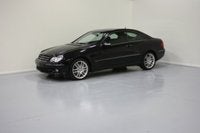
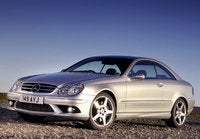
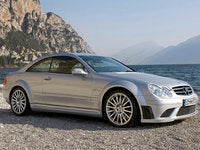
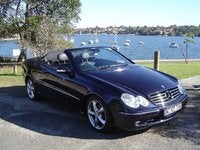
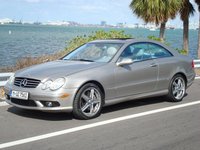
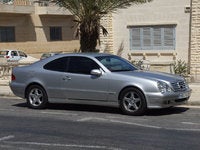
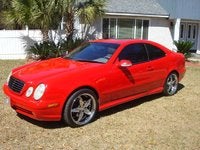
Bursting onto the automotive scene in the late 1990s as a result of a restructuring and expansion of the Mercedes-Benz lineup, the CLK-Class of sporty coupes and cabriolets presented drivers with an alternative to popular coupes from BMW and other competitors. The CLK-Class also represented a new direction for Mercedes, as the automaker sought to establish itself as a producer of agile, muscular coupes as well as more sedate, luxury-oriented sedans.
In designing the CLK-Class, Mercedes borrowed heavily from both the C-Class sedans, which served as the foundation for the new line of coupes and cabriolets, and the E-Class sedans, which contributed a number of styling elements, such as CLK-Class's distinctive headlights and taillights. Similarly, a number of engines were borrowed from E-Class sedans.
The result, however, was a distinctive vehicle when it appeared in 1998. The CLK320, the first CLK-Class car to roll into showrooms, was longer and lower than the C-Class, and powered by a new 215-horsepower, 3.2-liter V6 engine that would soon makes its way into a number of other Mercedes vehicles, including the C320, the E320, and the ML320.
The following year, Mercedes introduced a convertible version of the CLK320, as well as the more powerful CLK430, which received a 275-horsepower, 4.3-liter V8 engine, adding to the CLK-Class's reputation as a high-powered line of cars.
That reputation received another big shot in the arm in 2001, when Mercedes unveiled the CLK55 AMG. At the time of its introduction, the CLK55 AMG was the fastest Mercedes available in America, thanks to its 5.4-liter V8 engine, which produced a whopping 342 horsepower. With that kind of muscle under the hood, the CLK55 AMG could jump from 0 to 60 in just 5 seconds flat.
Over the years, Mercedes has dropped a lot of new technology into the CLK-Class cars, including Brake Assist, an Electronic Stability Program, and the Smart Key electronic anti-theft ignition system. And since these cars at their cores were Mercedes, the automaker also enriched them with a wide range of luxury appointments, like leather upholstery and high-end audio systems.
Today, the CLK-Class consists of the CLK350 Coupe and Cabriolet, which replaced the CLK320 in 2006; the CLK550 Coupe and Cabriolet, which replaced the CLK430; and the CLK63 AMG, which replaced the CLK55 AMG. The CLK63 AMG now comes equipped with a 6.3-liter V8 engine that produces an incredible 475 horsepower. Hold on to your hats -- it's gonna be a fast ride.