Mazda MPV Model Overview
Mazda MPV Cars
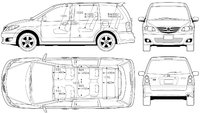


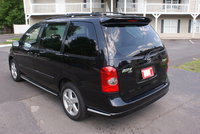
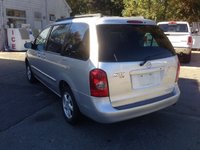
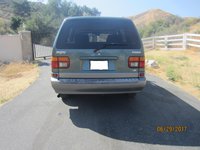
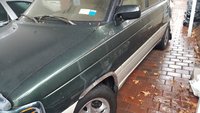

Questions
Rear Power Sliding Door Issue
We recently bought a 205 MPV ES, and once in awhile the rear power slider will close about 90%, then re open itself. Doesn't do it all the time though. I believe we are the 3rd owners, and the last ...
2001 Mazda MPV Overheating
Van keeps overheating I've replaced the thermostat, the water pump, and the whole coolant overflow tank. I don't seem to have any leaks and I ran a blue devil treatment in it but when my mechanic d...
1993 Mazda Mpv 3.0 Is There A Frost Plug In The Back Of The Engine Between ...
engine overheated cause of broken fanbelt . now when i fill the raiditor the water runs out of the back of the engine below exhaust crossover and above the transmission.
Mazda 2003 B2300 TRuck Reservoir Boiling
Reservoir boiling water but temp gauge cool, why?
Mazda MPV Overview
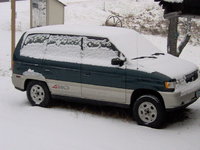
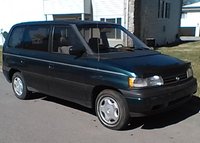
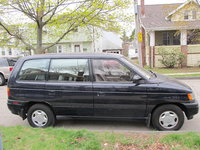
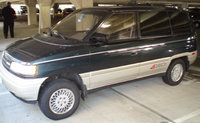
The Mazda MPV was one of the earliest Japanese vans to reach the U.S. market, and among the first to be designed specifically for North American buyers. Built from the ground up and based on Mazda 929 sedan's platform, the MPV was a rear-wheel drive vehicle from its introduction in 1989 until 2000, when it became a front-wheel-drive. It also was available in both two-wheel drive and four-wheel drive until its redesign in 2000.
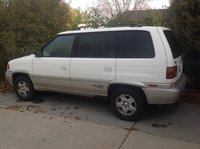
One element that distinguished the MPV from its competition was its hinged rear door, on the passenger side, rather than a sliding door. In 1996 Mazda added a fourth hinged door behind the driver's-side door. The hinged rear doors remained until the MPV's redesign in 2000, when they were replaced with sliding doors. In late-model vehicles, power sliding doors were available as either standard features or options, depending on the trim package.
Through most of its history, the MPV was considered to be underpowered by many. The earlier models were powered by either a 121-horsepower, 2.6-liter four-cylinder engine or a 150-horsepower, 3.0-liter V6. Power was steadily increased through the years, but it wasn't until a 200-horsepower 3.0-liter V6 engine was dropped under the hood in 2002 that the MPV was considered adequately powered.
Throughout the 1990s and into the 21st century, the MPV was updated but its size and shape remained essentially unchanged. This allowed some competitors' vans to exceed the MPV in size, power, and features. But there were many drivers who appreciated the MPV for what it was -- a small yet versatile minivan. Drivers noted that, for the most part, the MPV was a reliable vehicle that handled well and had plenty of room for people and cargo. It was also considered to be a good value. As Mazda continued to make upgrades to the minivan, it gained a sportier look and more nimble handling, but it has remained a true minivan up to the current model year.