
These Are The Fastest Electric Cars Currently Available
Who says you need a gas engine to go fast (or quick)?
Today, some of the fastest and quickest cars on the road are electric. What’s the difference? Fastest means highest top speed overall, and the record for the fastest production car on Earth currently belongs to the Bugatti Chiron Supersport 300+; it hits a top speed of 304 mph.
(That outdoes the fastest EV, by quite a bit… we’ll get to that in a moment).
Meanwhile, the quickest car is the one that accelerates in the shortest amount of time, whether it’s 0-60 MPH or the quarter-mile dragstrip. The world’s quickest production car is currently the Rimac Nevera R, which will do 0-60 MPH in a blistering 1.66 seconds.
Here, EVs have the advantage over gas cars, thanks to the fact that EVs’ instantaneous torque is quicker off the line, with many other EVs also shooting to 60 mph in less than two seconds.
Stretch that distance out beyond a drag race and these electric hypercars can creep near the top speeds of Bugatti’s famed gas-powered hypercars, the Veyron, Chiron, and Tourbillon.
While there are some inconsistencies in claiming top speed records, and even inconsistencies in defining a production car, we rounded up the world’s fastest electric cars you can buy today. For a price, of course.
- What is the Fastest EV Overall?
- Comparing the Fastest Electric Cars
- Rimac Nevera R
- Aspark Owl
- Lotus Evija
- Pininfarina Battista
- Lucid Air Sapphire
- Porsche Taycan
- Tesla Model S Plaid
- Rivian R1 Series
- Tesla Cybertruck
- Hyundai Ioniq 5 N
- Tesla Model 3 Performance
- Factors Contributing to the Speed of Electric Cars
- What’s the Difference Between Fastest and Quickest Electric Cars?
- The Role of Electric Car Speed in Everyday Driving
- Exploring the Fastest Electric Cars within Different Price Ranges
- Conclusion:
What is the Fastest EV Overall?
Globally, that honor will likely go to the BYD Yangwang U9 Track Edition. It reached 293 mph in August 2025, outstripping the Aspark Owl SP600 (which has hit 273 mph) and the Rimac Nevera R (which has topped out at 268 mph).
The 2,960-horsepower, four-motor Track Edition of the U9, however, is not on sale right now, and even when it is, it won’t be available in the U.S.
American shoppers could set their sights on the Aspark Owl SP600, but it’s still a prototype.
That leaves the Rimac Nevera R as the fastest EV production car, currently, both globally and in the U.S. This 2,107-hp hypercar is limited to 40 units worldwide, and its top speed comes with a key asterisk that says “with manufacturer oversight.” Consider yourself warned.
Comparing the Fastest Electric Cars
We list both the quickest and fastest electric cars below, with the top speed as the reigning order for the top 10 fastest electric cars. We’re deferring torque metric to the global standard of newton meters (nm) instead of pound-feet (lb-ft).
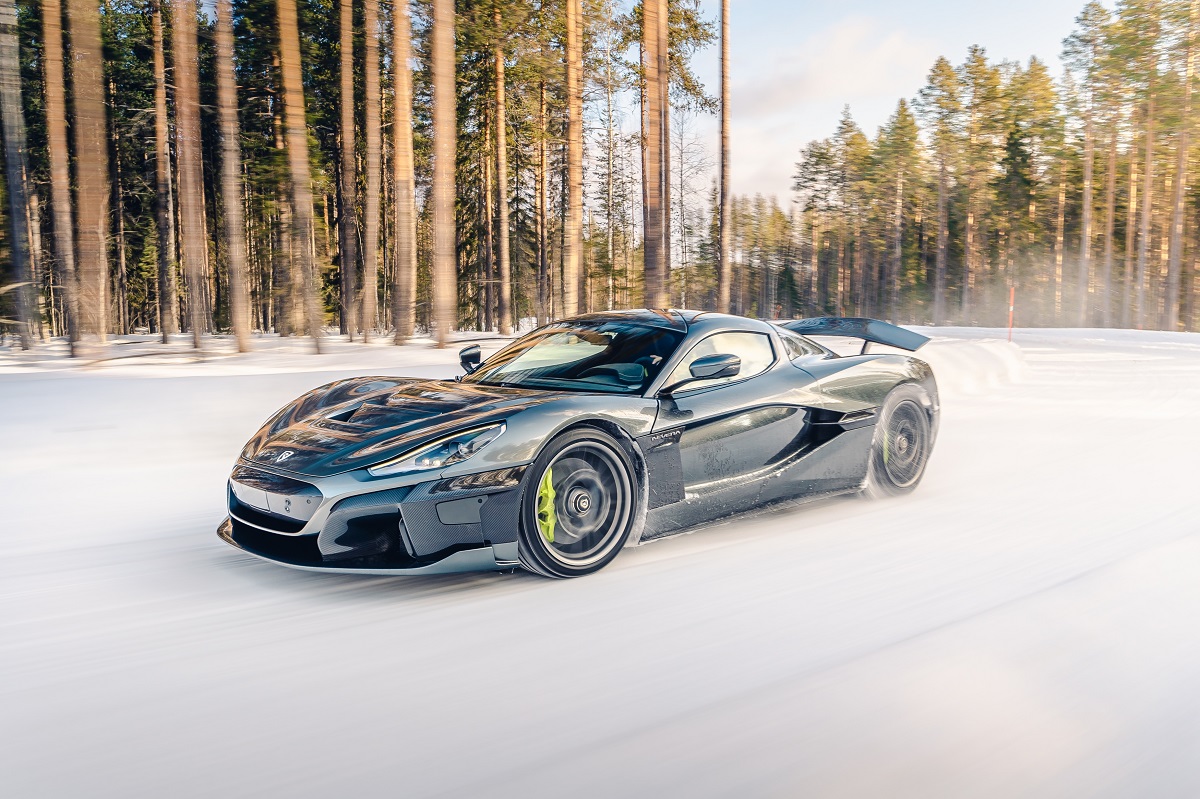
Rimac Nevera R
Rimac, a Croatian brand established in 2009, has made a name for itself by building incredibly fast electric cars. The Nevera R builds off the Nevera that made 1,914 horsepower and had a top speed of 258 miles per hour, making it one of the world’s fastest electric cars and Nürburgring record holder.
The Nevera R outdoes the Nevera in every category, including a top speed of 268.2 mph. In July 2025, the Rimac Nevera R broke 24 performance records in a single day, including the zero-400-zero-km/h (zero-249-zero-mph) record; this record is a test of power, acceleration, aerodynamics, and braking.
Limited to 30 units, the Rimac Nevera R costs approximately $2.7 million. Since it’s theoretically for sale, it rightfully claims top spot in our list.
Performance Specifications
Combined Horsepower: 2,107 hp
Combined Torque: Unspecified, but greater than the Nevera’s 2,360 nm
Zero to 60: 1.66 seconds
Quarter mile: 7.9 seconds
Top Speed: 268 mph
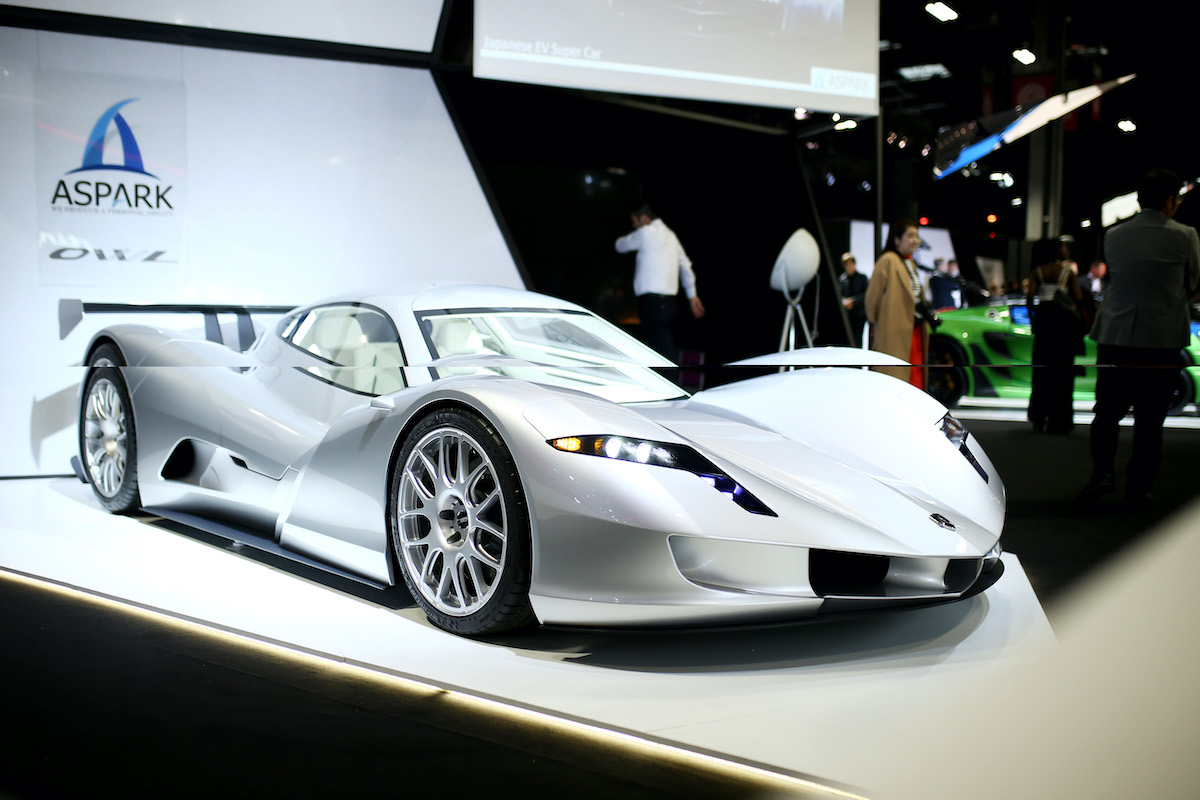
Aspark Owl
Aspark, a small Japanese EV brand, was created to set automotive EV records. In its SP600 trim, the carbon-bodied Owl hit 272.6 miles per hour in June 2024, making it the world’s fastest electric car. But that is still an experimental prototype and not a production car. The Aspark Owl Interestingly, the Aspark Owl SP600 builds off the Aspark Owl, which we’ll list here because in theory you could have purchased one of the 50 models that allegedly sold for $3.5 billion. The Owl features a two-speed transmission, allowing it to reach these high speeds (most EVs use single-speed transmissions). However, Aspark notes that “regular vehicles are limited to 217 mph” due to “safety and tire durability reasons.”
Performance Specifications
Combined Horsepower: 1,953 hp
Combined Torque: 1,920 nm
Zero to 60: 1.72 seconds
Quarter mile: 8.32 seconds at 172 mph
Top Speed: 256 mph
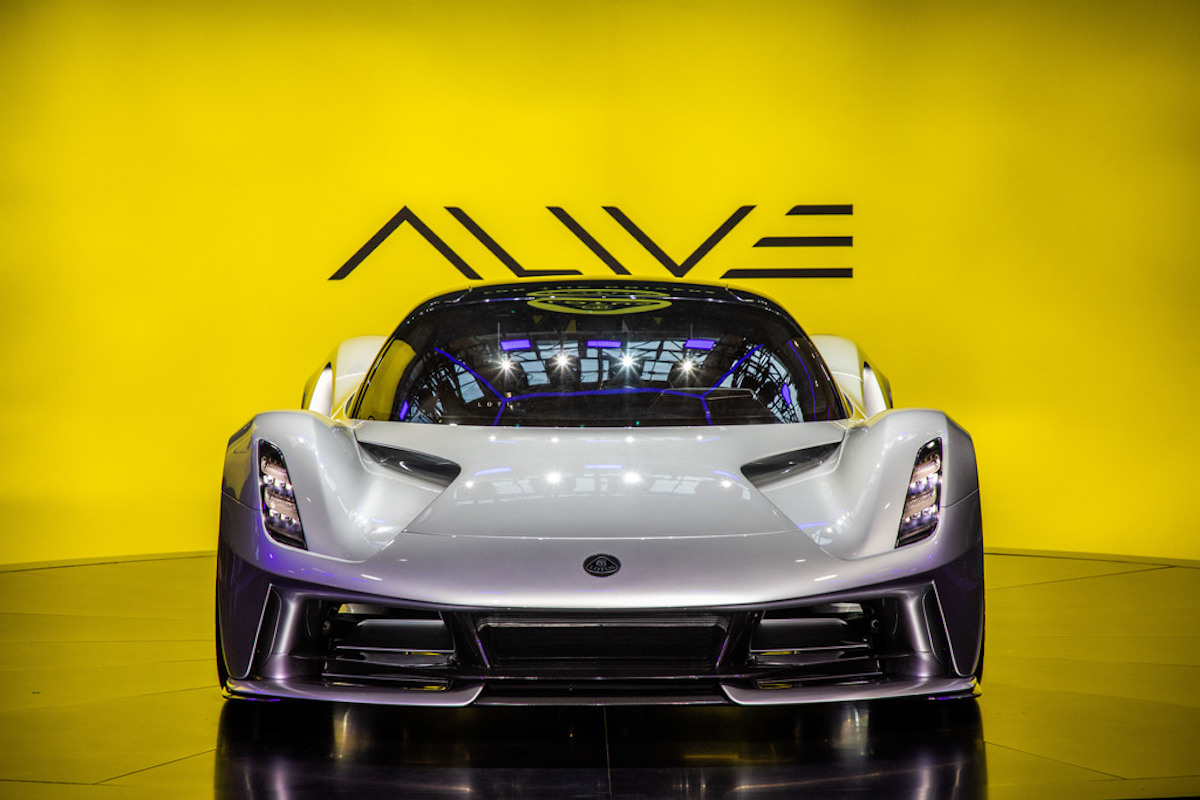
Lotus Evija
The famed British marque has reinvented itself as an electric sports car brand. The Evija, Lotus’s new flagship, is the most powerful production EV and car on the road today (but not U.S. roads, since it’s not legal to drive in the States). For that, look to the 905-hp Lotus Eletre crossover.
With four electric motors, one per wheel in a much more literal take on four-wheel drive, the Evija produces a combined 2,011 horsepower. Production is limited to 130 examples, already sold out. Pricing was rumored to be in excess of $2,000,000.
Combined Horsepower: 2,011 hp
Combined Torque: 1,704 nm
Zero to 62 mph: Officially, “under three seconds;” some outlets claim it in less
Quarter mile: 9.5 seconds at 171.6 mph, according to Autocar
Top Speed: Limited to 217 mph
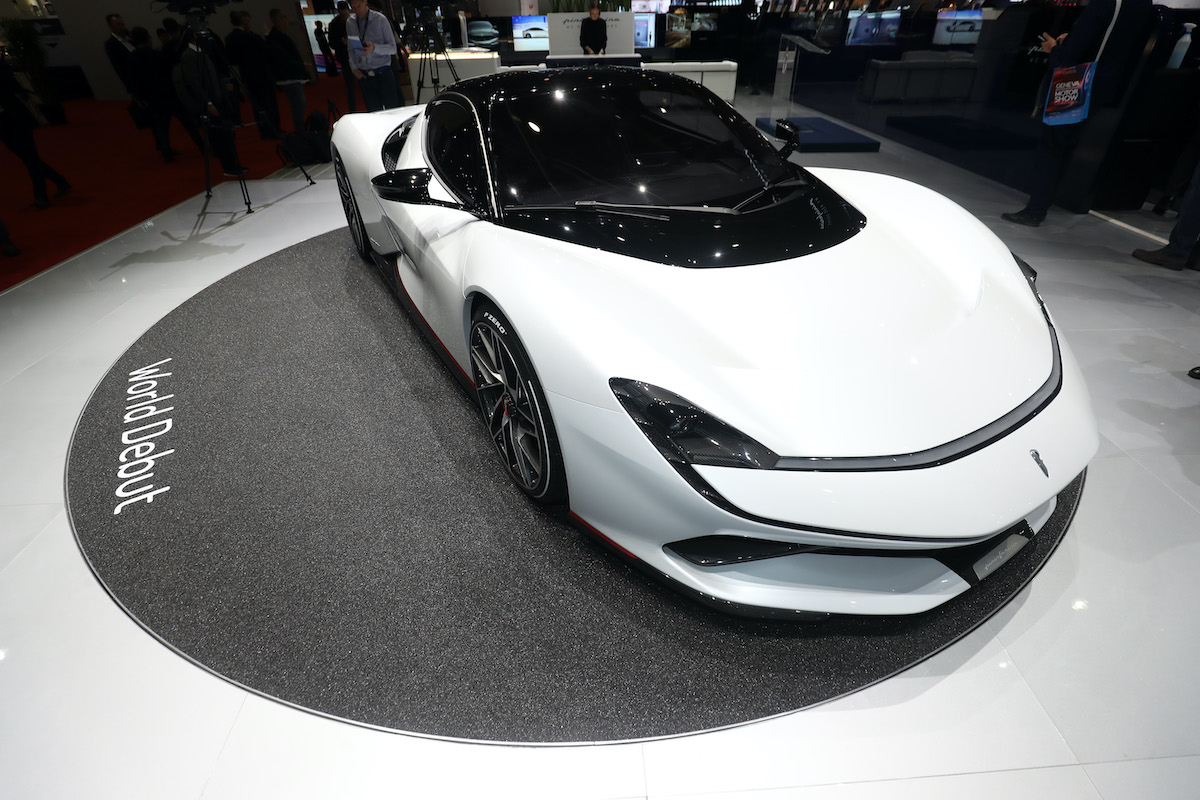
Pininfarina Battista
Pininfarina is an Italian design house and coachbuilder, most famous for penning some of the most beautiful Ferraris ever made. The Battista is Pininfarina’s first ground-up automobile, and it helped launched the electric hypercar era alongside the Rimac Nevera, with which the Battista shares a platform. Like its Nevera sibling, the Battista has four electric motors and is wrapped in a stylish all-carbon fiber body. Pricing is estimated at $2.5 million.
Performance Specifications
Combined Horsepower: 1,900 hp
Combined Torque: 2,340 nm
Zero to 60: 1.86 seconds
Quarter mile: 8.55 seconds
Top Speed: 217 mph

Lucid Air Sapphire
Lucid, a California startup of ex-Tesla engineers, launched its Air sedan for the 2022 model year. The Air is incredibly aerodynamically efficient, with fresh styling that reminds us of a Citroën DS. In the Sapphire trim, Lucid has created the world’s fastest sedan, with a tri-motor powertrain delivering a combined output of 1,234 horsepower. The all-wheel-drive Sapphire is not only about straight-line speed: An advanced torque-vectoring system and four selectable driving modes provide incredible performance when the road gets twisty. Go easy on the throttle and opt for the standard wheel covers and the Sapphire outpaces the other beasts on this list in one key metric: it has an EPA-rated 427-mile range. Prices start at $249,000.
Performance Specifications
Combined Horsepower: 1,234 hp
Combined Torque: 1,940 nm
Zero to 60: 1.89 seconds
Quarter mile: 8.95 seconds
Top Speed: 205 mph

Porsche Taycan
A giant in the sports car world, Porsche launched its first EV, the Taycan, for the 2020 model year. Based on the futuristic Mission E concept, the Taycan was immediately well-received thanks to its good looks, accessible performance, and great range. The Taycan was refreshed for the 2025 model year, with a bigger battery, a more powerful rear motor, and a new track-ready Turbo GT trim. The Porsche Taycan Turbo GT’s tri-motor powertrain delivers up to a combined 1,092 horsepower and a rear-seat delete if you choose the Weissach Package that also debuted in 2025. That 1,092 hp lasts for two blistering seconds, then it reverts to a measly 1,019 hp. Starting at around $230,000, the Weissach has an aero package that maximizes on-track performance, producing up to 175 pounds of downforce at the front and 310 pounds of downforce at the rear. The Porsche Taycan Turbo S is the more road-oriented version, with a softer suspension and slightly less power— it’s rated at “only” 938 horsepower. A more practical hatchback version, the 690-hp Taycan GTS Sport Turismo, is also on offer. The 2026 Taycan comes with a NACS adapter.
Performance Specifications
Combined Horsepower: 1,092 hp
Combined Torque: 1,239 nm
Zero to 60: 2.1 seconds
Quarter mile: 9.4 seconds
Top Speed: 190 mph
Tesla Model S Plaid
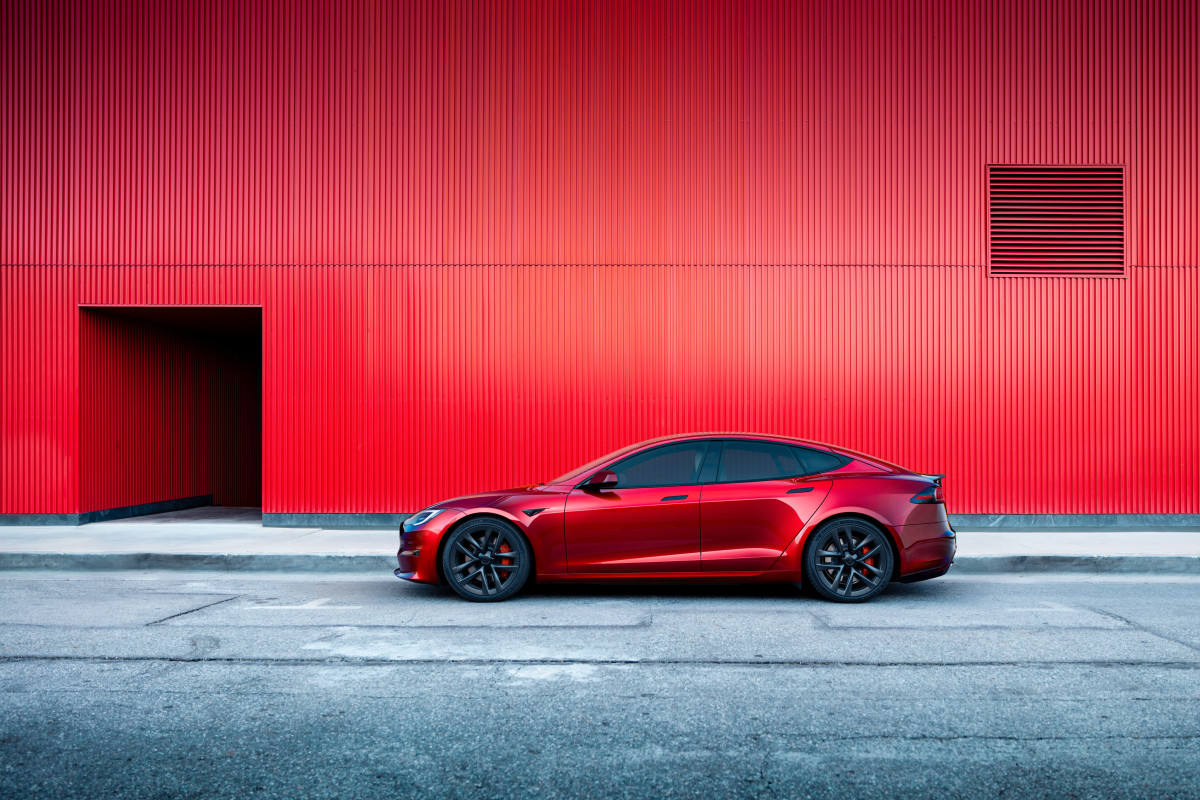
The Tesla Model S, one of the first mass-market electric cars on the road, has been steadily improved over the years since its introduction in 2012. A major refresh for the 2021 model year introduced the Plaid trim, the fastest car Tesla has produced to date. Equipped with three electric motors delivering 1,020 horsepower, the Model S Plaid is one of the cheapest ways to get a thousand-horsepower experience from the factory. Prices start at $94,990 for the base AWD model, but the Plaid starts at $109,900.
Performance Specifications
Combined Horsepower: 1,020 hp
Combined Torque: 1,240 nm
Zero to 60: 1.99 seconds
Quarter mile: 9.23 seconds
Top Speed: 200 mph
Rivian R1 Series
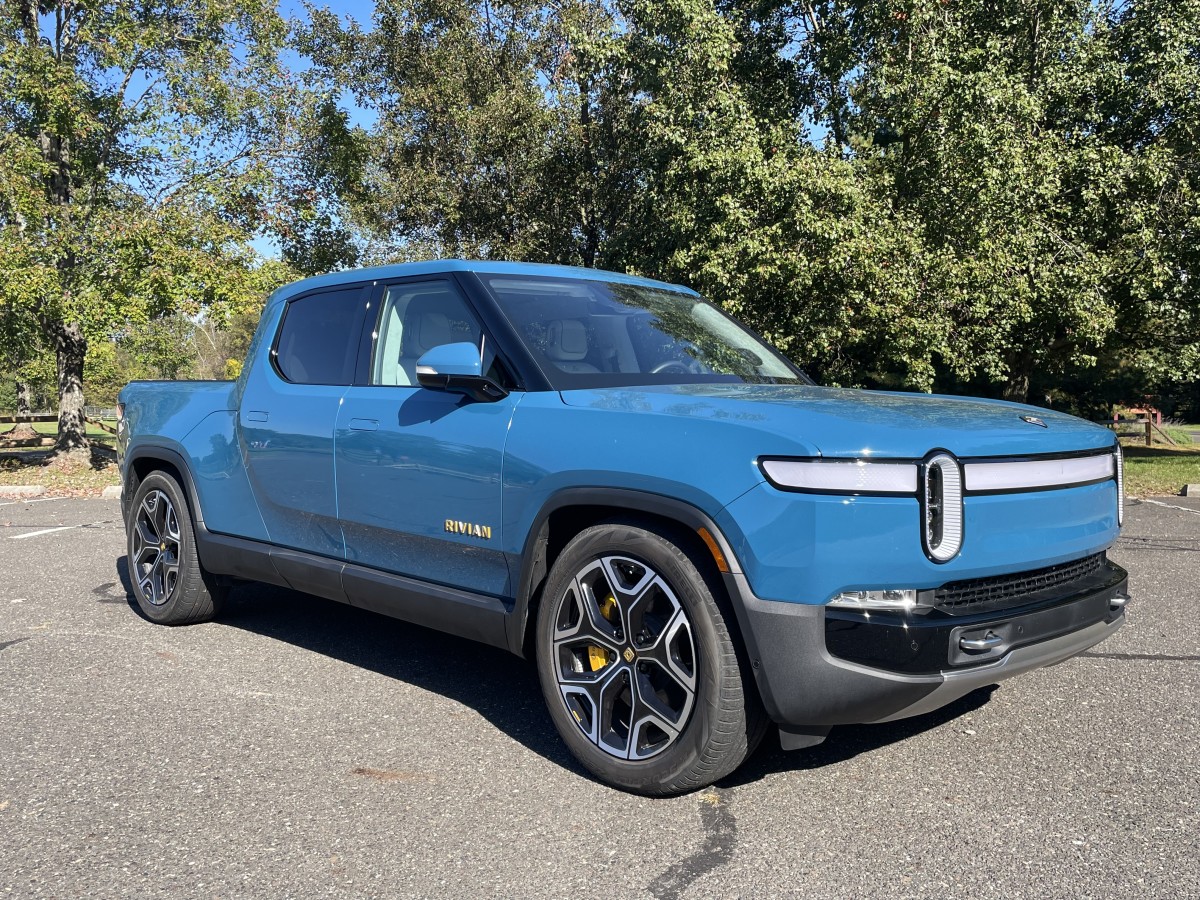
The Rivian R1T was the first electric pickup truck on the market, and the automaker later released the R1S three-row SUV version as well. These models were recently refreshed for the 2025 model year with less wiring, less weight, and more potent Tri-Motor and Quad-Motor configurations. Built for adventure, the Rivian twins feature a futuristic design and off-road-ready features. In Quad Max trim, the Rivian is equipped with four electric motors, producing a combined output of 1,025 horsepower. The Rivian has excellent traction with one motor per wheel. Combined with an advanced air suspension, that makes for an incredibly competent off-roader. The range-topping Quad Max starts at $115,990.
Performance Specifications
Combined Horsepower: 1,025 hp
Combined Torque: 1,624 nm
Zero to 60: 2.5 seconds
Quarter mile: 10.5 seconds
Top Speed: 130 mph
Tesla Cybertruck
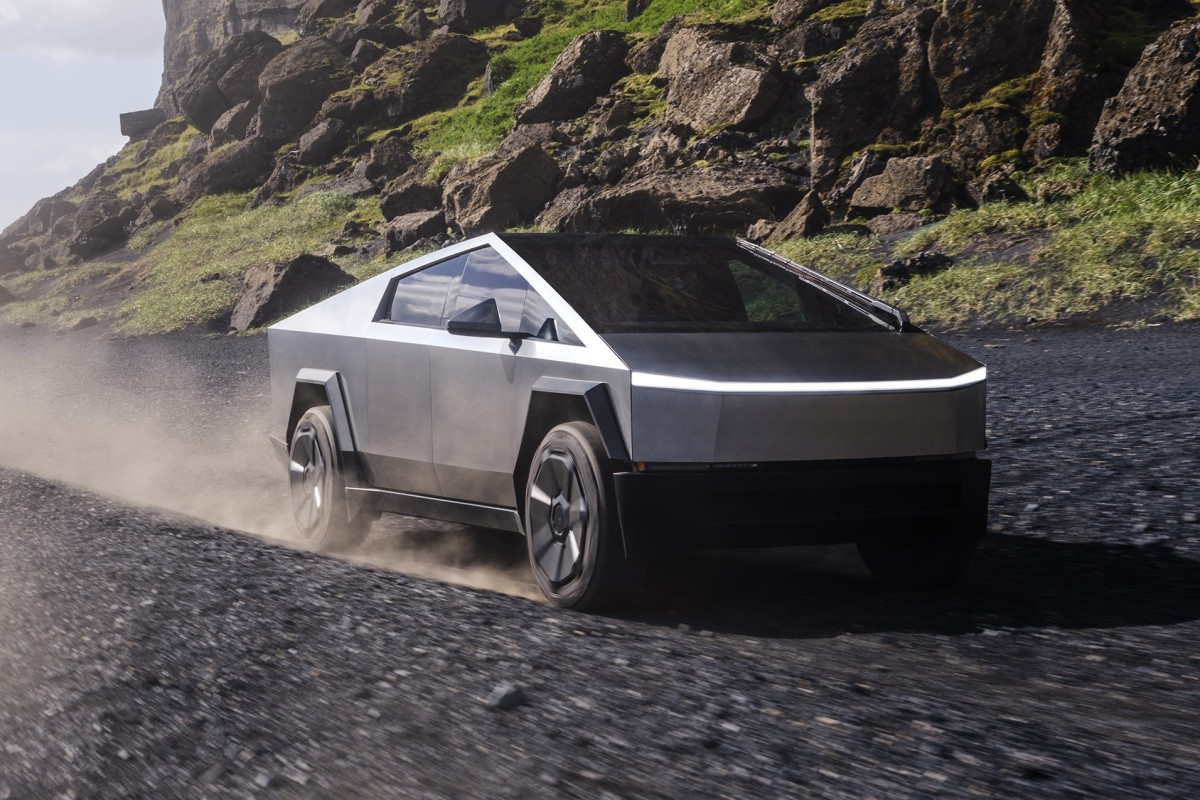
The attention-grabbing Cybertruck is a stainless-steel-bodied truck built for any planet. Its love-it-or-hate-it exterior design reminds us of the DeLorean, with a raw stainless steel finish and sharp edges. Inside, you will find a classic Tesla minimalist interior, with a large infotainment display front and center. In its top Cyberbeast trim, equipped with three electric motors producing a combined 845 horsepower, the Cybertruck sprints to 60 miles per hour in 2.6 seconds. Equipped with a 123-kWh battery, the Cybertruck has an estimated 325-mile range, and it can tow up to 11,000 pounds (Cyberbeast has a 320-mile range). Prices start at $72,490 for the base All-Wheel-Drive trim, with the Cyberbeast starting at $114,990.
Performance Specifications
Combined Horsepower: 840 hp
Combined Torque: 1,175 nm
Zero to 60: 2.6 seconds
Quarter mile: 11 seconds
Top Speed: 130 mph
Hyundai Ioniq 5 N
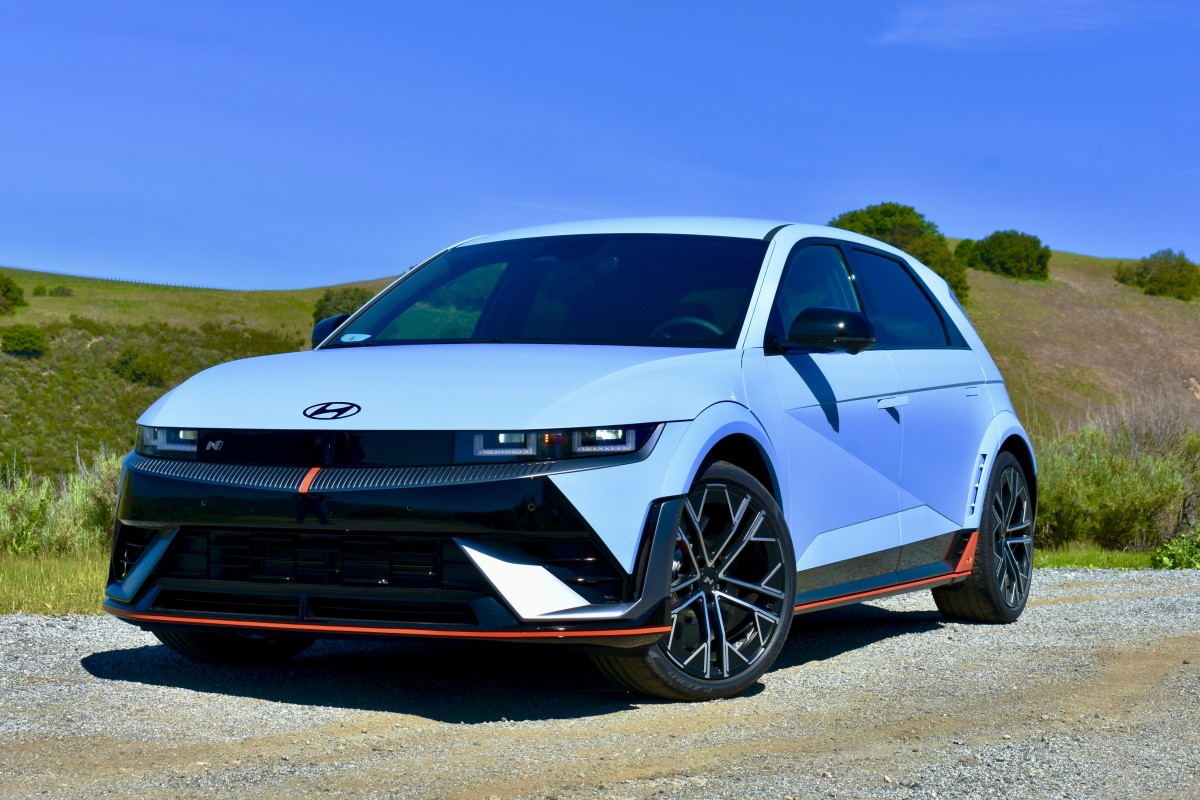
The Hyundai Ioniq 5 has been a fan favorite EV since it was introduced in 2022, with funky retro styling, a practical interior, and great range. The hatchback got even better for 2026 with the addition of a native NACS port for easier DC-fast charger at Tesla Superchargers, and the N Drift Optimizer now has 10 different adjustable stages rather than the original single mode. In N form, the Ioniq 5 gets front and rear spoilers, big wheels, big brakes, and more powerful motors. The Ioniq 5 N is quick, with a combined output of 641 horsepower, and it focuses on fun when you toggle N Grin Boost. N Grin Boost delivers a simulated internal combustion soundtrack and gears that do a great impression of a traditional internal combustion powertrain; you can hold gears, bounce off the rev limiter, or “downshift” to modulate your engine braking. Throw in a drift mode, and the Ioniq 5 N delivers a fun experience that can be rare in electric vehicles, and rarer still in electric crossovers. It and the related Kia EV6 GT are the best performance values on this list. Prices start at around $68,000.
Performance Specifications
Combined Horsepower: 641 hp
Combined Torque: 770 nm
Zero to 60: 3.25 seconds, officially
Quarter mile: 11.5 seconds (400 meter time)
Top Speed: 162 mph

Tesla Model 3 Performance
The Model 3 is Tesla’s entry-level sedan, and it has quickly become a best-selling car and a benchmark in the automotive world. Refreshed for the 2024 model year, the Model 3 gets updated styling, more power, more range, and better handling. In Performance trim, the awd Model 3 is equipped with two motors delivering a combined output of 510 horsepower. The budget buy on this list, the Model 3 Performance keeps pace with a BMW M3 Competition xDrive, which costs almost double the Model 3 Performance’s $54,990.
Performance Specifications
Combined Horsepower: 510 hp
Combined Torque: 745 nm
Zero to 60: 2.9 seconds
Quarter mile: 11.0 seconds
Top Speed: 163 mph
Factors Contributing to the Speed of Electric Cars
The main advantage of an electric vehicle (EV) is down to the electric motor itself. Electric motors are very compact and can be incredibly powerful. An electric motor can make all of its power from idle, which is why EVs have incredible acceleration–there’s no need to rev an engine or build boost to hit peak power. Because electric motors are all computer-controlled, engineers have much greater control over power delivery and traction, adding to a car’s performance envelope. Many of today’s high-performance EVs have four electric motors, one per wheel, which together deliver impressive torque-vectoring capabilities. With clever programming, this level of control can result in a perfectly balanced car, with no understeer or oversteer.
Packaging an electric powertrain is a lot simpler than packaging a combustion engine powertrain. Electric motors do not require transmissions, or heavy-duty drivetrains, or big cooling systems. The batteries are still large and heavy, so they are placed low in the center of the vehicle to improve weight distribution and center of gravity. A positive side effect of a low center of gravity is that these cars feel much lighter than they are from behind the wheel.
All of these engineering factors help to improve aerodynamics. Because electric powertrains have lower cooling requirements, front-end designs can be optimized for aerodynamics, with minimal openings for radiators and coolers. The overall shape of the cars can also be optimized for aero. This is important because aerodynamic drag has a massive impact on top speeds. In general, as speeds double, aerodynamic drag quadruples. Overcoming drag requires power and an aerodynamically efficient shape to slip through the air. Car makers are using different materials, like carbon fiber, to reduce weight and to produce the advanced shapes aerodynamics require.
What’s the Difference Between Fastest and Quickest Electric Cars?
What is the difference between the fastest and the quickest? The fastest car means the highest top speed in all-out capability of its drive systems. Cars powered by internal combustion engines (ICE) still hold that spot.
The fastest production car in the world is the Bugatti Chiron Supersport 300+ and its 8.0-liter quad-turbocharged W16: it hits a top speed of 304 mph. Simulations suggest the Koenigsegg Jesko Absolut can reach 310 mph, but that hasn’t been proven in real-world testing.
The quickest car is usually what’s meant in sprints, whether its 0-60 mph or the quarter mile. Electric cars and the instantaneous torque provided by motors situated at each wheel accelerate quicker than gas cars. EVs are the quickest accelerating cars, topped by the Rimac Nevera R, which can rocket to 60 miles per hour quicker than you can read these words.
By the timer, it’s only 1.66 seconds. With how powerful modern electric powertrains are, EVs don’t need to look like supercars to deliver supercar performance. The Lucid Air Sapphire is incredibly quick, accelerating to 60 mph in only 1.89 seconds. Even the Quad Max Rivian R1T pickup truck can accelerate to 60 miles per hour in 2.5 seconds.
No matter what drivetrain, there has never been a time like now for performance cars.
The Role of Electric Car Speed in Everyday Driving
Believe it or not, quick acceleration times can be helpful for the daily commute. Need to make a gap when accelerating onto a highway? A combined power output of over 1,000 horsepower will allow you to make any gap you need. As motorcyclists know, sometimes having extra power is helpful for getting yourself out of a sticky situation: “When in doubt, throttle out.”
As much fun as straight-line speed can be, the effortless nature of these cars means that it is very, very easy to break the speed limit. And because of how competent and quiet electric powertrains are, you may not realize exactly how fast you are going. Another concern with these ultra-fast EVs has to do with basic physics. Batteries are heavy, and most EVs are significantly heavier than a comparable internal combustion engine car. That extra weight results in longer braking distances, which can be easily underestimated if you are traveling faster than expected. This can be an issue for powerful electric SUVs and trucks like the Cybertruck, R1T, and R1S, which are all heavy vehicles that are quicker than most sports cars. However, that superior speed doesn’t mean they also handle or stop better than a sports car, especially when equipped with adventure-ready off-road tires.
The impact of performance on range is not as significant as you might expect. To generate big power numbers, most performance EVs are equipped with bigger battery packs that, when the car is driven normally, deliver competitive ranges. For example, a Tesla Model 3 Performance is rated at 298 miles, while the Long Range All-Wheel-Drive trim is rated at 346 miles. The biggest difference contributing to range reduction is the wheel and tire package: The bigger wheels and performance tires equipped on the Performance trim have a much higher rolling resistance, which is good for performance and bad for mileage.
Exploring the Fastest Electric Cars within Different Price Ranges
At the high end, the Lotus Evija, Aspak Owl, Rimac Nevera, and Pininfarina Battista are awe-inspiring but, sadly, are available only to a few. Officially, there are no public MSRP numbers available but expect to spend well over $2 million for the experience. The Lucid Air Sapphire deserves an honorable mention, delivering incredible performance for a fraction of the Rimac’s price tag.
Affordable electric cars are still quite expensive compared to ICE cars, with the cheapest EV on the market–the Nissan Leaf–starting around $30,000. Taking these higher costs into consideration, Tesla delivers a lot of performance for the money. The Model 3 Performance trim delivers sub-three-second zero-to-60-mph acceleration times and retails for just under $55,000. Step up to the Model S Plaid for a sub-two-second zero-to-60-mph time, still for less than $90,000. Unless you happen to come across a Rimac, a Pininfarina, or a Sapphire, that Model S Plaid will be the quickest car on the road.
For the fun-seeking enthusiast, the Hyundai Ioniq 5 N is hard to beat. Hyundai went to great lengths to tailor the handling, seating position, and overall feel of the Ioniq 5 for a genuinely fun-to-drive experience. Activate N Grin Shift mode to get fake engine sounds and gears that make a convincing impression of a sports car. You can bounce off the rev limiter and toggle into drift mode–when it is safe to do so on a closed course.
Conclusion:
Speed has never before been as attainable as it is today. The power and efficiency of electric powertrains is truly impressive. Even a pedestrian EV like the Kia Niro EV can be hilarious fun with its torquey and responsive electric motor.